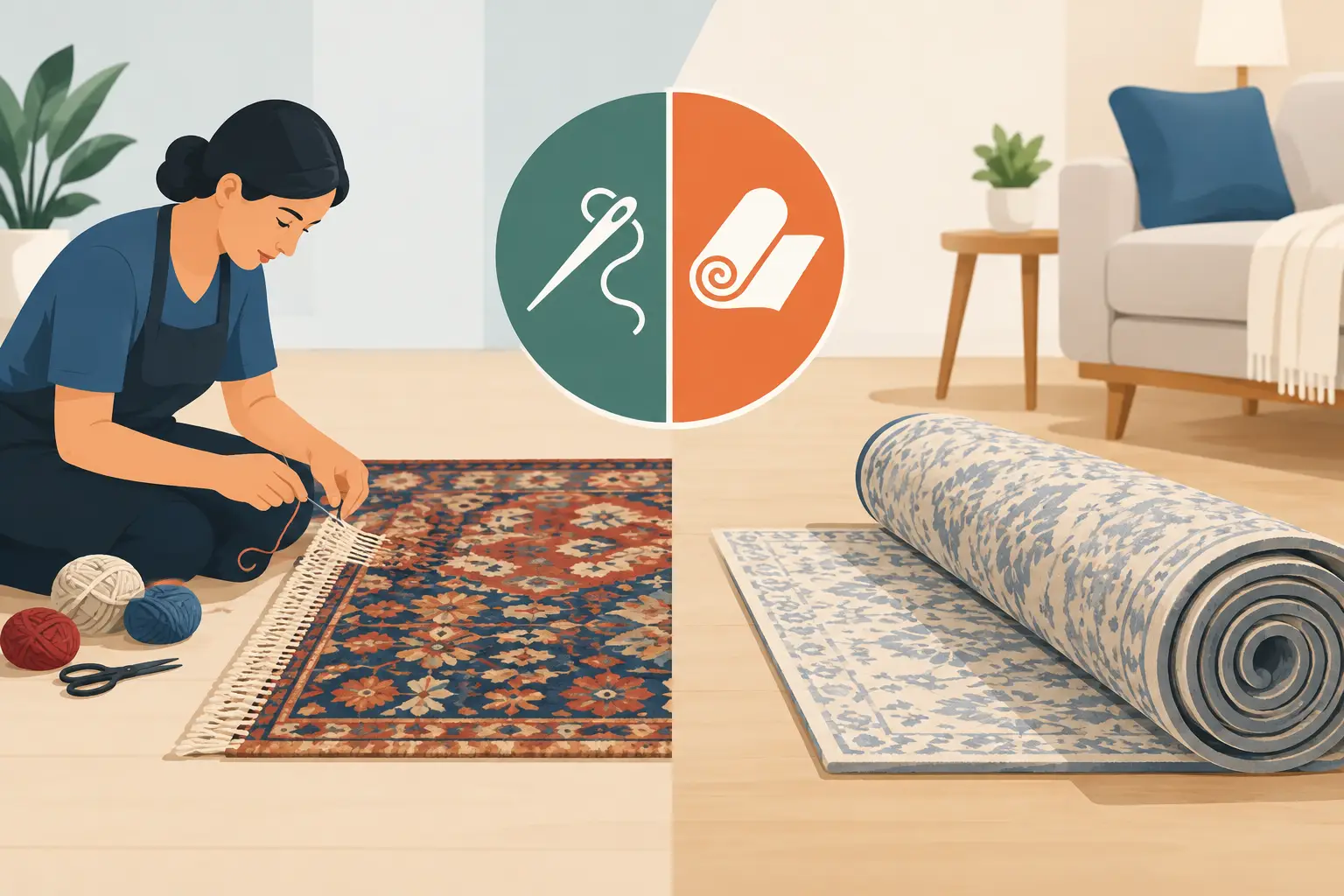
A worn rug edge, thinning fringe, or small pet-damaged area can make replacement feel like the simplest answer. But rug repair versus replacement costs are not only about the first number on an estimate. For a well-made wool, silk, Persian, Oriental, or inherited rug, repair may protect a living piece of history, preserve its character, and cost far less than finding a true equivalent.
The right choice depends on what the rug is made of, how it was constructed, where the damage is located, and what it would take to replace it with comparable quality. A careful inspection is the best starting point because a problem that looks cosmetic from above may be structural underneath.
Why Replacement Is Often More Expensive Than It Appears
Replacement pricing can be misleading when it is based on the cost of a new decorative rug from a big-box retailer. A machine-made synthetic rug may be affordable to replace, particularly if it is heavily stained, delaminating, or damaged across a large area. In that situation, replacement can be the sensible, practical choice.
However, a comparable replacement for a handmade rug is a different calculation. Hand-knotted rugs are made knot by knot, often from natural wool or silk, with variations in dye, weave, texture, and design that cannot be duplicated by a mass-produced substitute. An antique or family rug may also carry sentimental value that no purchase can replace.
For example, replacing a basic machine-made 5-by-8 area rug may cost a few hundred dollars. Replacing a similarly sized handmade wool rug of comparable construction and design can move into the thousands. A fine silk or antique piece may be substantially more. That is why the question is not simply, “What does a new rug cost?” It is, “What would it cost to replace this rug with one that offers the same materials, craftsmanship, beauty, and meaning?”
Rug Repair Versus Replacement Costs by Type of Damage
Some rug problems are especially good candidates for professional repair because they can spread if left untreated. Addressing them early usually keeps both the work and the cost more manageable.
Fringe damage
Fringe is not always an added decoration. On many handwoven rugs, it is the foundation warp extending from the body of the rug. When fringe becomes short, tangled, or loose, the rug’s end can begin to unravel.
Fringe repair can involve securing loose foundation threads, rebuilding missing fringe, or carefully replacing damaged sections. The cost depends on the width of the rug, the amount of lost material, and whether the rug needs structural stabilization before fringe is added. Replacing the entire rug over fringe damage alone is rarely necessary when the body of the rug remains sound.
Worn or broken edges
Side binding and serging protect the rug’s outer structure. When edges fray, curl, or split, the damage can work inward through the rows of knots. A small edge repair may be relatively modest, while extensive rebuilding along both sides requires more hand labor.
This is one of the clearest examples of why early action matters. Repairing several inches of loose binding is far more economical than waiting until a foot or more of the rug has lost its structure and pattern.
Holes, tears, and moth damage
Holes and tears require a more detailed assessment. A repair specialist may need to stabilize the surrounding foundation, match fibers and colors, rebuild warp and weft threads, and reweave the missing design. Fine handwork is not inexpensive, but it can be worthwhile when the rug has strong overall condition, a distinctive design, or personal significance.
Moth damage deserves prompt attention. The insects feed on natural fibers, especially wool, and can create hidden weakening in quiet, dark areas beneath furniture. Professional washing, proper treatment, and repair help stop the damage from continuing before restoration begins.
Stains, fading, and surface wear
Not every issue requires reweaving. Embedded soil, odor, food spills, pet accidents, and dull color can make a rug look worn out even when its foundation is healthy. Specialized washing may restore brightness, softness, and pattern clarity without the cost of major restoration.
Fading is more complicated. Sun exposure can weaken fibers and alter dyes, particularly along windows and doorways. A professional can explain whether cleaning, color correction, rotation, or more involved restoration is appropriate. In some cases, a faded rug still has years of useful life and should be preserved rather than replaced.
What Professional Rug Repair May Cost
Repair pricing is based on labor, materials, construction, and the extent of damage, not just the rug’s dimensions. A straightforward binding repair or fringe stabilization may cost considerably less than replacement. Detailed reweaving, antique restoration, and color-matched silk work can require many hours of skilled hand labor and may cost hundreds or more.
As a general guideline, minor preventive work is usually the least expensive category. Moderate repairs, such as rebuilding worn edges or restoring sections of fringe, often cost more but can extend the rug’s life for many years. Major structural restoration is the most significant investment, especially when holes, dry rot, water damage, or missing design areas are involved.
A trustworthy rug-care professional should inspect the rug in person and explain what is necessary, what is optional, and what result is realistic. The lowest estimate is not always the best value if it skips foundation repairs, uses mismatched materials, or conceals damage without properly securing it.
Four Questions That Clarify the Best Value
Before deciding, consider these four practical questions:
- Is the rug handmade, antique, inherited, or difficult to replace with comparable quality?
- Is the damage limited to an edge, fringe, small area, or localized stain?
- Is the foundation still stable, or has the rug begun to unravel or weaken across a broad area?
- Will the repaired rug serve your home for years, or are you already planning to change its size, style, or use?
If the rug is handmade and the damage is localized, repair often makes financial and emotional sense. If it is an inexpensive machine-made rug with widespread damage, severe backing failure, or little remaining life, replacement may be more reasonable.
Do Not Forget the Cost of Waiting
The most avoidable expense is often delayed repair. Loose fringe becomes lost knots. A small tear becomes a larger opening. A spilled drink that seems dry on the surface can leave residue deep in the fibers, attracting soil and causing odor over time.
Routine professional washing also helps reveal issues that everyday vacuuming cannot. Dirt acts like fine sandpaper inside a rug, gradually abrading wool fibers as people walk across it. Removing that embedded grit protects the pile and makes it easier to spot weak areas before they become costly structural problems.
For Southern California households, sunlight is another consideration. Rotate rugs regularly where possible, use window coverings during intense exposure, and address curling edges or weakened areas before they become trip hazards or larger repairs.
Choose Restoration When the Rug Still Has a Story to Tell
A rug does not need to be museum-quality to deserve skilled care. The rug under a family dining table, in a child’s bedroom, or in a favorite sitting room may hold years of memories along with its woven pattern. Thoughtful repair can keep that piece in service while preserving the artistry that first made it special.
At Persian Rug Spa, each rug is evaluated as an individual textile, with attention to fibers, dyes, construction, and the condition beneath the visible surface. Expert washing and hand repair can be coordinated with free pickup and delivery, helping homeowners make a clear decision without treating a valuable rug like an interchangeable household item.
Before discarding a damaged rug, have it examined by a specialist. A careful assessment may show that the repair is not merely an expense, but a practical way to preserve tradition, enhance beauty, and keep a meaningful rug at home for many more years.
