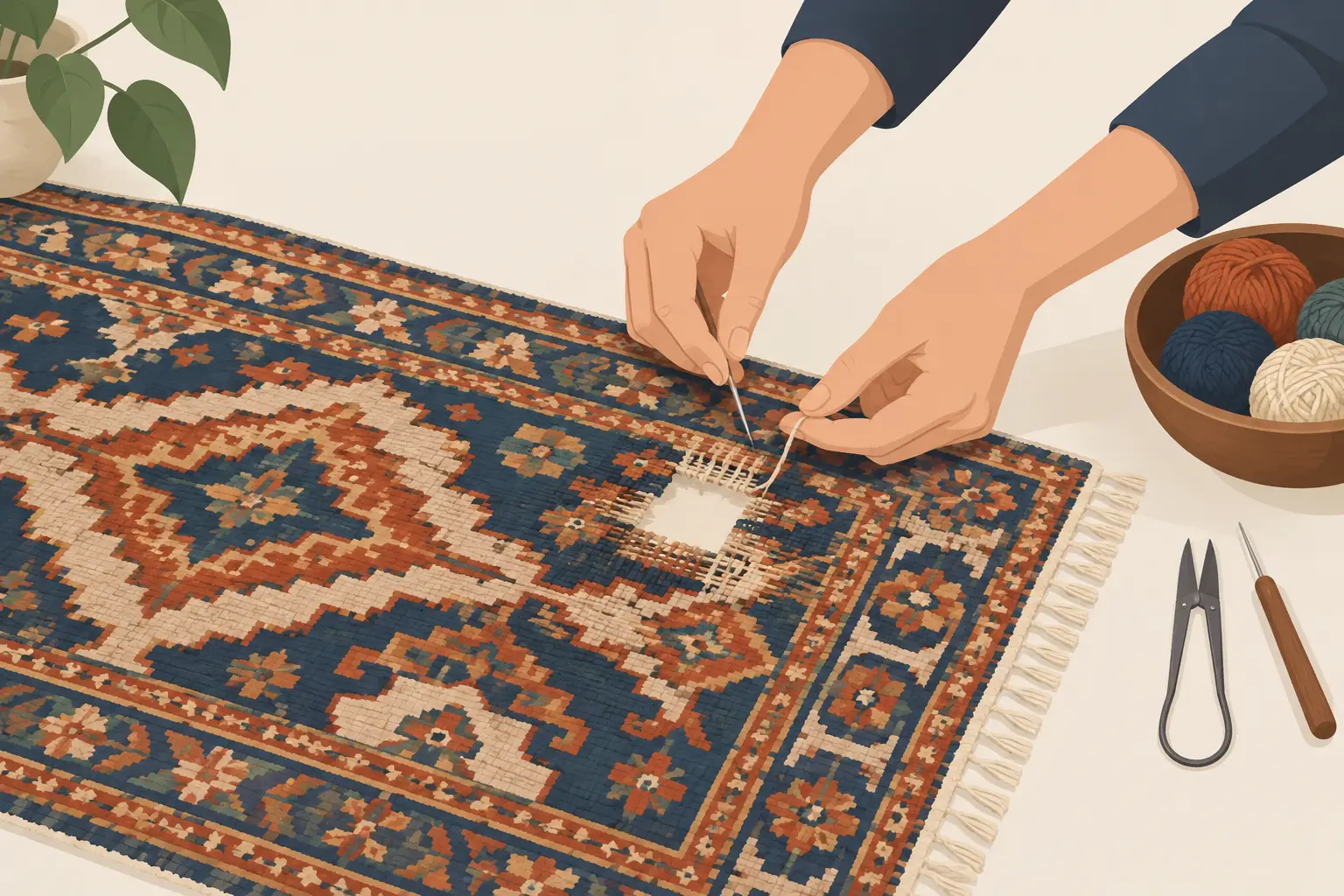
A small hole can change the future of a handwoven rug faster than most owners expect. What begins as a thin spot under a chair leg, a snag from a pet, or damage from moths can spread as neighboring knots lose their support. Rug hole restoration is not simply about covering an opening. It is the careful work of rebuilding structure so a treasured textile can continue to be used, admired, and passed down.
For Persian, Oriental, antique, silk, and handmade wool rugs, the best repair respects what is already there: the original foundation, knot direction, pile height, pattern, dye character, and age. A repair should stabilize the rug first, then blend naturally into its design rather than drawing attention to itself.
Why a Hole Needs Attention Sooner Rather Than Later
A rug’s pile is only part of its construction. Beneath the visible surface are warp and weft threads that hold thousands of knots in place. When those foundation threads break, the problem is structural. Foot traffic, vacuum agitation, and even the simple flexing of a rug during use can pull at the weakened area and enlarge the opening.
This is why a hole should not be treated like a minor cosmetic flaw. Tape, glue, iron-on patches, and adhesive backing may seem convenient, but they can stiffen fibers, trap soil, discolor delicate materials, and make professional restoration more difficult later. On handmade rugs, these shortcuts can also interrupt the natural drape that gives the piece its character.
Early professional assessment often means a smaller repair area, fewer replacement fibers, and a closer visual match. It also gives a specialist the chance to identify the cause. Moth activity, dry rot, pet damage, sun-weakened fibers, furniture pressure, or a worn backing may require attention beyond the visible hole.
What Professional Rug Hole Restoration Involves
The right repair method depends on how the rug was made and how far the damage extends. A machine-made area rug, for example, may need a practical stabilization repair rather than an attempt to recreate every detail. A finely woven Persian or Oriental rug can justify a more detailed hand restoration because its construction, craftsmanship, and long-term value call for it.
Inspection Comes Before Any Stitching
A restorer begins by examining both the front and back of the rug. The goal is to determine whether the surrounding foundation is sound and whether loose knots need to be secured. They will look at the fiber type, such as wool, silk, cotton, or a blend, and evaluate color variation, weave density, pile direction, and nearby wear.
This step matters because the visible opening is not always the full extent of the damage. Fibers around its edges may be brittle, stained, or partially detached. Repairing directly into weakened material can create a patch that fails prematurely.
Rebuilding the Foundation
If warp and weft threads are missing or broken, the restorer reconstructs that internal grid by hand. This creates a stable base for any replacement knots or pile. It is careful work: the tension has to be consistent with the rest of the rug. Too tight, and the repaired section may pucker. Too loose, and it can sink below the surrounding surface.
For an open area near a border or edge, the repair may also include binding, serging, or stitch locking to keep the damage from traveling. When fringe has separated from the rug’s body, it may need separate reinforcement rather than a quick fringe replacement.
Matching Fibers, Color, and Pile
Once the foundation is stable, replacement yarn is selected to suit the rug. Natural wool has a different texture and resilience than silk, and both behave differently from synthetic fibers. A skilled restorer considers not only the main color, but also the slight shifts created by age, fading, and hand-dyed yarn.
New yarn can look too bright beside an older field. In some cases, a specialist may blend fibers or use carefully selected tones so the repair belongs visually with the original rug. The goal is not to make an antique rug look artificially new. It is to preserve its beauty while honoring its history.
For a hand-knotted piece, missing pile may be re-knotted to follow the original design. A simple field color is usually more straightforward than a detailed floral motif, medallion, animal figure, or border. Pattern reconstruction takes additional time because the restorer must follow the original knot placement and color sequence as closely as possible.
Finishing and Protection
After the repaired area is secured, the pile is trimmed and leveled to blend with the surrounding surface. The rug may then be professionally washed if soil, odors, or residues are present, although the order of cleaning and repair depends on the condition of the fibers. Proper washing can reveal the rug’s true color and help a restorer see where repairs are needed, but fragile damage sometimes requires stabilization before washing.
A final inspection checks that the repaired area lies flat, the underside is stable, and the surrounding edges are protected. For rugs exposed to regular furniture movement or heavy foot traffic, a suitable rug pad can reduce friction and provide valuable cushioning underneath.
When Restoration Is Worth the Investment
Not every hole requires the same level of restoration. The decision usually comes down to the rug’s construction, condition, sentimental importance, and intended use. A family heirloom, a collectible handmade rug, or a piece with an intricate design often deserves detailed restoration. A less expensive machine-made rug may be better served by a clean, durable repair that extends its useful life without replicating every lost detail.
Value is not always measured by an appraisal. A rug brought home from a parent’s house, a wedding gift, or the centerpiece of a carefully designed room may be worth preserving because of the memories attached to it. A thoughtful repair can keep that living piece of history in the home rather than folded away in storage.
There are limits, and an honest assessment matters. Extensive dry rot, widespread moth loss, severe color damage, or failure across a large portion of the foundation can make full visual reconstruction impractical. In those cases, stabilization may be the wiser choice. It protects the remaining textile and allows the rug to be displayed or used gently without promising an unrealistic result.
Common Causes of Rug Holes and How to Prevent More Damage
Moths are a common concern in natural-fiber rugs, particularly in quiet, dark areas beneath furniture. The larvae feed on animal-based fibers such as wool and silk, often leaving irregular bare spots or holes. Regular professional washing, careful inspection, and moving furniture occasionally can help reveal activity early.
Heavy furniture can also create concentrated wear, especially when a rug has no pad beneath it. Rotate the rug periodically where practical, use appropriate furniture protection, and avoid placing sharp or narrow legs directly on delicate areas. Sunlight deserves attention as well. Prolonged exposure can weaken fibers and fade dyes, making a worn section more vulnerable to damage.
If a snag appears, resist the urge to pull or cut it flush. Tuck it gently out of harm’s way and arrange an inspection. The same caution applies to loose fringe and unraveling edges. These are often early warnings that the rug’s structure needs reinforcement.
What to Expect From a Specialist Repair
A reputable rug-care professional should explain what caused the damage, what repair approach is appropriate, and what result is realistic for your specific rug. They should also distinguish between structural stabilization and detailed visual restoration. That clarity helps homeowners choose a repair level that fits both the piece and their expectations.
At Persian Rug Spa, each rug is handled as an individual work of textile art, with fiber-aware cleaning and meticulous hand repairs designed to preserve its beauty and usefulness. Convenient pickup and delivery can also spare a fragile or oversized rug from being folded, dragged, or handled carelessly during transport.
A hole does not have to be the end of a beloved rug’s story. Keep the area protected from traffic, avoid temporary adhesives, and have it examined before the surrounding weave begins to loosen. The sooner skilled hands can reinforce the foundation, the better the chance of preserving the original craftsmanship that made the rug worth keeping.
