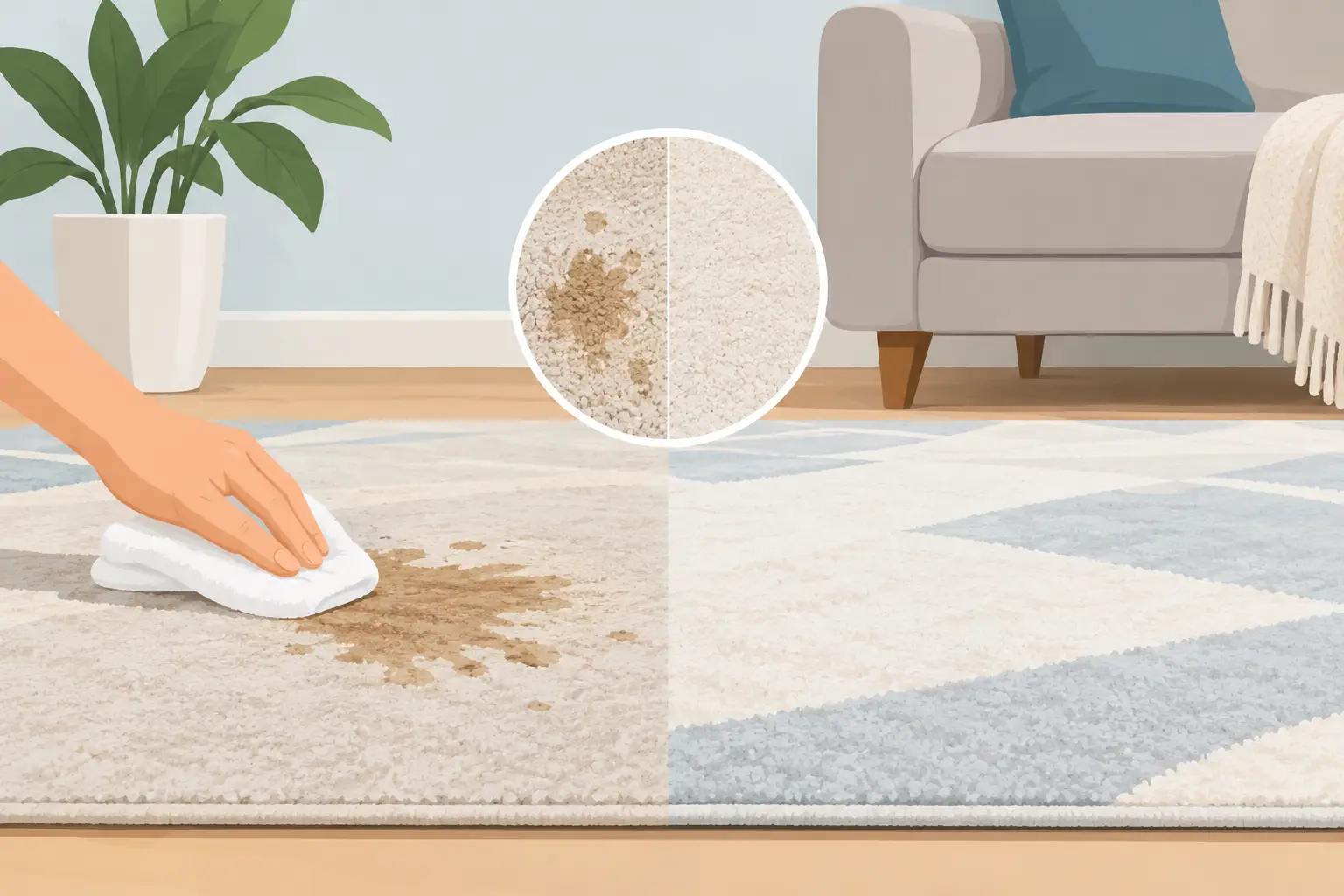
A glass of red wine tips onto a handwoven wool rug. A pet has an accident near the fringe. Coffee settles into a pale silk field before anyone sees it. In those first moments, homeowners often ask, are rug stains permanent? The reassuring answer is usually no – but the right outcome depends on the stain, the rug’s fibers and dyes, what has already been tried, and how long the spill has had to settle.
A fine rug is not simply a floor covering. It may be a living piece of history, a handmade work of art, or a family piece with irreplaceable sentimental value. Treating a stain quickly and carefully can make a meaningful difference. Treating it with the wrong household product can turn a manageable spot into a lasting color change or damaged area.
Are Rug Stains Permanent? It Depends on the Fibers and the Spill
Many stains can be substantially reduced or fully removed through professional washing and targeted treatment. Others may leave a faint shadow, alter the dye, or create damage that requires restoration rather than cleaning alone. A stain becomes more difficult when it chemically bonds with a fiber, dries deeply into the foundation, oxidizes over time, or reacts with an unsuitable cleaner.
Natural fibers each respond differently. Wool has a protective outer layer and can release many water-based spills when treated correctly, but it can also felt, bleed, or discolor if exposed to harsh chemistry or excessive agitation. Silk is exceptionally beautiful and far more sensitive. Its fine fibers and luminous dyes require controlled handling, especially with acidic foods, beverages, or pet accidents. Cotton foundations can hold moisture and soil beneath the pile, while viscose and other art-silk materials may brown, stiffen, or lose texture after improper spot cleaning.
The source of the stain matters just as much. Fresh tea, coffee, wine, juice, grease, ink, makeup, urine, mud, and food all require different methods. Red wine may respond well if treated promptly, while old urine can leave both visible discoloration and lingering odor within the fibers and foundation. Grease attracts more soil over time. Ink can travel through the pile when rubbed. Bleach, chlorine, and some acne or peroxide products are not technically stains at all – they may remove color from the rug, creating dye loss that must be carefully restored.
Why Old Rug Stains Can Seem to Return
A spot that appears gone after an in-home cleaning can reappear days later. This is often called wicking. Moisture moves remaining soil, detergent residue, or stain particles upward from deep in the rug as it dries, leaving a ring or shadow on the surface.
This is one reason area rugs deserve a different approach from wall-to-wall carpet. A quality rug can hold soil in the pile, the foundation, and sometimes the backing. Surface extraction may improve its appearance without reaching the material trapped below. For handmade, Oriental, Persian, antique, and delicate rugs, a controlled off-site washing process allows specialists to inspect the entire rug, treat the stain safely, rinse away residues, and dry it properly.
Age also changes a stain. Sugar-based spills can oxidize and turn yellow or brown. Pet accidents can become more alkaline as they dry, affecting dyes and fibers. A prior cleaner may leave soap behind, which attracts new dirt and makes an old spot look worse. What looks like a permanent stain may actually be an untreated residue problem, but it needs careful diagnosis before any cleaning begins.
What to Do Right After a Spill
The first goal is simple: keep the spill from spreading or settling deeper. Avoid panic scrubbing. Friction can distort wool pile, break delicate fibers, spread pigment, and push liquid into the rug’s foundation.
For most fresh liquid spills, blot gently with clean white towels or plain white paper towels. Work from the outer edge toward the center, replacing the towel as it absorbs moisture. Use light pressure rather than rubbing. If you use water at all, use only a small amount of cool water on a clean cloth, then blot again to avoid overwetting the rug.
Avoid these common reactions until the rug has been assessed:
- Do not use bleach, ammonia, dish soap, laundry detergent, or powdered cleaners.
- Do not scrub with a brush or use a steam cleaner on a handmade or delicate rug.
- Do not apply salt, baking soda, vinegar, or club soda indiscriminately, particularly to silk or unstable dyes.
- Do not place the rug in direct sun or use intense heat to force it dry.
These home remedies can occasionally appear to help on a durable synthetic rug, but they are a real risk on wool, silk, antique, and hand-knotted pieces. Vinegar and other acids can affect dyes. Detergents can leave sticky residue. Heat can set certain stains, shrink fibers, or cause color movement. When a rug has fringe, exposed foundation threads, or visible dye variation, the stakes are higher.
When a Stain Is Actually Color Loss
A pale patch after cleaning is not always leftover soil. Sometimes it is color loss caused by bleach, a strong spot remover, pet urine, sunlight, or wear. Unlike a removable stain, missing dye cannot simply be washed out. It may require color correction, re-dyeing, or skilled restoration to blend the damaged area with the surrounding pattern.
This distinction is why inspection matters. A rug specialist looks at the direction of the pile, the construction, the type of fiber, the dye stability, and whether the issue sits on the surface or reaches the foundation. The goal is not to use the strongest possible chemical. It is to choose the gentlest effective method that preserves the rug’s structure, color, and character.
There are trade-offs. An aggressive treatment may offer a chance of lifting a stubborn stain, but it can also increase the risk of dye bleed or fiber damage. On a valuable antique rug, preserving the original materials may matter more than eliminating every trace of an old mark. On a contemporary family-room rug, the owner may prefer a more assertive stain-removal approach. A thoughtful professional will explain those choices before proceeding.
Professional Washing Gives Deep Stains a Better Chance
When a spill has penetrated beyond the surface, professional rug washing can provide the most complete opportunity for improvement. The process begins with identifying fibers, construction, dyes, existing wear, and prior cleaning residue. Dry soil is removed before washing so it does not turn into mud within the pile. Stains receive targeted treatment, followed by a fiber-appropriate wash, thorough rinsing, controlled drying, and final grooming.
For rugs affected by pet accidents, this deeper treatment is especially valuable. Odor can remain in the foundation even when the surface looks clean. Proper washing addresses contamination below the visible pile rather than masking it with fragrance. For food, drink, and grease stains, a full wash can also remove the surrounding soil that makes a treated spot stand out.
At Persian Rug Spa, each rug is handled as an individual textile, not run through a generic carpet-cleaning routine. That may mean specialized spot work, color-safe washing, fringe care, or repairs to binding and edges if the stain incident also revealed existing wear. Free pickup and delivery make it easier to protect a treasured rug without dragging it to a storefront or attempting a risky DIY fix.
How to Protect a Rug After the Stain Is Gone
Once a stain has been removed or improved, routine care helps keep the area from becoming visible again. Vacuum regularly with the beater bar raised or turned off when appropriate, especially near fringe. Rotate the rug periodically so traffic and sunlight do not fade one side faster than the other. Use a quality pad to reduce friction, improve support, and help prevent slipping.
Prompt attention remains the best protection. A fresh spill is generally easier to remove than one that has been repeatedly walked on, dried, and treated with several products. If you are unsure what caused the mark or what fiber you have, take the conservative route: blot, keep the area dry, and arrange for expert evaluation.
A stain does not have to define the future of a beautiful rug. With patient handling and the right level of care, even a rug marked by a busy home can continue to bring warmth, artistry, and tradition to the room for many years.
