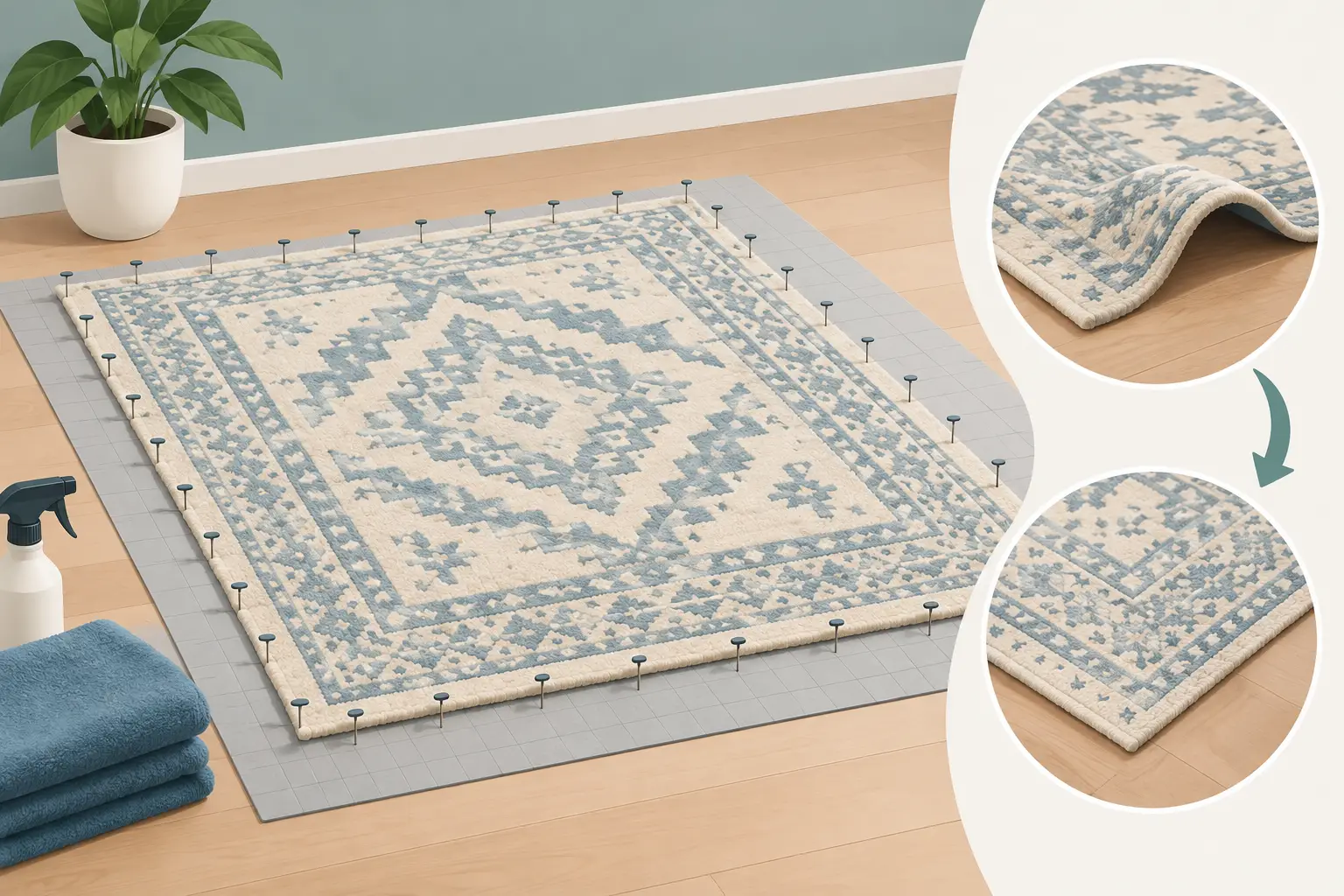
A handwoven rug can be clean, beautifully repaired, and still not look right if it dries out of shape. Corners may curl upward, borders may wave, or a once-rectangular rug may appear slightly crooked across the floor. Rug blocking is the precise finishing process that corrects these issues, helping a rug lie flat, hold its intended shape, and present its pattern as its maker intended.
For Persian, Oriental, wool, silk, antique, and other handmade rugs, this is not merely a cosmetic detail. Proper reshaping protects the rug’s structure and honors it as a living piece of history. When blocking is handled with care, it can make the difference between a rug that looks unfinished and one that once again feels at home in a carefully designed room.
What Is Rug Blocking?
Rug blocking is the controlled process of gently stretching and securing a rug to return it to proper dimensions after washing, restoration, or structural repair. A trained rug specialist assesses the rug’s weave, fibers, condition, and original shape before carefully positioning it on a flat blocking surface. The rug is then adjusted while damp, not soaked, and held in place as it dries.
The goal is not to force a rug into a shape it never had. It is to correct distortion caused by moisture, wear, improper storage, previous cleaning, pet damage, or repairs. The process helps straighten edges, square corners, smooth ripples, and realign borders and motifs that have shifted over time.
Handmade rugs are particularly likely to benefit because they are not manufactured with the uniform, machine-set construction of many modern rugs. Slight variations are part of their character. Still, a noticeable bulge, bowing edge, or skewed border may signal that the rug needs professional attention.
Why Rugs Lose Their Shape
Rugs can become distorted for several reasons, and the cause matters when deciding on the proper treatment. Water is one common factor. Natural fibers such as wool and cotton can expand, relax, and contract during washing or when exposed to a spill. If the rug is dried unevenly or placed back into service before it has fully stabilized, it may no longer lie flat.
Structural wear also plays a role. Years of foot traffic can pull at foundation threads, weaken side bindings, and loosen fringe. A rug that is frequently dragged beneath furniture, folded for storage, or placed over thick carpet padding may develop waves or curled corners. Sun exposure, humidity, and previous repairs can also affect how evenly a rug holds tension.
Sometimes the problem begins with a generic cleaning method. In-home carpet cleaning equipment is not designed around the construction of a hand-knotted rug. Excess moisture, rushed drying, and aggressive handling can leave a valuable rug shrunken, wavy, or misaligned. A rug deserves a fiber-aware process, especially when it carries sentimental, cultural, or investment value.
When Blocking Is Needed After Washing or Repair
Blocking is often part of the final stage of professional rug washing. During a thorough wash, embedded soil and residues are removed from deep within the pile. As the rug becomes wet, the fibers and foundation may relax. Careful blocking during drying helps the cleaned rug settle back into a balanced, flat shape.
It may also be needed after restoration work. Repaired holes, rebuilt sections, fringe restoration, binding, edging, stitch locking, and backing work can all require the rug to be stabilized afterward. The repair itself may be beautifully done, but the surrounding area needs to blend naturally with the rest of the rug. Proper blocking helps the repaired section sit evenly rather than pulling or puckering.
Not every rug requires blocking after every service. A stable, machine-made rug with no distortion may simply need appropriate drying. But when an heirloom rug has wavy sides, uneven corners, or a border that no longer runs straight, skipping this step can leave the job incomplete.
Signs Your Rug May Need Reshaping
Look at the rug from a short distance rather than only while standing over it. If the pattern appears tilted, the edges look scalloped, or one end seems wider than the other, the issue may be structural rather than decorative. Corners that will not stay down after being flattened by hand are another common sign.
You may also notice that furniture no longer sits evenly on the rug, or that the rug develops buckles after being placed on a smooth floor. These conditions create more than a visual concern. Raised areas can become trip hazards, collect dirt unevenly, and place additional stress on weakened fibers.
Why Professional Rug Blocking Is Safer
The idea of stretching a rug at home may sound simple, but it carries real risk. Pulling too hard can break foundation threads, distort hand-knotted rows, damage fringe, or create permanent stress along the borders. Pins, tacks, adhesives, and heavy objects can leave marks or cause further tears when used without an understanding of the rug’s construction.
Professional blocking begins with inspection. A specialist determines whether the rug is wool, silk, cotton, synthetic, or a blend, then considers the type of weave, dye stability, age, and existing repairs. An antique rug with brittle cotton foundation threads requires a very different approach than a newer, dense wool area rug.
Moisture control is equally important. A rug should be adjusted only under conditions that allow the fibers to respond safely. Too much water can contribute to dye migration, mildew, or foundation damage. Too little moisture may make the rug resistant to adjustment and encourage unnecessary pulling. Controlled drying preserves the gains made during cleaning and repair.
At Persian Rug Spa, blocking is approached as part of a complete care plan rather than an isolated quick fix. The objective is to preserve the rug’s beauty, pattern, and structure while addressing the condition in front of us. That may include washing, edge repair, fringe work, or restoration before the final shaping process begins.
What Happens During the Blocking Process
The exact method varies by rug, but the work follows a careful sequence. First, the rug is measured and examined to understand where distortion has occurred. Its borders, corners, pile direction, fringe, and foundation are reviewed so the rug can be returned as closely as possible to its intended proportions.
Next, the rug is placed on an appropriate flat surface and gently positioned. The specialist works gradually, correcting waves or unevenness without overstretching the textile. The edges and corners are secured with methods suited to the rug and its condition, allowing the shape to hold while it dries under monitored conditions.
Once dry, the rug is released and inspected again. The final check matters because a rug can appear square while under tension yet reveal a concern after it has settled. The best result is a rug that lays flat naturally, with borders that look balanced and repairs that integrate gracefully into the overall design.
Care After Rug Blocking
Once a rug has been professionally reshaped, a few practical habits can help it stay that way. Use a rug pad that supports the rug without creating excessive pressure or trapping moisture. Rotate the rug periodically in high-traffic areas so foot traffic and sunlight affect it more evenly.
Avoid folding a rug tightly for long-term storage. If it must be stored, roll it with the pile facing inward and keep it in a dry, climate-controlled place. After a spill, blot promptly rather than saturating the area, and avoid using household spot treatments that can leave residues or alter dyes.
If a rug develops a new ripple after a leak, flood, or deep cleaning attempt, do not wait for the problem to become permanent. Early attention often allows for a more conservative repair. A skilled evaluation can determine whether the rug needs washing, localized restoration, blocking, or a combination of services.
A rug that lies flat and looks balanced brings quiet order to a room, but the deeper value is in what that finish protects. Careful reshaping gives the fibers, borders, and handwoven design the support they need to continue serving your home with beauty for years to come.
