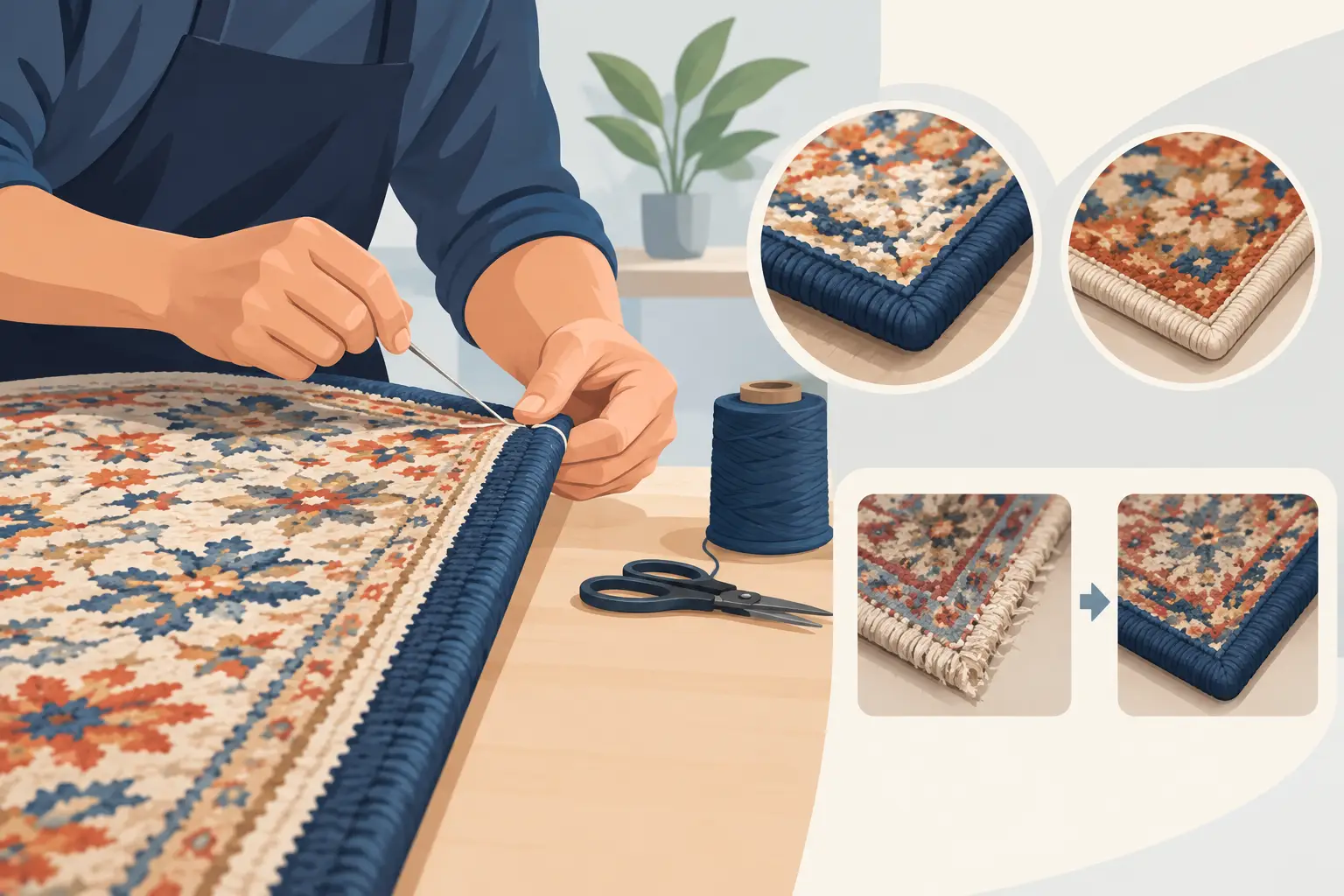
A loose edge can change quickly. What begins as a few lifted threads at the corner of a favorite area rug can become a widening gap, a curling border, or a section of pile that starts to pull away from the foundation. Professional rug binding and edging repair addresses this early structural damage before it affects the beauty, safety, and long-term value of the rug.
For a machine-made rug, a worn binding may be a straightforward functional repair. For a Persian, Oriental, antique, silk, or handwoven wool rug, the edge is part of its construction and character. It deserves a careful assessment, compatible materials, and handwork that respects the rug’s original design.
Why Rug Edges Need Attention Sooner Than You Think
The perimeter of a rug handles a surprising amount of stress. Vacuum wheels, furniture legs, foot traffic, pets, and routine movement across hard flooring can wear down the outer rows long before the center of the rug looks tired. If a rug catches under a door, slides across tile, or has a corner repeatedly turned up, the damage can accelerate.
Binding and edging do more than create a finished appearance. They hold the rug’s woven structure together. On many handmade rugs, the side cords or selvages protect the warps that form the rug’s foundation. Once those threads are exposed or broken, adjacent rows can loosen. The result is often more costly than an edge repair because the work may expand into reweaving, securing pile, or rebuilding part of the foundation.
There is also a household safety concern. A rolled or detached edge is easy to catch with a shoe, slipper, walker, or vacuum. Repairing it promptly helps the rug lie flatter and more securely in the room.
What Rug Binding and Edging Repair Can Correct
Not every edge problem looks the same, and the right repair depends on how the rug was made. A careful rug specialist begins by identifying the fibers, construction, dye stability, backing condition, and source of the damage. That inspection matters because a repair that works on a synthetic area rug may be unsuitable for a hand-knotted wool piece.
Fraying, unraveling, and loose side cords
Fraying commonly appears along the long sides of a rug, where the woven edge has thinned or the protective side cord has come loose. On handmade rugs, a specialist may hand-stitch and secure the side finish using materials that complement the rug’s original structure. The goal is not merely to cover the damage. It is to stabilize the edge so the foundation does not continue to open.
On contemporary rugs, serging or new binding may be appropriate. Serging wraps thread over the edge for a neat, durable finish, while binding applies a sewn fabric or tape border. Each has a place, but the finish should suit the rug’s thickness, use, and style.
Corners that curl, split, or wear thin
Corners absorb concentrated pressure and are often the first place homeowners see trouble. They may curl because the edge has stretched, split because the backing is failing, or wear thin from repeated foot traffic. In some cases, stitch locking can secure a small area before it spreads. In others, the corner needs reinforcement or a more extensive edge reconstruction.
A repair should allow the rug to rest flat without creating a stiff, bulky patch. That is especially important on rugs placed in hallways, entryways, and dining spaces, where a raised repair can catch on feet or furniture.
Detached binding on machine-made area rugs
Factory binding can separate when adhesives age, backing breaks down, or the rug is exposed to repeated moisture. Reattaching a loose strip without addressing the weakened backing may offer only a short-lived improvement. A professional can determine whether the rug is a good candidate for rebinding, backing repair, or a different solution based on its overall condition and intended use.
This is one of those situations where repair value depends on the rug. A quality wool rug, a sentimental piece, or a rug that fits a room perfectly can be well worth preserving. For a heavily deteriorated low-cost rug, replacement may be the more sensible choice. Honest guidance should account for both craftsmanship and practical value.
The Difference Between a Cosmetic Fix and a Lasting Repair
A quick glue application or a strip of tape may make an edge look better for a short time, but it can create larger problems. Adhesives can harden fibers, leave residue, discolor textiles, and make future restoration more difficult. They also do little to reinforce a weakened handwoven foundation.
Lasting rug binding and edging repair is built around stabilization. The repairer secures vulnerable threads, matches the method to the construction, and uses appropriate stitching tension so the border does not pucker or pull. On a valuable handmade rug, the work may include restoring side cords by hand, rebuilding small sections of the edge, and securing the adjacent pile so the pattern remains intact.
Color matters, too. A border thread that is too bright, too heavy, or poorly matched can distract from an otherwise beautiful rug. When the rug carries a family history, distinctive regional weaving style, or investment value, thoughtful material selection is part of preserving its identity.
When Cleaning Should Come Before Edge Repair
A rug covered in embedded soil may hide the extent of edge damage. Dirt works its way into fibers like fine sandpaper, weakening yarns and making repairs harder to evaluate. For that reason, a professional inspection may recommend washing the rug before restoration, particularly after pet accidents, flooding, smoke exposure, or years of accumulated dust.
A proper off-site wash also gives the repair specialist a clearer view of faded areas, weakened foundation threads, and old repairs. Once the rug is clean and fully dried, binding, fringe, and edge work can be completed with greater precision. The sequence depends on the rug’s condition. A loose edge that could unravel during handling may need to be secured first.
For delicate natural fibers and color-sensitive dyes, this work should not be treated like standard in-home carpet cleaning. Rugs require fiber-aware washing, controlled drying, and hands-on inspection at every stage.
Signs It Is Time to Schedule an Inspection
Homeowners often wait until an edge is visibly coming apart. It is wiser to arrange an inspection when you notice early changes, especially on a handmade or inherited rug. Watch for these signs:
- Threads extending from the side or corner of the rug
- A border that looks thinner, uneven, or separated from the body
- Corners that curl upward or fold under
- Exposed white or light-colored foundation threads
- Fringe loss accompanied by loosening at the ends
- A rug that no longer lies flat after being moved or vacuumed
Fringe and binding are different parts of a rug, but damage in one area can affect the other. Fringe is often an extension of the rug’s warp threads, not a decorative add-on. If the fringe is pulling away at the base, it may signal structural wear that calls for more than trimming.
How to Protect Repaired Edges at Home
After repair, simple habits can help the work last. Use a quality rug pad to reduce shifting and cushion the rug from hard flooring. Rotate rugs periodically so traffic is not concentrated in the same areas. When vacuuming, avoid aggressive beater bars along the edges and never pull a vacuum directly across loose fringe.
If furniture rests partly on the rug, check that legs are not pressing repeatedly into a fragile corner. Pets that scratch, chew, or dig at a particular spot can undo repairs quickly, so addressing that behavior is part of protecting the rug. For spills, blot gently rather than rubbing, and avoid household spot products until you know they are safe for the fiber and dyes.
Can a damaged rug edge be repaired without changing its look?
Often, yes. The degree of visual change depends on the rug’s construction and how much material has been lost. A skilled repair aims to make the edge secure and harmonious with the rug, rather than making it look artificially new. On antique rugs, preserving an authentic, age-appropriate appearance may be preferable to an overly uniform finish.
Is it worth repairing the edge of a handmade rug?
In many cases, absolutely. Early repair can prevent damage from reaching the foundation or pattern field, where restoration becomes more involved. The best answer comes from an in-person assessment of the rug’s age, craftsmanship, condition, and personal or market value.
At Persian Rug Spa, each rug is handled as a living piece of history as well as a part of your home. Professional pickup and delivery make it easier to address worn edges before a small concern becomes a major restoration project.
A rug does not need to be perfect to be worth preserving. Giving a weakened edge timely, skilled attention protects the craftsmanship beneath your feet and allows the piece to keep serving your home with beauty and meaning.
