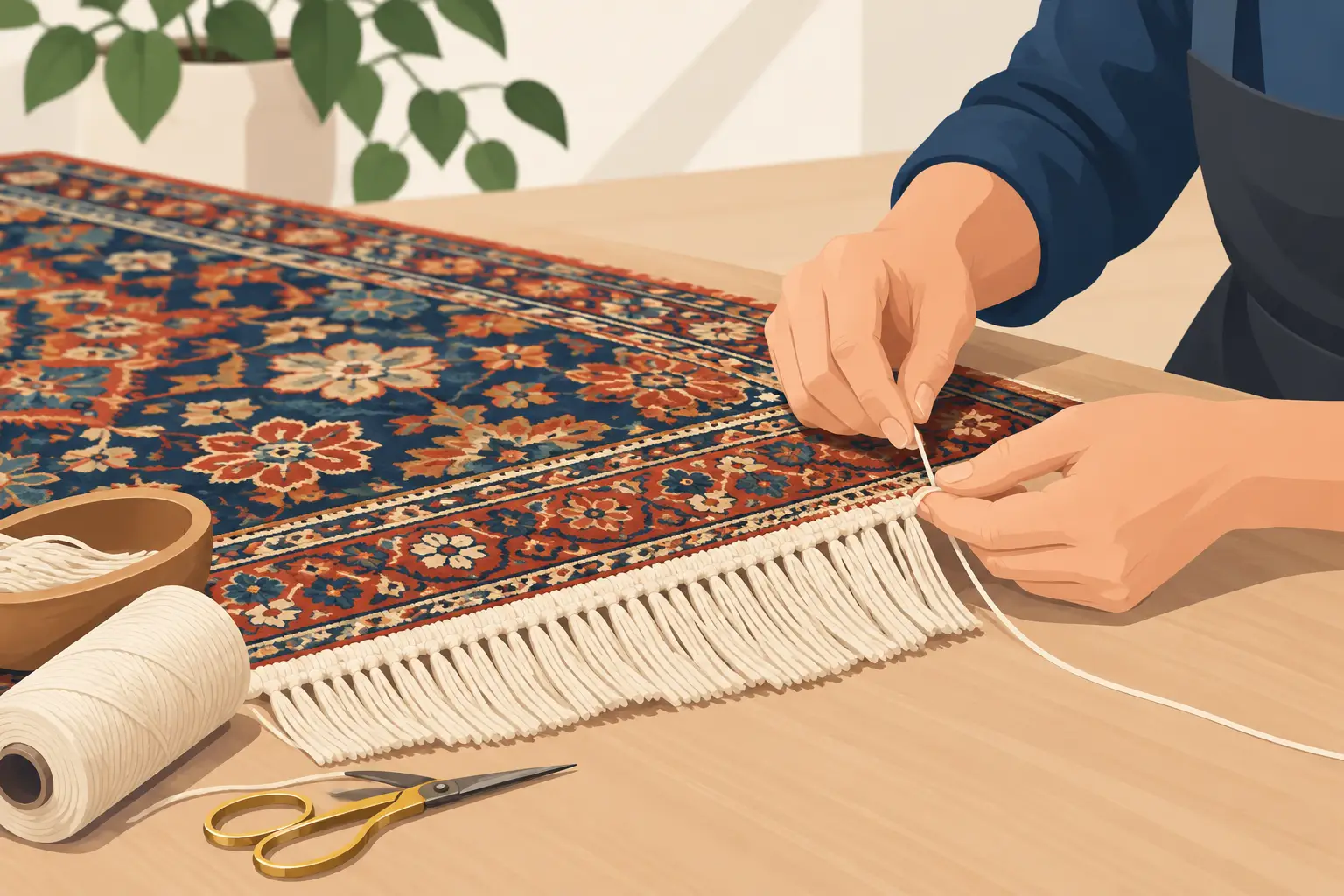
A few loose fringe strands may look like a cosmetic concern, but on many handmade rugs they signal something more serious. A professional rug fringe repair service addresses the vulnerable foundation at the ends of a rug before wear moves into the pattern itself. For a Persian, Oriental, Turkish, Indian, or family heirloom rug, this careful work can mean the difference between a contained repair and permanent structural loss.
Fringe has a way of collecting the evidence of daily life: foot traffic, vacuum snags, pet chewing, furniture movement, and the gradual pull of years. Treating it as an afterthought can put a valuable living piece of history at risk. The right repair begins with identifying how the rug was made, what fibers it contains, and how far the damage has traveled beneath the visible edge.
Why Rug Fringe Is More Than Decoration
On a hand-knotted rug, fringe is usually the exposed end of the warp threads that hold the entire weave together. It is not simply trim that can be cut off and replaced without consequence. As those warp ends unravel, the knots at the end of the rug can loosen. Once the pile begins to release, a formerly small fringe issue may become a much more involved restoration.
That said, not every rug has structural fringe. Many machine-made area rugs use sewn-on fringe for appearance only. The repair approach is different, which is why an inspection matters. An experienced specialist can determine whether the fringe is part of the rug’s foundation, an added finish, or a previous repair that needs correction.
For handmade wool and silk rugs, preserving the original weave whenever possible is the priority. A proper repair should stabilize the rug, respect its design, and avoid creating a stiff, bulky, or mismatched edge that distracts from its beauty.
When to Schedule a Rug Fringe Repair Service
Fringe damage rarely improves on its own. It is wise to arrange a professional evaluation when you notice thinning, missing sections, knots coming undone, or a fringe line that is noticeably shorter on one side. Exposed warp threads, loose pile at either end, and a wavy or curling rug edge also deserve prompt attention.
Some damage is less obvious. If a rug shifts easily underfoot, catches in a vacuum, or has strands that pull free each time it is moved, the foundation may already be under stress. Pet damage can be especially deceptive because chewing often affects a concentrated area while weakening nearby fibers as well.
A repair does not always need to wait until a rug is in poor condition. Homeowners often choose fringe work during professional washing, when embedded dust and residues can be removed and the rug can be examined clean, flat, and fiber by fiber. This gives the technician a clearer view of color, construction, old repairs, and hidden deterioration.
What Professional Fringe Repair Involves
A quality fringe repair is tailored to the rug rather than selected from a one-size-fits-all menu. The process starts with a close inspection of the weave, materials, dye stability, age, and extent of loss. A fine antique silk rug calls for a different touch than a durable wool hallway runner, and a hand-knotted tribal piece may require a different finishing technique than a formal Persian rug.
Stabilizing the foundation first
When the end of a handmade rug has begun to unravel, the first task is to secure the remaining structure. This may involve stitch locking, re-knotting loose areas, or creating a protective finish at the rug’s end. The goal is not merely to make the fringe look tidy. It is to stop further loss of pile and preserve the tension of the weave.
If the original fringe is too worn to save, a specialist may recommend replacing or rebuilding it with compatible materials. The new work should be proportionate to the rug, securely integrated, and finished in a way that complements the original craftsmanship.
Matching the repair to the rug
Natural fibers behave differently from synthetic ones, and handwoven textiles often have slight variations that are part of their character. Fiber-aware repair considers the rug’s wool, cotton, silk, or blended foundation, as well as its age and intended use.
Color matching matters too. A repair should not introduce an overly bright white fringe to a softly aged ivory rug, nor should it use a material that looks artificial beside handspun wool. In some cases, preserving an aged appearance is more appropriate than making the edge look newly manufactured. The best result is secure, balanced, and respectful of the rug as a whole.
Repairing related edge damage
Fringe wear often occurs alongside weakened side bindings, worn serging, or frayed corners. Addressing these areas together can prevent the rug from continuing to unravel from more than one direction. It may also be the right time to consider backing, leathering, blocking, or a rug pad, depending on the construction and how the rug is used in the home.
The Right Repair Depends on the Damage
There is no honest single price or universal method for fringe work because the scope can vary widely. A short section of loose fringe on a machine-made rug may need a straightforward cosmetic correction. A long edge of missing fringe on a fine hand-knotted rug may require extensive foundation repair and careful re-fringing.
Age is another factor. Antique rugs often have fragile fibers, prior alterations, or areas that have worn unevenly over generations. A visible repair may be preferable to an aggressive attempt at making an old rug look factory-new. For many heirloom owners, retaining authenticity and preventing future damage is more valuable than erasing every sign of age.
Use also matters. A rug displayed in a low-traffic room may need a delicate conservation-minded approach. A family room rug needs a repair that can withstand regular activity without compromising its appearance. A knowledgeable rug professional will explain these trade-offs clearly before work begins.
Why DIY Fringe Fixes Can Create Bigger Problems
It is tempting to trim uneven fringe, apply glue, or tie loose threads into quick knots. Unfortunately, these shortcuts can make later restoration harder. Cutting structural fringe too close to the weave may remove the threads needed to secure the rug. Household glue can stiffen natural fibers, discolor with age, and trap dirt along the edge.
Vacuuming is another common source of accidental damage. Avoid using a beater bar or power head directly over fringe. Instead, vacuum the body of the rug with controlled passes and use gentle suction near the ends. If strands are already loose, do not pull them. Keep the rug away from robotic vacuums, which can repeatedly tug fringe before anyone notices.
A rug should also be lifted rather than dragged when moving furniture or repositioning it. Small habits protect the ends from unnecessary stress between professional care.
Preserving Fringe After Repair
Once fringe has been repaired, regular professional washing helps keep the foundation free from the gritty soil that wears fibers from within. Surface vacuuming cannot remove all of the fine sand, dust, and allergens that settle into a rug’s base over time. For handmade rugs, controlled off-site washing and careful drying are safer choices than treating them like wall-to-wall carpet.
At home, rotate the rug periodically to distribute traffic, use a suitable rug pad to reduce slipping and abrasion, and check the fringe every few months. Catching a few loose strands early is far simpler than restoring a full row of lost knots.
For homeowners in Camarillo, Ventura County, and surrounding Southern California communities, Persian Rug Spa provides hands-on inspection, specialized washing, and detailed fringe and edge repairs with free pickup and delivery. Each rug is handled as an individual work of art, with eco-conscious care and a 100% satisfaction-or-no-payment commitment.
A repaired fringe does more than restore a finished look. It protects the quiet craftsmanship at the foundation of a rug, so the color, pattern, and memories woven into it can remain part of your home for years to come.
