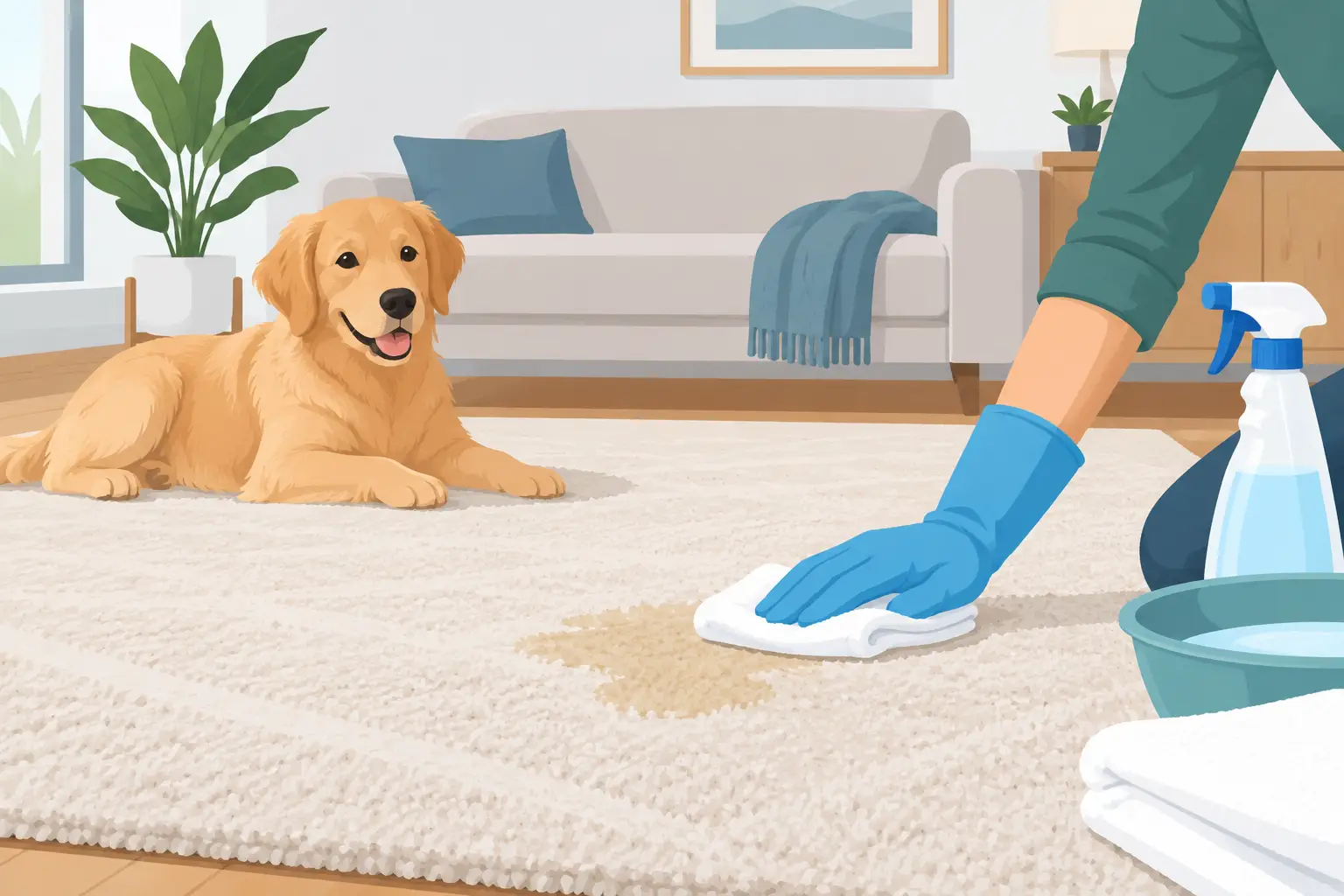
A pet accident can feel especially alarming when it lands on a treasured area rug. The goal is not simply to remove pet urine from rug fibers where you can see it. Urine can travel through the pile, foundation, backing, and even into the rug pad or floor beneath. On a handmade wool, silk, Persian, or Oriental rug, the wrong cleaning method can turn one small accident into color loss, browning, odor, or fiber damage.
A quick, gentle response gives your rug the best chance of recovery. But speed should never mean scrubbing hard, soaking the rug, or reaching for a harsh household cleaner. Fine rugs are living pieces of history, often made with natural fibers and dyes that need a more thoughtful approach.
Why Pet Urine Is Harder on Rugs Than It Looks
Fresh urine contains moisture, salts, proteins, and compounds that can leave behind an odor even after the surface looks clean. As it dries, those residues may crystallize in the fibers. Humidity can reactivate them later, which is why a rug may smell clean for weeks and then suddenly develop an odor again.
The construction of the rug matters just as much as the stain itself. Machine-made synthetic rugs may tolerate more conventional spot treatment than a hand-knotted wool rug. Silk rugs, antique pieces, and rugs with unstable or vegetable-dyed colors need even more caution. Excess water may cause dyes to bleed, while alkaline cleaners can weaken wool and alter its natural texture.
Urine also does not always stay in one place. A visible spot may be small, yet moisture can spread along the foundation yarns and settle beneath the rug. Surface cleaning alone may improve the appearance without fully addressing the source of the odor.
What to Do Immediately After an Accident
The first priority is to remove as much moisture as possible without spreading the stain. Place clean, white absorbent towels over the area and press firmly. Stand on the towels if needed, but do not rub. Replace them with dry towels and repeat until they are no longer picking up much moisture.
If the accident is fresh and on a sturdy, colorfast synthetic rug, lightly blotting with cool water after the initial absorption may help dilute what remains. Use very little water, then blot again thoroughly. Avoid hot water, which can set proteins and make odor removal more difficult.
Move the rug away from its pad if you can do so safely. Check the pad and the floor underneath. If either is damp, blot those surfaces as well. Leaving moisture underneath a rug can invite mildew, create lingering odor, and affect wood or other flooring materials.
Do not use a hair dryer on high heat, a steam cleaner, or direct sunlight to rush the drying process. Heat can set the stain, distort fibers, or cause uneven fading. Air circulation is safer. A fan in the room can help the area dry without exposing the rug to excessive heat.
How to Remove Pet Urine From Rug Fibers at Home
Home treatment is best reserved for a small, fresh accident on a rug you know is colorfast and not particularly delicate. Before applying any product, test it on an inconspicuous area using a white cloth. If color transfers to the cloth, stop immediately.
Use an enzyme cleaner with care
A pet-specific enzyme cleaner can be useful because it is designed to break down odor-causing residues rather than simply cover them. However, not every enzyme product is suitable for wool, silk, natural dyes, or antique rugs. Read the label carefully. If it does not clearly indicate that it is safe for your rug’s fiber type, do not use it.
Apply only a modest amount to a white cloth rather than pouring solution directly onto the rug. Dab the affected pile gently, working from the outer edge toward the center. Allow the product to work according to its directions, then blot away moisture with clean towels.
The trade-off is simple: an enzyme treatment can help a minor accident, but enough liquid to reach a deep urine deposit can also saturate a handmade rug’s foundation. If the urine has penetrated through the rug, spot treatment may not be enough.
Skip common household shortcuts
Vinegar, baking soda, ammonia, hydrogen peroxide, dish soap, and heavily fragranced deodorizers are often suggested as quick fixes. They can be risky on valuable rugs. Vinegar and other acidic products may affect dyes or leave the fiber feeling harsh. Baking soda can become trapped deep in the pile and create a gritty residue. Hydrogen peroxide may lighten colors, while ammonia can intensify the smell for pets and encourage repeat marking.
Scrubbing is another common mistake. It roughens wool fibers, spreads the contamination, and can distort the surface of a hand-knotted rug. Blotting is slower, but it is far safer.
When a Rug Needs Professional Urine Removal
Professional washing is the wiser choice when the urine spot is old, the odor returns after drying, the accident reached the back of the rug, or the rug is made from wool, silk, or natural fibers. It is also the right decision for heirloom, antique, hand-knotted, or deeply sentimental pieces.
A specialized rug cleaner can inspect the fiber type, dyes, construction, and condition before selecting a treatment. Proper off-site washing allows the rug to be treated through its full depth, not only on the surface. That process may include controlled dust removal, targeted urine and odor treatment, careful hand washing, rinsing, moisture extraction, and climate-appropriate drying.
Not every urine stain can be made invisible, particularly if it has sat for a long time or changed the rug’s dyes. Honest rug care means recognizing that distinction. Even when a permanent color change cannot be completely reversed, professional cleaning can often remove contamination, reduce odor, and prevent further deterioration. In some cases, skilled color restoration or repair may also be appropriate after cleaning.
At Persian Rug Spa, each rug is evaluated as an individual textile rather than treated like wall-to-wall carpet. This is particularly important for Persian, Oriental, Turkish, Indian, wool, and silk rugs, where dye stability and handwoven structure deserve careful attention. Free pickup and delivery can also prevent a urine-affected rug from sitting damp in your home while you figure out the next step.
Protect the Rug Pad and the Area Beneath
A rug that smells clean on top may still have urine in the pad beneath it. Standard foam pads can absorb and hold moisture, creating a recurring odor problem even after the rug has been cleaned. If the pad is significantly wet or still smells after drying, replacement is often more effective than repeated deodorizing.
Hardwood deserves special attention. Urine that reaches the floor can affect finish, seep into seams, and leave discoloration. Blot promptly and inspect the area after the rug is removed. Do not replace the rug until both the rug and the floor are fully dry.
Reducing Repeat Accidents
Pets often return to a location where they can still detect odor, even when people cannot. Complete odor removal helps, but so does temporarily keeping the pet away from the rug while it dries and while behavior or health concerns are addressed.
If accidents are becoming frequent, consider the practical cause. A new pet, a change in routine, stress, litter box issues, or an underlying medical concern can all play a role. Using a washable protective layer in a pet’s favorite resting area may be sensible for everyday rugs, while valuable handmade rugs may be better placed in lower-risk rooms.
Regular professional washing is also preventive care for homes with pets. It removes embedded soil, dander, and residues before they settle deeply into the pile. A clean rug is easier to inspect, easier to maintain, and better prepared to retain its color and beauty over time.
Your rug does not have to be treated as disposable because of one accident. Respond gently, avoid over-wetting or harsh chemicals, and give fine fibers the specialized care they deserve. With the right attention, a cherished rug can remain part of your home’s story for many years to come.
