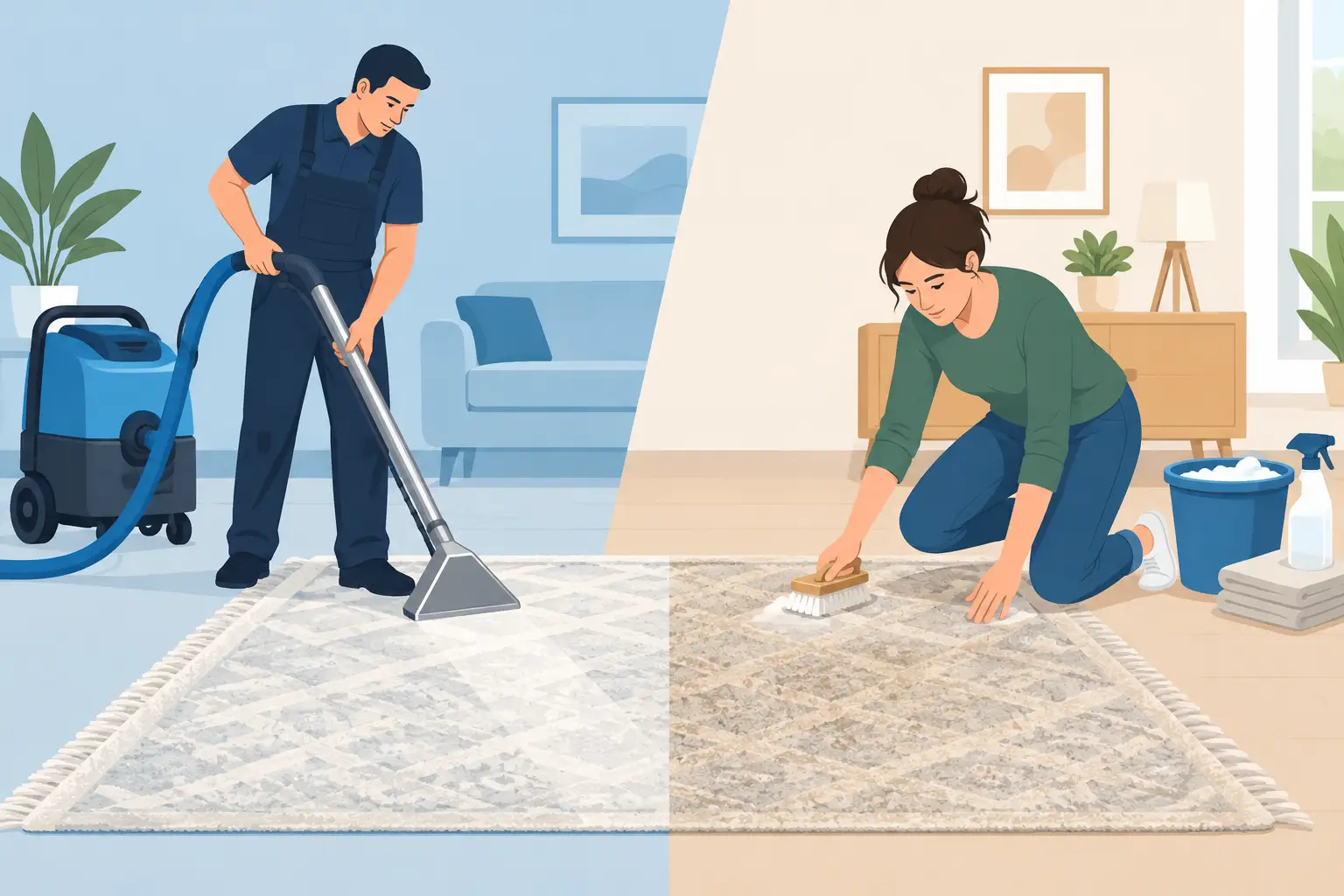
A rug can look clean from across the room while holding months of grit deep at its foundation. That is where the decision between professional versus DIY rug cleaning becomes more than a question of convenience. For a washable synthetic rug, a careful at-home refresh may be enough. For a hand-knotted Persian, a silk Oriental, or a treasured family piece, the wrong method can leave behind damage that no amount of cleaning can reverse.
A beautiful rug is not simply floor covering. It may be a living piece of history, a work of skilled craftsmanship, or an investment chosen to make a home feel complete. The safest cleaning choice starts with understanding what the rug is made of, how it was constructed, and what is truly hiding below the surface.
Professional Versus DIY Rug Cleaning: The Real Difference
DIY cleaning is usually surface-focused. Homeowners vacuum, blot spills, apply a store-bought spot remover, or rent a machine intended for wall-to-wall carpet. These steps can improve appearance when used appropriately, but they rarely remove embedded soil from the rug’s full depth. They also offer little room for error when fibers, dyes, fringe, and foundation threads react differently to moisture and cleaning agents.
Professional rug washing begins with inspection. A specialist identifies the fiber type, construction, dye stability, prior repairs, odor source, stain type, and areas of weakness before choosing a process. This matters because wool, silk, cotton, viscose, jute, and synthetic fibers do not respond the same way to water, agitation, heat, or detergent.
A quality off-site washing process can address both sides of the rug and the foundation beneath the pile. It may include controlled dusting, fiber-safe washing, targeted stain treatment, rinsing, grooming, and careful drying. If the rug has loose fringe, worn edges, curling corners, or weakened backing, those concerns can be evaluated before cleaning turns a small issue into a larger one.
When DIY Care Makes Sense
At-home care has a valuable place in responsible rug ownership. Regular vacuuming removes loose debris before it works its way down into the pile. Prompt blotting can prevent a fresh spill from setting. Rotating a rug occasionally can also help distribute foot traffic and sun exposure more evenly.
DIY care is generally most appropriate for routine maintenance on durable, low-value synthetic rugs with stable color and no structural concerns. Even then, restraint is wise. More water, more soap, and more scrubbing do not necessarily mean a cleaner rug.
For a fresh liquid spill, start by blotting with a clean white cloth. Work from the outside toward the center, use gentle pressure, and avoid rubbing the fibers. Rubbing can spread the stain, distort the pile, and force liquid deeper into the foundation. If the spill includes wine, pet urine, coffee, oil, or a colored food, avoid guessing with a chemical cleaner. The wrong product can set the stain or affect the dyes.
Vacuuming deserves a little care, too. Use appropriate suction and avoid repeatedly running a beater bar over delicate fringe or a low, handwoven pile. Fringe is an extension of the rug’s foundation, not decorative trim. When it unravels, the structure of the rug can begin to loosen with it.
The Risks Hidden in Rental Machines and Store-Bought Cleaners
Many carpet-cleaning machines are designed for installed synthetic carpet, not handcrafted rugs. They can introduce excessive moisture, leave detergent residue, pull at loose fibers, or fail to remove water from the foundation. A rug that feels mostly dry on top may still be damp underneath, where mildew odor, browning, dye migration, and fiber deterioration can begin.
The same concern applies to harsh spot treatments. Bleach-based products, high-alkaline detergents, and cleaners with strong oxidizers may lighten wool, weaken natural fibers, or create permanent color loss. Silk is especially vulnerable. Viscose, often sold as art silk or bamboo silk, can become stiff, brown, or distorted when treated with too much moisture or improper shampoo.
DIY deodorizing can cause trouble as well. Powders and baking soda may seem harmless, but fine particles can settle deep into the foundation and resist normal vacuuming. Fragrance products may mask an odor without addressing its source. Pet accidents, for example, often require treatment below the surface because urine can travel into the rug’s fibers and base.
Rugs That Deserve Professional Washing
Some rugs should be evaluated by a specialist before anyone attempts wet cleaning. This includes handmade Persian, Oriental, Turkish, Indian, tribal, antique, silk, and wool rugs, as well as rugs with unstable colors, delicate fringe, visible repairs, or sentimental value.
Professional care is also the better choice when a rug has a persistent odor, extensive pet contamination, food or beverage staining, water damage, mold concerns, heavy traffic soil, or residue from previous cleaning attempts. These are not always problems that can be solved by treating the visible spot. Dirt can act like sandpaper in a rug’s foundation, gradually wearing fibers down every time someone walks across it.
A specialist can also recognize when cleaning should be paired with repair. Hand stitching, binding, serging, edge repair, fringe restoration, blocking, and stitch locking can stabilize a rug and preserve its shape. Cleaning a weakened rug without addressing unraveling edges or damaged fringe may expose problems that were already present but hidden by soil.
What Expert Rug Care Protects
The value of professional cleaning is not limited to brighter color or a fresher scent. Proper washing removes the abrasive debris that shortens a rug’s life. It helps preserve the softness and resilience of wool, supports cleaner indoor air, and reveals the pattern and color that made the rug special in the first place.
For heirloom and investment-grade rugs, professional care also protects decision-making. A trained eye can distinguish normal variation from dye bleed, moth damage, dry rot, fading, or construction failure. That diagnosis helps a homeowner choose the right next step instead of spending money on a quick fix that places the rug at risk.
At Persian Rug Spa, each rug is treated as an individual piece, not as another item on a carpet-cleaning route. Careful washing, repair options, and free pickup and delivery make it easier for Southern California homeowners to give valuable rugs the specialized attention they require without turning the process into a household project.
Cost: A Short-Term Saving or Long-Term Protection?
DIY cleaning can cost less upfront, especially when the rug only needs light maintenance. Renting a machine or buying a cleaner may feel practical, and for the right rug, it can be. The trade-off is that the homeowner assumes the risk of choosing the wrong product, using too much moisture, or overlooking a condition that needs more than cleaning.
Professional washing has a higher initial cost because it involves inspection, skilled labor, specialized equipment, controlled drying, and careful handling. For a handmade or valuable rug, that expense is often better understood as preservation. Replacing faded dyes, repairing shrinkage, correcting browning, or restoring a damaged foundation can cost far more than preventive care.
The best comparison is not simply what a cleaning method costs today. It is what that method leaves behind in the fibers, foundation, and future lifespan of the rug.
A Simple Way to Choose
Ask three questions before cleaning: Is the rug handmade or made with delicate natural fibers? Is there a stain, odor, or moisture issue beyond ordinary dust? Would permanent color loss, shrinkage, or fringe damage be upsetting or expensive to repair?
If the answer to any of these is yes, professional evaluation is the safer path. If the rug is durable, synthetic, lightly soiled, and structurally sound, gentle DIY maintenance may be entirely reasonable. The goal is not to avoid home care. It is to match the level of care to the rug in front of you.
A well-loved rug should show the warmth of a home, not the wear of preventable damage. Treat routine upkeep gently, act quickly on spills, and give the rugs with history, craftsmanship, and meaning the patient hands they deserve.
