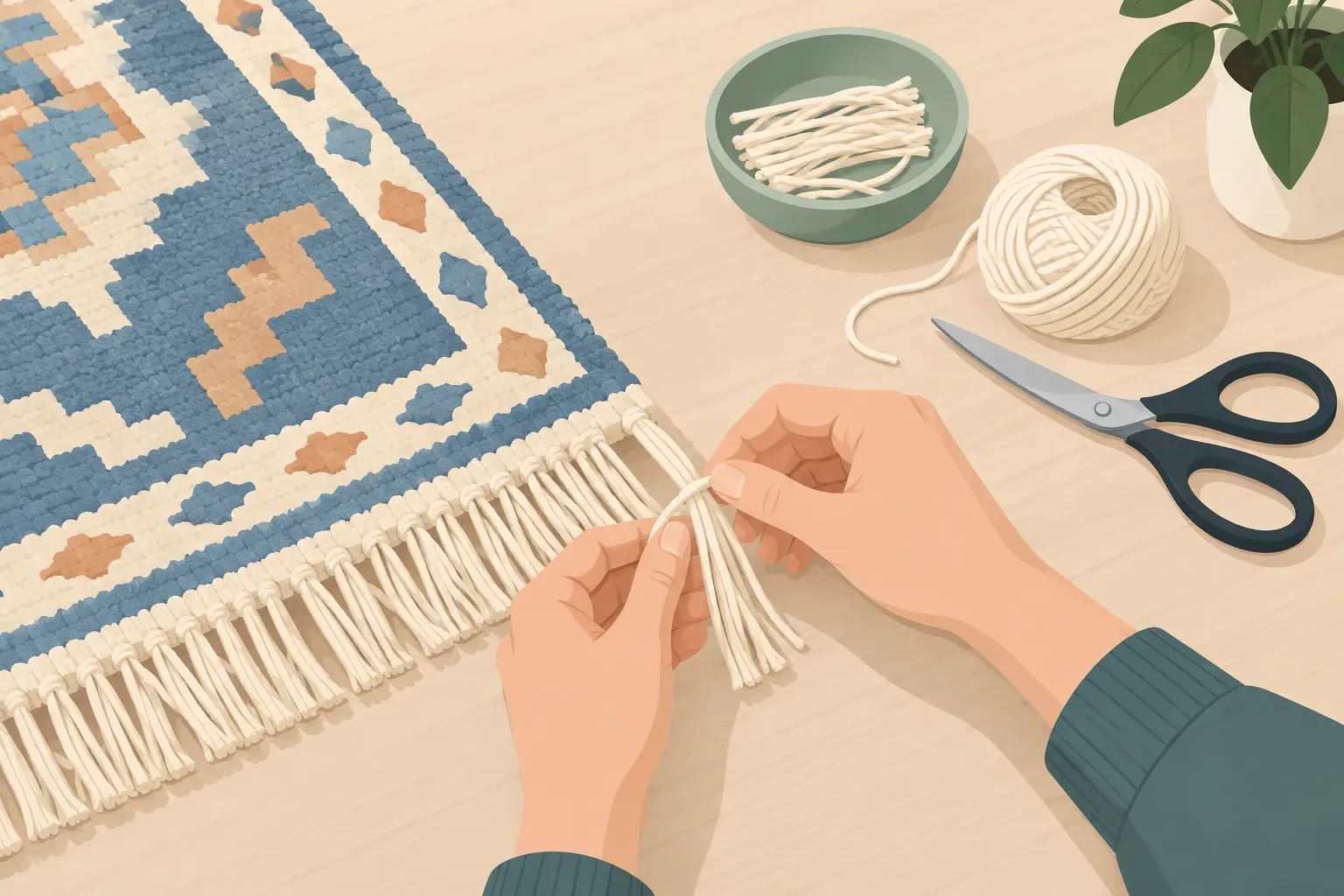
A few loose threads at the end of a rug can look like a minor cosmetic problem. But on many handmade rugs, fringe is not an added decoration. It is the visible end of the rug’s foundation. Knowing how to repair rug fringe begins with recognizing whether those threads are simply untidy or whether the rug itself is starting to unravel.
For a machine-made area rug, a modest fringe touch-up may be manageable at home. For a Persian, Oriental, Turkish, wool, silk, antique, or hand-knotted rug, caution matters more than speed. A well-made rug can be a living piece of history, and an incorrect repair can remove original material, shorten the rug, or allow valuable knots to loosen.
First, identify what kind of fringe you have
Look closely at the end of the rug where the fringe begins. On many handwoven rugs, the fringe consists of the warp threads that run lengthwise through the entire piece. The colored pile is knotted around these warps. When the fringe wears away past the end knots, the rug can begin losing its structure one row at a time.
On other rugs, fringe is separately sewn or glued onto the finished edge. This is common on many contemporary, machine-made rugs. If that fringe detaches while the edge binding remains intact, the repair is usually more cosmetic and less urgent.
A simple test is to turn the rug over and inspect the back. Original structural fringe generally appears to continue naturally into the rug’s weave. Added fringe often sits along a stitched tape or binding. Do not pull on either type to test it. Tugging can worsen weak fibers or tear an already stressed edge.
When you can repair rug fringe at home
Home care is best reserved for very limited issues: a small number of uneven strands, a loose fringe knot, or light tangling on a sturdy machine-made rug. The goal is to tidy and stabilize, not to make a worn handmade fringe look factory-new.
Gently untangle before cutting
Lay the rug flat on a clean, dry surface. Use your fingers first, working from the free ends toward the rug rather than yanking outward. A wide-tooth comb can help with loose, durable cotton fringe, but skip it if fibers feel brittle, powdery, or tightly matted.
If a few strands are longer than the rest, trim only those individual strands with sharp fabric scissors. Cut conservatively. Fringe that looks uneven while the rug is lying down may settle once it is back in place. Never cut all fringe in a straight line without checking the rug’s construction, especially on a handmade piece.
Secure one loose knot at a time
Some fringes are finished with small knots to prevent individual warp threads from slipping. If one knot has loosened and the surrounding fringe is sound, you may be able to retie it gently near its original position. Avoid pulling it tight against the rug edge. Excess tension can pucker the end or place stress on neighboring warps.
Use clean hands and work slowly. Do not apply glue, clear nail polish, tape, or a liquid fray-prevention product to original fringe. These products can stiffen natural fibers, trap soil, discolor over time, and make future professional restoration more difficult.
The warning signs that call for professional fringe repair
The moment damage reaches the woven body of a handmade rug, fringe work becomes structural repair. This is where an experienced rug specialist can protect both the appearance and the long-term value of the piece.
Arrange for an inspection if you notice fringe missing entirely in sections, exposed horizontal threads, bare areas just above the fringe, knots coming loose, or an edge that is curling and thinning. Pet chewing, vacuum damage, dry rot, moth activity, and repeated foot traffic can create problems that extend beyond what is visible from the front.
Fringe repair is also best left to a specialist when the rug is silk, antique, fine wool, hand-knotted, handwoven, or emotionally irreplaceable. Natural dyes and aged fibers require careful handling. A repair that looks acceptable for a few months can cause a more expensive restoration later if the wrong thread, stitch, tension, or cleaning method was used.
Why replacing fringe is not always the right answer
Many homeowners assume every worn fringe needs to be replaced. Sometimes it does. A specialist may carefully add new fringe that matches the rug’s fiber, color, thickness, and construction as closely as possible.
But replacement is not the only solution. If the original fringe is too short or weak to save, the better repair may be to secure the end with hand stitching or create a protective finish that stops further loss. On an antique rug, preserving the remaining original foundation can be more appropriate than installing bright new fringe that changes its character.
The right choice depends on the rug’s condition, age, value, intended use, and your expectations. A family-room rug that receives daily traffic may benefit from a durable, discreet stabilization. A collectible piece may call for more traditional restoration techniques and a lighter-use placement afterward.
How professional fringe restoration protects the rug
Proper fringe work starts with examination, not scissors. A rug-care specialist checks the foundation, end knots, pile wear, edge binding, fiber type, color stability, and signs of hidden damage. Often, the rug should be washed before repair so embedded grit does not continue abrading the fibers while restoration is underway.
Depending on the need, the repair may involve re-knotting existing fringe, securing loose warps, rebuilding worn ends, adding matched fringe, stitch locking, or repairing the adjacent binding. The work is done by hand because each rug has its own weave density, materials, and history.
At Persian Rug Spa, fringe repair is treated as part of preserving the whole rug, not as a quick add-on. Careful washing, fiber-aware restoration, and detailed handwork help protect the pattern, structure, and beauty that made the rug worth keeping in the first place.
Prevent future fringe damage
Once fringe has been repaired, daily habits determine how long it stays secure. Vacuum the rug body with suction only, keeping the vacuum head and beater bar away from both fringe and delicate edges. For light debris, gently lift fringe with your hands or use a low-suction upholstery attachment with care.
Avoid placing heavy furniture directly on the fringe. If a door catches the rug end, reposition the rug or use an appropriate low-profile solution so the fringe is not repeatedly dragged. Pet owners should address chewing early, since saliva and repeated pulling can weaken cotton and wool fibers quickly.
Rotate rugs periodically to distribute traffic, particularly at entrances and in sunny rooms. A quality rug pad can reduce sliding and edge strain. It will not prevent every problem, but it helps keep the rug from shifting each time someone steps near the ends.
Do not wait for a small problem to become lost pile
Fringe damage rarely improves on its own. A few loose warps can become an exposed end, and an exposed end can lead to lost knots and a shortened rug. Early repair is usually more conservative, more attractive, and less costly than rebuilding a heavily worn section.
If you are unsure whether your fringe is decorative or structural, resist the urge to trim it first. Set the rug aside from heavy traffic, take a close look at the back and ends, and have a qualified rug professional assess it. The right repair should preserve tradition, enhance beauty, and let your rug remain part of your home for many more years.
