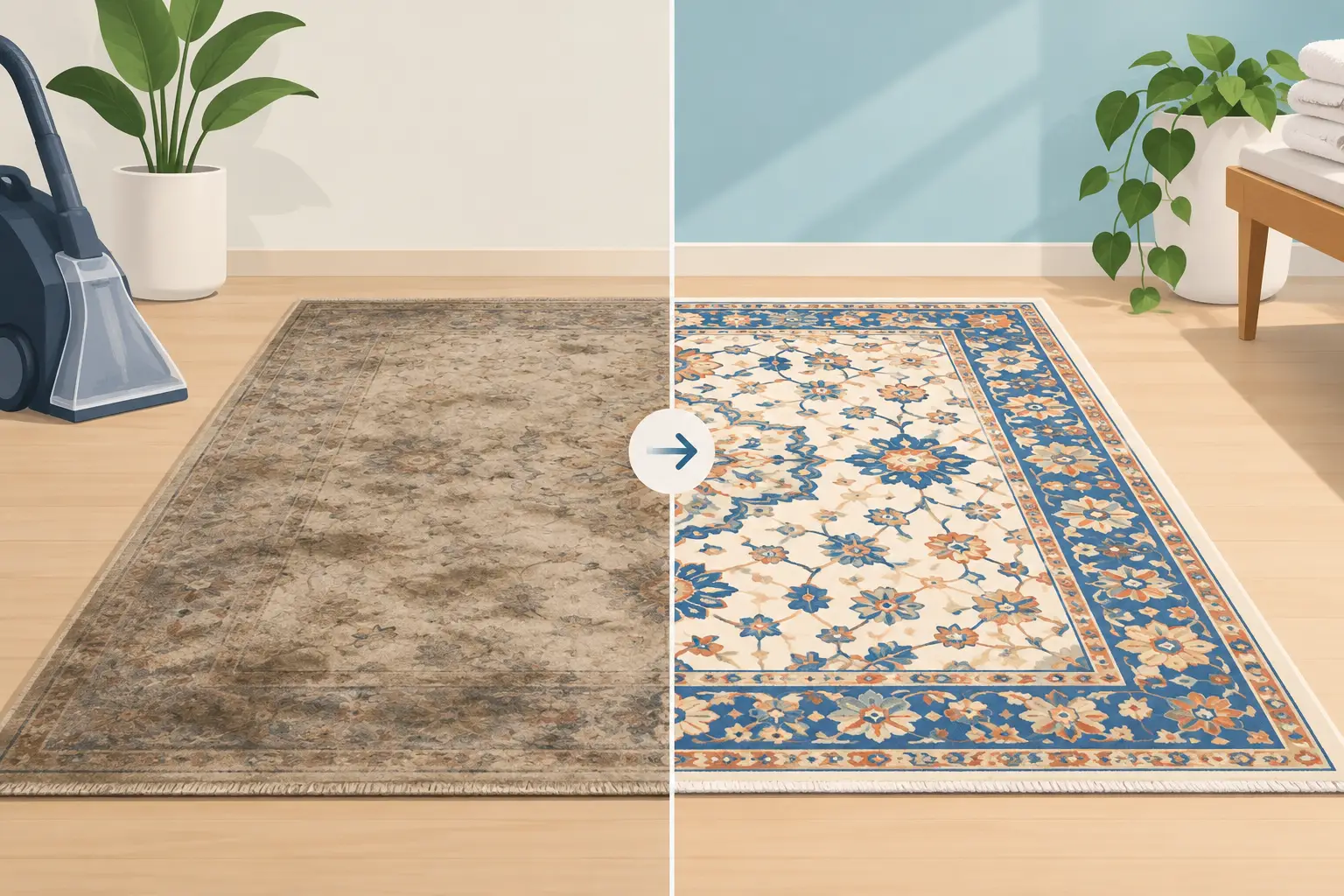
A rug can look tired long before it is beyond saving. What appears to be permanent fading may be a film of soil dulling the fibers. A fringe that seems merely untidy may signal stress at the end of the weave. The best rug restoration results do more than make a rug look cleaner – they address the conditions that can shorten the life of a valuable handmade or heirloom piece.
For a Persian, Oriental, wool, silk, or antique rug, restoration is never a one-size-fits-all service. Its age, fiber type, dye stability, weave, previous repairs, and daily exposure all shape what can safely be done. The goal is not to make an old rug look artificially new. It is to preserve its character, restore its structure where possible, and help its beauty remain part of your home for years to come.
What Rug Restoration Results Should Look Like
Successful restoration is often visible immediately, but the most meaningful improvements are also structural. After proper washing, accumulated grit, pet dander, residue, and embedded soil are removed from deep within the pile. Colors can appear clearer and more balanced because the fibers are no longer coated in dulling debris.
A careful restoration may also correct worn edges, loose binding, damaged fringe, uneven shape, separated backing, or small holes before those issues spread. The rug should lie flatter, feel cleaner underfoot, and look more complete without losing the handwoven details that make it special.
For owners of older rugs, the finest results retain an honest sense of age. A century-old rug should not look like it was made last week. Its patina, abrash, and subtle variation are part of its story. Expert work reinforces what is fragile while respecting what gives the piece its authenticity.
Cleaner Fibers and Revived Color
Deep soil is abrasive. Every step across a dirty rug can grind fine particles against wool or silk fibers, causing gradual wear that vacuuming alone cannot resolve. A professional hand-washing process removes that hidden contamination with fiber-appropriate, color-safe methods.
The difference is especially striking in rugs placed near entryways, dining tables, fireplaces, and family rooms. Creams become lighter, dark blues regain depth, and intricate floral or geometric patterns become easier to see. This is not a cosmetic trick. It is the result of removing what was obscuring the fibers.
Still, cleaning cannot reverse true sun fading or dye loss. If a rug has spent years in strong Southern California sunlight, the color change may be permanent. In those cases, restoration focuses on cleaning the remaining color safely and helping prevent additional damage through thoughtful placement, rotation, or protective care.
Stronger Edges, Fringe, and Foundation
A rug’s edges and fringe are not simply decorative details. They are part of the structure that keeps the weave secure. When binding loosens or fringe begins pulling away, the rug can start to unravel from the outside inward.
Hand repair can stabilize these vulnerable areas through fringe work, binding, edging, serging, stitch locking, and reweaving where appropriate. The result should feel secure and visually integrated with the rug’s design. A repair may not disappear completely, particularly on an antique or heavily worn rug, but it should protect the surrounding weave and prevent a small concern from becoming a much larger loss.
The right approach depends on the rug. A contemporary machine-made area rug may benefit from practical edge repair, while an inherited Persian rug may call for a more precise hand-restoration method. Investing in a detailed repair makes the most sense when the rug has sentimental, artistic, or resale value and a sound enough foundation to support the work.
The Process Behind Meaningful Rug Restoration Results
The results homeowners see in their living room begin with an individual inspection. Before washing or repair, a rug specialist should examine fiber content, dye condition, construction, stains, odor, wear patterns, prior repairs, and areas of weakness. This step helps prevent common mistakes, such as over-wetting unstable dyes or treating delicate silk like ordinary wall-to-wall carpet.
At Persian Rug Spa, each rug is treated as a living piece of history or a personal masterpiece, whether it is a hand-knotted family heirloom or a contemporary area rug that anchors a busy room. The service process is designed around the rug’s actual condition, not a generic cleaning formula.
Washing Is More Than Surface Cleaning
In-home carpet cleaning equipment can be useful for broadloom carpet, but it is not always the right choice for an area rug with natural fibers, delicate dyes, or a handwoven foundation. Excess moisture, harsh chemicals, incomplete soil removal, or improper drying can leave behind residue, encourage odor, or distort the rug’s shape.
Off-site rug washing allows for more complete dust removal, controlled washing, spot treatment, rinsing, and drying. Eco-friendly cleaning solutions can be selected with the fibers and household in mind, while modern washing tools support a careful, hands-on process.
Stain removal requires the same patience. Pet accidents, wine, coffee, food, and old mystery spots respond differently depending on how long they have been present and what has already been applied. Some stains can be significantly reduced or removed. Others may leave a faint shadow, especially if they have altered the dye or damaged the fibers. Honest expectations are part of quality restoration.
Repair Should Protect, Not Overcorrect
A well-repaired rug should remain recognizably itself. Overly bright replacement fringe, mismatched yarn, heavy adhesive, or conspicuous patching can reduce the visual harmony of a handmade piece. Skilled restoration aims to match color, texture, and construction as closely as practical while preserving the original material whenever possible.
There are times when stabilization is better than extensive restoration. If an antique rug is extremely fragile, a conservator’s approach may favor securing weak areas and limiting further handling rather than attempting broad reconstruction. Conversely, a structurally sound rug with localized edge damage can often benefit greatly from repair and return to daily use.
Factors That Shape the Final Outcome
No responsible rug specialist should promise identical results for every rug. The outcome depends on several practical factors: the age and origin of the rug, whether it is wool, silk, cotton, or synthetic, the extent of damage, the stability of its dyes, and the quality of any previous cleaning or repair work.
A newer wool rug with traffic soil and loose fringe may show a dramatic transformation after washing and repair. A delicate silk rug with sun damage may look cleaner and more stable, yet retain visible fading. An antique rug with moth loss may require careful reweaving that protects the piece but does not erase every sign of its long life.
This is why inspection matters so much. Clear communication before work begins helps you understand what is achievable, what is likely to remain, and which services offer the best return for your particular rug.
How to Protect Restoration Work at Home
Once a rug has been professionally cleaned or restored, simple care makes a real difference. Rotate it periodically to distribute foot traffic and light exposure. Use a proper rug pad to reduce slipping, cushioning wear and helping the rug lie evenly. Vacuum regularly with care, avoiding aggressive beater bars on delicate fringe and hand-knotted areas.
Address spills quickly by blotting with a clean, white cloth rather than rubbing. Avoid household spot cleaners unless you know they are safe for the rug’s fiber and dyes. If a pet accident, water event, or heavy stain occurs, prompt professional attention can improve the chance of a successful result.
A restored rug is not just a cleaner furnishing. It is a protected part of the home – one that can continue carrying its craftsmanship, memories, and character from one season to the next.
