A handwoven Oriental rug can look clean on the surface while holding a surprising amount of fine sand, pet dander, cooking residue, and grit deep in its foundation. That buildup does more than dull the colors. It acts like sandpaper each time someone walks across the pile. This Oriental rug cleaning guide is designed to help homeowners protect rugs that are beautiful, valuable, sentimental, or all three.
A Persian, Turkish, Indian, or other handmade rug is not simply a piece of floor covering. It is a living piece of history, built knot by knot from wool, silk, cotton, or a blend of natural fibers. The right care preserves its beauty and structure. The wrong cleaning method can cause color bleeding, fringe damage, shrinkage, odor, or permanent distortion.
Start With the Rug, Not the Stain
Before treating a spot or scheduling a cleaning, consider what your rug is made of and how it was constructed. Wool is naturally resilient and often responds well to proper washing, but it can retain soil near the base of the fibers. Silk rugs require far more caution because their fine fibers and delicate sheen can be damaged by harsh chemistry, aggressive brushing, or excessive moisture.
The rug’s age matters, too. Antique and inherited pieces may have fragile foundations, weakened areas, previous repairs, unstable dyes, or sun fading that is not immediately obvious. A rug that appears sturdy from above can be vulnerable underneath. This is why a specialist begins with inspection rather than treating every rug like wall-to-wall carpet.
Machine-made area rugs also need thoughtful care, especially when they have glued backings, synthetic fringe, or printed designs. Their cleaning needs differ from hand-knotted rugs, but a generic in-home carpet cleaning approach is still not always the safe choice.
Everyday Care That Prevents Deep Wear
Routine maintenance is the simplest way to extend a rug’s life. Vacuum once or twice a week in normal-use rooms, using suction without a beater bar when possible. A rotating brush can pull at fringe, stress loose yarns, and abrade delicate pile. Vacuum the back occasionally as well, then gently lift and remove the loosened debris from the floor beneath.
Do not vacuum fringe. Straighten it by hand and use a soft upholstery attachment nearby if needed. Fringe is part of the rug’s foundation, not decoration added at the end. When it frays or loosens, the knots along the rug’s edge can begin to unravel.
Rotate the rug every six to twelve months when sunlight or foot traffic falls unevenly across it. This helps distribute fading and wear. In a sunny Southern California room, use window coverings or UV-filtering treatments when practical. No cleaning process can reverse significant sun damage to dyes or fibers.
Use a quality rug pad underneath. A pad cushions the fibers, reduces slipping, improves airflow, and limits stress on the foundation. The right pad depends on the floor surface and rug type, so avoid rubber products that may discolor hardwood or trap moisture.
What to Do When a Spill Happens
Fast, calm action makes a meaningful difference. Start by lifting the spill rather than rubbing it deeper into the fibers. Use clean white towels or plain paper towels to blot from the outer edge toward the center. Replace the towel as it absorbs moisture.
For a fresh water-based spill, lightly blot with a cloth dampened in cool water, then blot dry again. Avoid soaking the rug. Excess water can travel into the cotton foundation, encourage odor, and cause dyes to migrate. Never use hot water, steam, bleach, laundry detergent, or a household carpet spotter unless you know it is appropriate for that specific rug.
Food, wine, coffee, pet accidents, and oily residues each behave differently. Pet urine is particularly time-sensitive because it can penetrate to the foundation and leave odor even after the surface looks clean. A professional wash may be needed to remove contamination from the rug’s full depth rather than mask it with fragrance.
If you are unsure whether the dye is stable, stop after blotting. Testing a cleaner in a hidden corner is not a guarantee, particularly on older rugs with uneven fading or multiple dye lots. Protecting the original color is worth more than forcing a quick result.
Oriental Rug Cleaning Guide: When Home Care Is Not Enough
A rug generally benefits from professional washing every one to three years, depending on traffic, pets, children, allergies, and placement. Entryways, dining rooms, and homes with active pets may need attention more often. A lightly used rug in a formal room may go longer, provided it receives regular vacuuming and is kept dry.
There are several signs that it is time for more than surface cleaning:
- The rug looks flat or gray even after vacuuming.
- Colors seem muted, especially in high-traffic paths.
- It has a stale, musty, or pet-related odor.
- The pile feels stiff, gritty, or matted underfoot.
- Fringe, edges, or corners show loosening, curling, or wear.
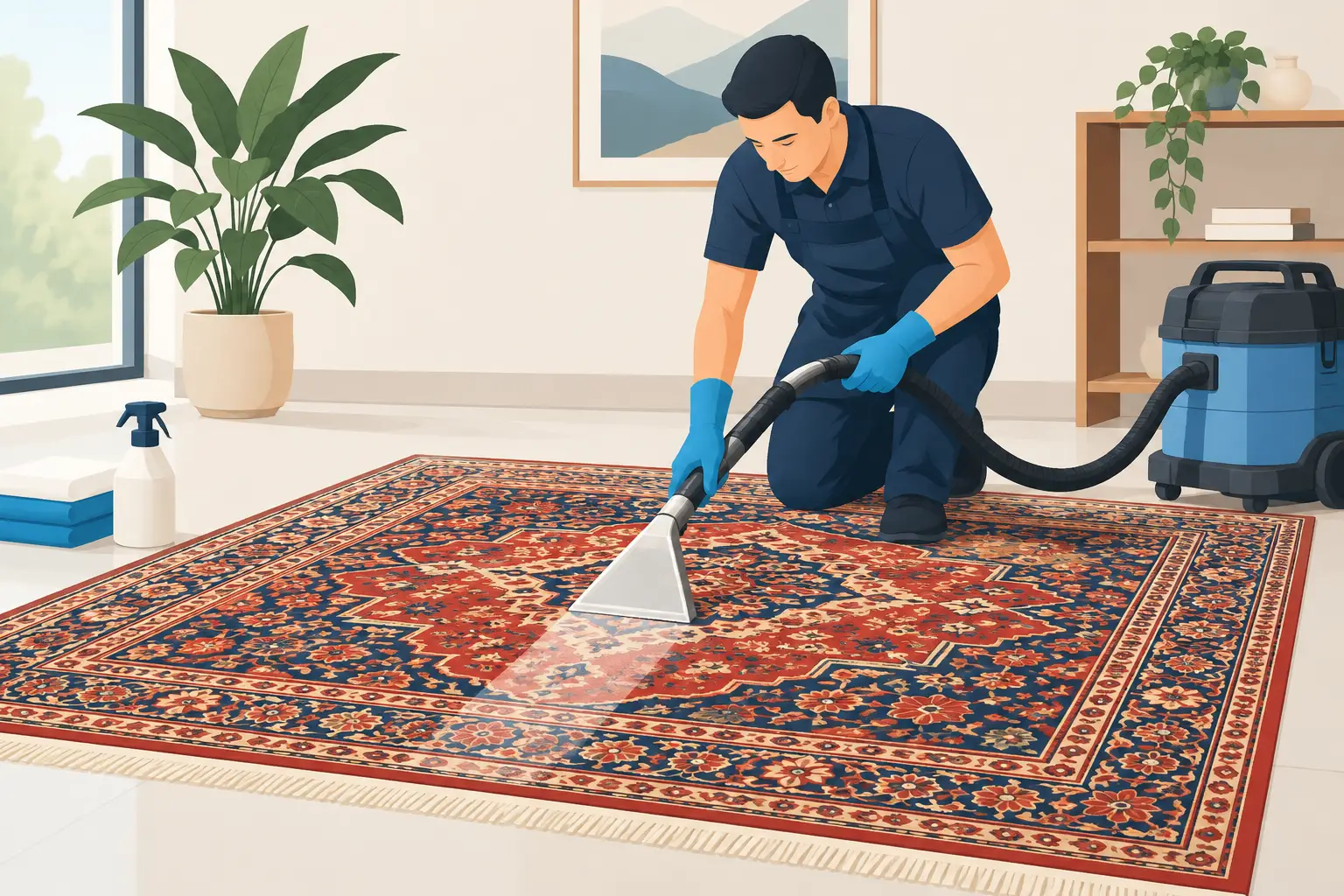
Professional rug washing is an off-site process for good reason. Soil must be removed from deep within the pile and foundation, which requires controlled dusting, fiber-appropriate washing, careful rinsing, and complete drying. Spraying shampoo over a rug in the home may brighten the top fibers temporarily, but it can leave residue and moisture below the surface.
At Persian Rug Spa, each rug is evaluated individually before cleaning. That assessment helps determine whether it needs hand washing, specialized spot treatment, odor removal, color-safe testing, fringe care, or repairs before washing. The goal is not merely to make a rug look cleaner. It is to preserve the craftsmanship that gives it value.
Repairs Should Not Wait for Major Damage
Small edge and fringe issues are easier to address before they spread. When binding begins to loosen or a corner curls, the rug can catch on shoes, vacuum heads, and furniture legs. One pulled thread can become a larger structural problem.
Early repair may involve stitch locking, edge binding, serging, fringe restoration, or foundation reinforcement. The proper method depends on how the rug was woven and the condition of its materials. Repairing a handmade rug should respect its original construction, not cover a problem with a quick cosmetic fix.
Watch for moth damage as well, particularly on wool rugs stored in garages, closets, or seldom-used rooms. Moths are attracted to natural fibers with food residue, body oils, or pet hair. If you notice bare patches, loose wool dust, or small irregular areas of pile loss, avoid disturbing the area and arrange for an inspection.
Common Cleaning Mistakes to Avoid
The most damaging mistakes usually come from good intentions. Renting a carpet machine, applying a strong store-bought cleaner, or hanging a heavy wet rug in direct sun can create more trouble than the original spot. Overwetting may lead to mildew or buckling. Harsh alkaline products can strip natural oils from wool and affect dyes. Direct heat can shrink or warp the foundation.
Be cautious with dry cleaning powders as well. They can leave fine residue behind, particularly in dense hand-knotted pile. If someone recommends steam cleaning without asking about fiber type, dye stability, age, or construction, that is a reason to pause.
A professional cleaner should be able to explain how the rug will be inspected, washed, dried, and handled if color movement or structural concerns are discovered. Clear answers are part of careful service.
A Better Standard for Valuable Rugs
Your Oriental rug does not have to be an antique or a collector’s piece to deserve specialized care. A rug that anchors your living room, softens a nursery, or came from a family member carries both practical and personal value. Regular attention protects the colors you chose, the fibers beneath your feet, and the story woven into every detail.
When a spill, odor, fading concern, or worn edge leaves you uncertain, preserve the rug first and experiment later. Careful inspection and skilled washing can give a treasured piece the clean, secure foundation it needs to remain part of your home for years to come.
