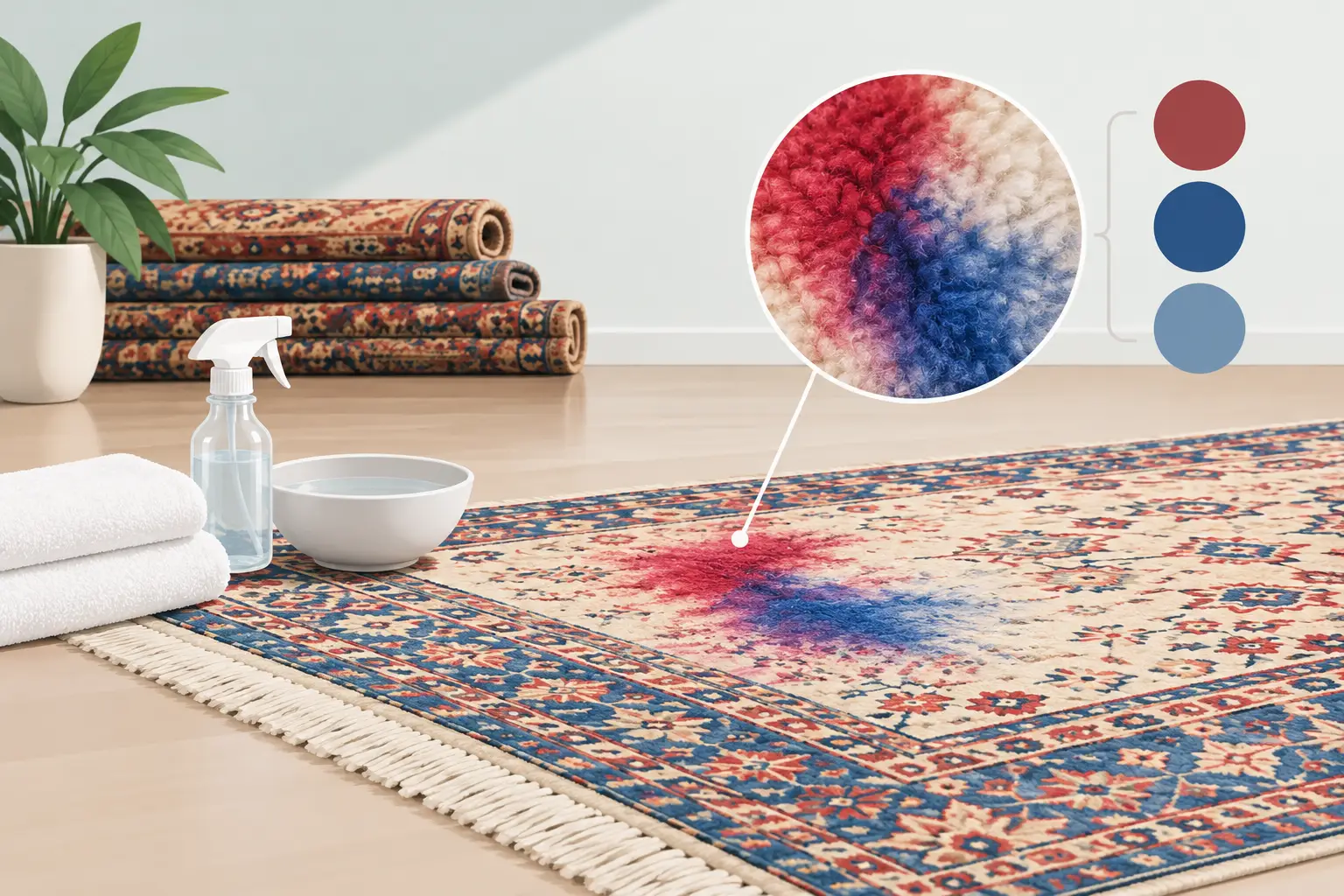
A red border that suddenly clouds a cream field can make a treasured rug look permanently ruined. This rug dye bleeding guide explains what color migration means, why it happens, and why a fast, careful response matters. For a Persian, Oriental, antique, or handmade rug, bleeding dye is not a standard household stain. It is a fiber-and-color emergency that calls for restraint as much as action.
A handmade rug can be a living piece of history, a family heirloom, or a significant design investment. Its wool, silk, cotton foundation, and individual dye lots may react very differently to water, cleaning products, humidity, and previous treatments. The goal is not simply to make the rug look clean. It is to preserve its pattern, materials, and character without causing another layer of damage.
What rug dye bleeding actually is
Dye bleeding happens when color is released from one yarn and travels into another area of the rug. You may see a blue field develop a grayish haze, a dark border spread into lighter fringe, or red and navy colors soften into nearby ivory motifs. Sometimes the change appears while a rug is wet. In other cases, it becomes visible only as the rug dries.
Not every color change is active bleeding. Soil can dull a light background, pet accidents can leave a yellowed area, and moisture can cause browning in cotton fringe or foundation fibers. A professional inspection separates these concerns because the treatment for each one is different. Attempting to correct a suspected dye problem with strong spot cleaner may set the color movement in place or weaken delicate fibers.
Bleeding is especially common in certain circumstances. Older rugs may contain naturally dyed yarns that need controlled washing. Some newer rugs use unstable dyes, particularly in richly colored reds, blues, purples, and blacks. Previous cleaning residues can also interfere with dye stability. Even a rug that has been fine for decades can react after a spill, flood, steam treatment, or improper in-home cleaning.
Why colors run in handmade and area rugs
Water is often part of the story, but water alone is not always the culprit. Dyes move when moisture, alkalinity, heat, agitation, or prolonged drying disrupts their bond to the yarn. A rug’s construction determines how much risk is involved. Wool has natural resilience and can often be washed beautifully with the right process, while silk demands an even more controlled approach. Cotton foundations and fringe can absorb moisture quickly and may transfer color if they remain wet.
Household products add uncertainty. Dish soap, laundry detergent, vinegar, bleach, oxygen cleaners, and popular carpet sprays are formulated for other materials and conditions. Their pH may be too high or too low for rug dyes. Steam cleaners introduce heat and moisture at the same time, while rental machines may leave excessive water below the surface where a rug dries slowly.
Southern California homes can create their own set of variables. Open doors, patio traffic, coastal humidity, pets, and quick attempts to clean a spill can expose rugs to repeated moisture. A rug placed over a pad may seem dry on top while its foundation remains damp underneath. That slow drying period gives unstable color more time to travel.
Immediate steps when you see dye bleeding
The safest first move is to stop adding moisture. Do not continue rinsing the rug, scrub the affected area, or apply more cleaner in hopes of lifting the color. Friction can drive released dye deeper into adjacent yarns, and heat can make the problem harder to reverse.
If the area is wet from a fresh spill, gently blot from the surface with clean, white absorbent towels. Press straight down and lift. Do not rub in circles or pull at the pile. Replace towels as they become damp, and avoid paper towels with printed designs, which can transfer ink or leave fibers behind.
Move furniture away from the rug if you can do so without dragging it across wet fibers. Keep children and pets off the area. If possible, place the rug in a well-ventilated space with ordinary room-temperature airflow, but do not use a heater, hair dryer, or direct high heat. The objective is to limit further migration, not force the rug dry.
Photograph the affected area in natural light before any additional handling. A clear photo helps document the original pattern and extent of the issue. Then arrange an evaluation with a dedicated rug-washing specialist. For valuable, silk, antique, or hand-knotted rugs, this is one situation where a cautious pause can protect far more value than a quick household remedy.
What not to use on a bleeding rug
Many well-meant remedies create costly complications. Avoid bleach, ammonia, baking soda pastes, vinegar, laundry stain removers, and color-safe products intended for clothing. Avoid shampooing, steam cleaning, and machine scrubbing as well. “Color-safe” on a household label does not mean safe for hand-spun wool, vegetable dyes, silk pile, cotton warp, or a rug with unknown prior treatments.
It is also wise to avoid hanging a saturated rug over a railing or leaving it in direct sunlight. The weight of water can strain the foundation, distort the shape, and stretch weakened areas. Direct sun may contribute to uneven fading, particularly where moisture has already changed the way light reflects off the fibers.
A small test in an inconspicuous corner is not a guarantee. Dye behavior can vary across a rug because one color, repair, or section of yarn may respond differently from the rest. That is why a complete inspection is more reliable than treating a visible spot in isolation.
How professional dye stabilization works
Professional correction begins with identifying the rug’s fibers, construction, age, color behavior, soil load, and existing repairs. A specialist assesses whether the colors are actively releasing, whether the rug has been contaminated by a spill or cleaning product, and whether the foundation has retained moisture. This step determines the washing method, chemistry, water temperature, and drying plan.
The rug is then treated in a controlled off-site setting rather than with a one-size-fits-all carpet-cleaning approach. Depending on its needs, the process may include carefully measured color-stabilizing treatment, hand washing, specialized spot removal, thorough rinsing, and managed drying. The exact method depends on the rug. A durable wool rug and a fine silk rug should not receive the same handling simply because they share similar colors.
When color migration has already occurred, restoration may require repeated controlled work to reduce transferred dye without stripping the original design. Results depend on how quickly the rug is addressed, the type of dye involved, the amount of moisture exposure, and any products already applied. Honest professional care means recognizing that some cases need delicate improvement rather than aggressive correction. Protecting original fibers and pattern integrity remains the priority.
At Persian Rug Spa, each rug is evaluated as an individual textile work, with color-safe washing and restoration methods chosen for its materials and condition. Free pickup and delivery make it easier to remove a compromised rug from a risky environment without folding, dragging, or continuing to treat it at home.
Preventing future color migration
Prevention starts with routine care that respects the rug’s construction. Vacuum the pile regularly with appropriate suction, but avoid aggressive beater bars on delicate rugs and do not pull fringe through a vacuum. Rotate the rug periodically so sun exposure and traffic wear are distributed more evenly. Address spills promptly by blotting, not saturating.
Use a quality rug pad to reduce abrasion and improve airflow, especially over hard floors. Keep potted plants, pet water bowls, and damp shoes away from the rug’s edges. If a leak, plumbing issue, or pet accident soaks through the rug, treat it as more than a surface problem. The foundation may be holding moisture long after the pile feels dry.
Professional washing on a sensible schedule also helps. How often depends on household traffic, pets, allergies, and the rug’s location. A formal-room rug may need less frequent service than a family-room rug that receives daily use. Regular deep washing removes abrasive grit and residues before they become embedded, while allowing trained hands to monitor fringe, edges, dyes, and structural condition.
A rug deserves more care than a hurried cleaning fix when its colors begin to move. Put down the spray bottle, limit moisture and friction, and let a qualified rug specialist assess the fibers before a temporary problem becomes a permanent change to the masterpiece underfoot.
