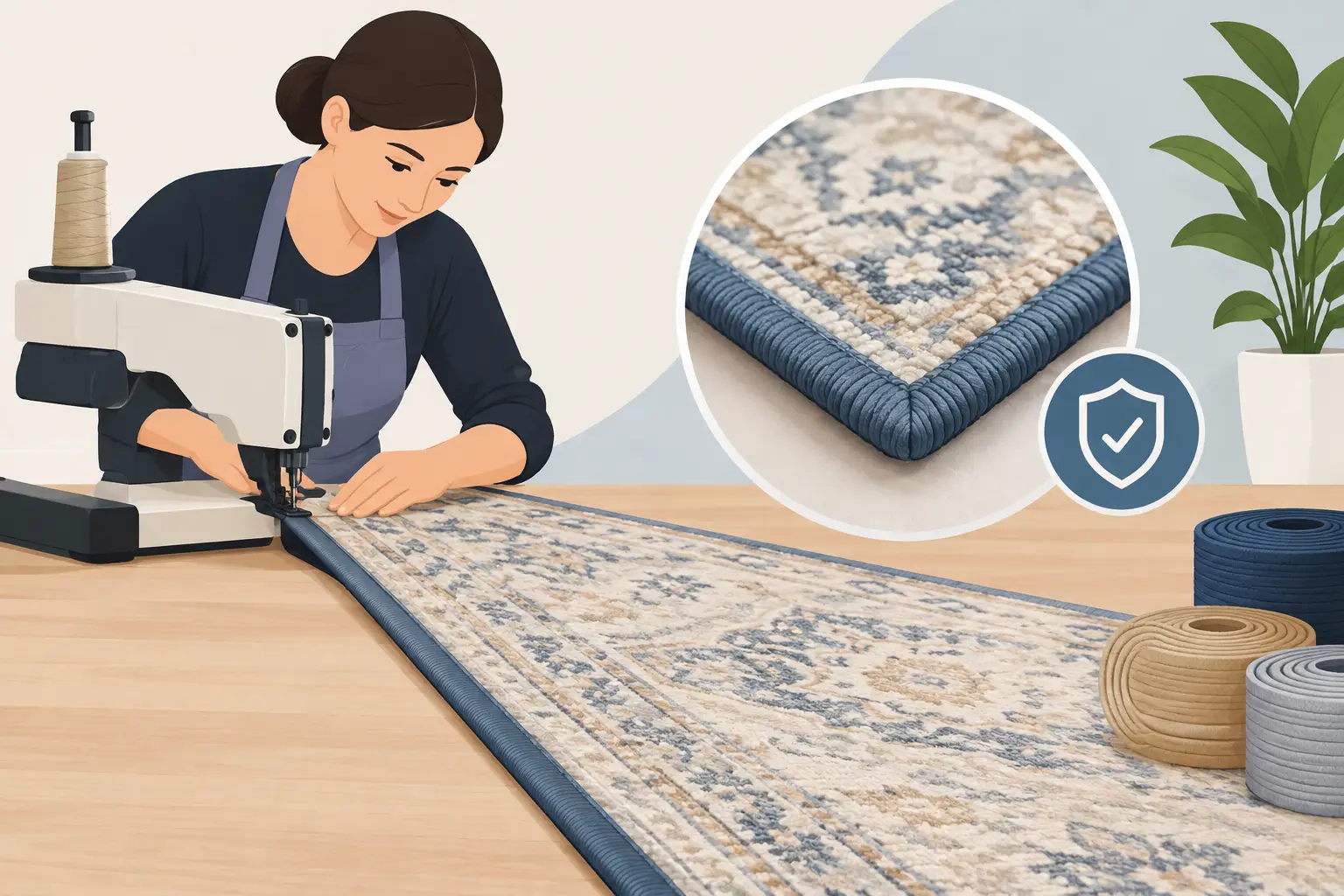
A rug can look beautiful across its field of color and pattern while quietly failing at the edge. A loose corner, thinning border, or row of exposed threads may seem minor, but it can quickly lead to unraveling and loss of the rug’s original shape. Professional rug binding services address that vulnerable perimeter with careful, fiber-appropriate work designed to protect both the appearance and structure of your rug.
For a handmade Persian or Oriental rug, the edge is not simply a finishing detail. It helps hold the rug’s foundation together. For a contemporary area rug, a clean, secure binding keeps the piece looking intentional and finished rather than worn out. The right repair depends on how the rug was made, what it is made from, and how much damage has already occurred.
Why Rug Edges Need Specialized Care
Rug edges endure more stress than most homeowners realize. Shoes catch on them, furniture presses against them, vacuum heads pull at them, and pets may scratch or chew them. Sun exposure, moisture, and everyday foot traffic can also weaken fibers over time. Once an edge begins to fray, the issue rarely stays contained.
On hand-knotted rugs, the side edges are often secured by an overcast stitch called serging. When that stitching wears through, the warp threads beneath can become exposed. Those threads are part of the rug’s internal foundation. If they break or pull free, adjacent knots may loosen, and a repair that once involved a narrow edge can become a more extensive restoration.
Machine-made rugs have different needs. Their bindings may separate from the backing, curl upward, or wear thin along heavily traveled areas. A proper repair can stabilize the border, improve how the rug lies on the floor, and prevent further pulling. The goal is not merely to cover damage. It is to preserve the rug’s useful life while respecting its construction.
What Professional Rug Binding Services Can Repair
Rug binding is often used as a broad term, but several techniques may be involved. During an inspection, a rug specialist looks at the weave, foundation, pile, fibers, colors, and existing edge treatment before recommending the appropriate work.
Binding for Cut or Worn Edges
If an area rug has been cut to fit a room, staircase, hearth, or custom space, the newly cut edge needs a durable finish. Binding encloses that edge with a material selected to complement the rug and protect it from fraying. It is especially useful for broadloom carpeting converted into custom area rugs, as well as many contemporary rugs with damaged perimeter tape.
The material and color should be chosen thoughtfully. A high-contrast binding can create a deliberate design detail, while a closely matched option keeps attention on the rug itself. In either case, an uneven or poorly attached binding can distract from the room and wear out prematurely.
Serging for Handwoven Rugs
Serging is common on Persian, Oriental, Turkish, Indian, and other handwoven rugs. It involves wrapping yarn around the side cords to create the familiar finished edge seen on many traditional rugs. This work must be done with care because the yarn tension affects both the appearance and stability of the rug.
A hand-repaired serged edge should follow the character of the original piece. Matching the color, thickness, and texture of the existing wool is often as important as securing the structure. On an antique rug, a repair that is too bright, thick, or uniform may look out of place even if it is technically strong.
Fringe and End Repairs
Fringe is another area where confusion is common. On many handmade rugs, fringe is the visible end of the foundation, not an accessory that can simply be replaced without consideration. When fringe is worn, tangled, or breaking apart, the rug may need stitch locking or end securing before cosmetic fringe work is considered.
For some rugs, trimming damaged fringe is the safest option. For others, preserving as much original fringe as possible makes sense. It depends on the rug’s age, value, construction, and the condition of its foundation. A careful specialist explains that trade-off rather than applying the same fix to every rug.
When a Small Edge Problem Becomes a Larger Repair
Early repair is usually less invasive and more economical than waiting for visible unraveling. Watch closely for these signs:
- Loose threads or yarn loops along either side of the rug
- Corners that curl, split, or look thinner than the rest of the border
- Fringe that is detaching from the body of a handmade rug
- Exposed white, cotton, or jute foundation threads
- A binding tape that has lifted away from the rug backing
Do not pull loose yarn, cut foundation threads, or use household glue to hold an edge together. Glue can harden fibers, discolor materials, attract dirt, and make later restoration more difficult. Aggressive vacuuming along fringe and edges can also worsen an existing weakness. If a thread has come loose, it is better to stop the damage from spreading and have the rug evaluated.
The Value of a Fiber-Aware Repair
Wool, silk, cotton, jute, and synthetic fibers react differently to tension, moisture, cleaning solutions, and adhesives. Natural dyes can be sensitive, especially on older handmade pieces. That is why rug repair should not be treated like a quick upholstery or carpet fix.
Before binding or serging begins, a qualified rug-care professional should identify the materials and assess the surrounding condition. Dirt embedded at the edge, pet residue, old stains, dry rot, or moth damage can affect what repair is appropriate. In many cases, washing the rug before restoration allows the technician to work with cleaner fibers and see the true condition of the border.
Color matching also deserves patience. A newly repaired edge may need to complement wool that has softened naturally over decades of use and sunlight. The objective is a secure repair that looks at home on the rug, not a patch that calls attention to itself.
Repair, Replacement, or a New Bound Edge?
Not every damaged edge should receive the same treatment. If a rug has localized wear but a stable foundation, repairing the original serging or binding can preserve its authenticity. This is often the preferred route for handmade, antique, and sentimental rugs.
If the perimeter has extensive loss, a new binding may provide a clean, practical solution. It can also be a smart choice for a machine-made area rug whose original edge treatment is no longer serviceable. For rugs with severe structural damage, however, binding alone may not solve the underlying problem. Foundation stabilization, reweaving, or backing work may be needed first.
The best decision balances sentimental or resale value, the cost of restoration, the rug’s intended use, and its overall condition. A cherished heirloom in a formal living room may justify detailed hand restoration. A contemporary rug in a busy family entry may benefit from a durable, practical edge treatment designed for daily wear.
Protecting the Repair at Home
After professional work is complete, a few habits can extend the life of the repair. Use a quality rug pad to reduce slipping and cushion the rug against hard flooring. Rotate the rug periodically so one edge does not receive all the traffic or sunlight. When vacuuming, use suction carefully near fringes and avoid running a beater bar directly over delicate edges.
Prompt attention to spills and regular professional washing also matter. Dirt acts like fine sand within rug fibers, gradually increasing wear in high-traffic sections and along borders. Clean fibers are easier to inspect, safer to repair, and better able to retain their original color and texture.
At Persian Rug Spa, each rug is evaluated as an individual textile, whether it is a treasured hand-knotted masterpiece or a hardworking modern area rug. Professional off-site care, hand repairs, and convenient pickup and delivery help homeowners protect their rugs without treating them like ordinary carpeting.
A secure edge may be one of the least noticed parts of a rug, yet it does some of the most important work. Addressing fraying early gives your rug the chance to remain a beautiful, usable part of your home and a living piece of history for many more years.
