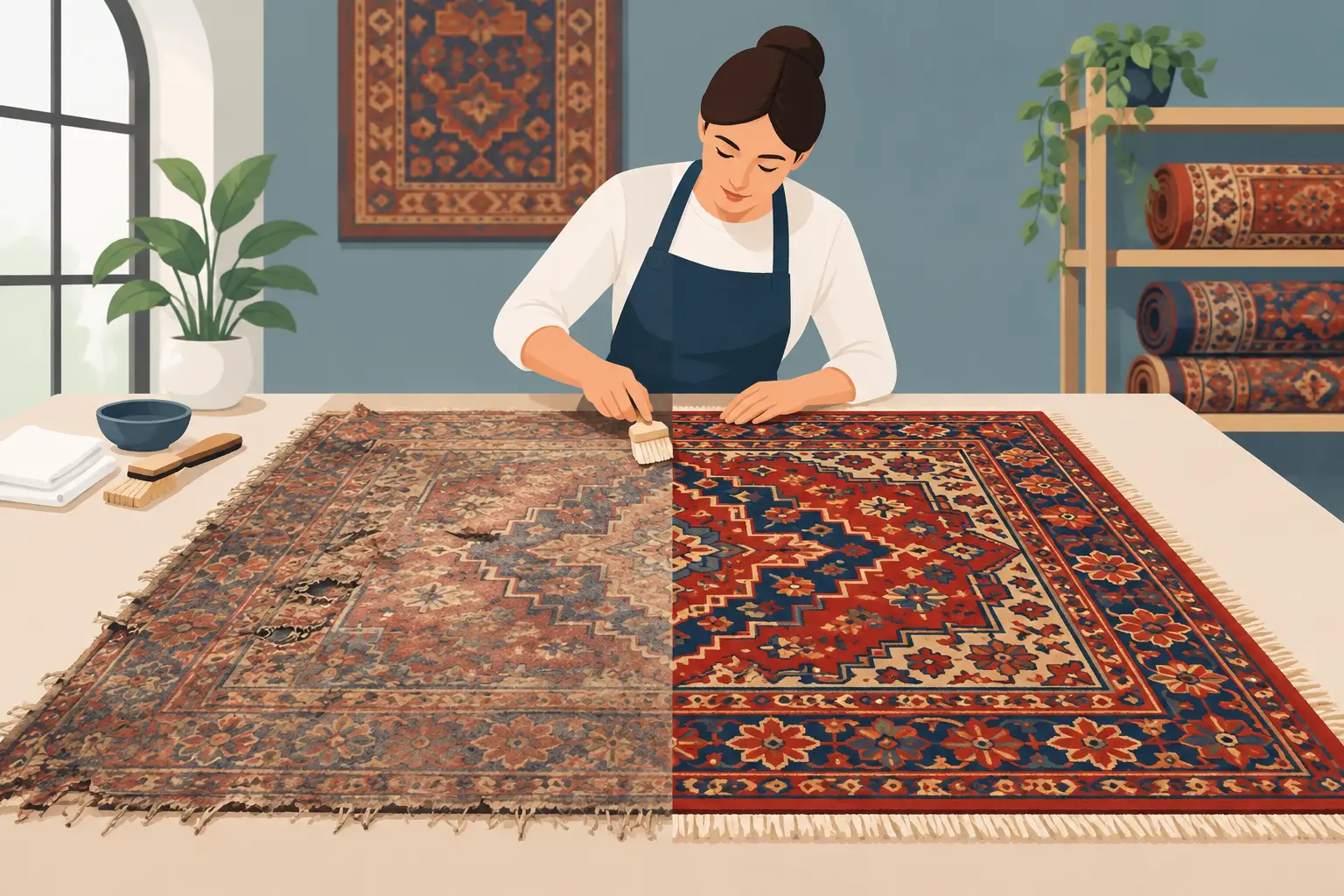
A worn corner, unraveling fringe, or faded patch can make an antique rug look beyond saving. Often, it is not. The right antique rug restoration service can stabilize fragile fibers, repair handmade structure, and bring back a rug’s presence without erasing the age and character that make it meaningful.
An antique Persian, Oriental, Turkish, or handmade wool rug is not simply a floor covering. It may be a family heirloom, a collected artwork, or a living piece of history that has anchored a room for decades. Restoration is about preserving that history carefully, not making the rug look artificially new.
What Antique Rug Restoration Actually Means
Restoration is more involved than cleaning a rug or sewing down one loose thread. It is a tailored process that addresses the rug’s materials, weave, dyes, damage pattern, and overall condition. A skilled specialist begins with a close inspection to determine what can be safely repaired and what should be left alone.
Some antique rugs benefit from modest conservation work, such as securing a weak edge before it unravels. Others need more extensive repairs after pet damage, water exposure, moth activity, furniture wear, or years of neglected cleaning. The correct approach depends on the rug’s age, construction, fiber type, and intended use.
A careful restoration may include reweaving missing areas, repairing holes or tears, rebuilding worn corners, securing foundation threads, replacing or repairing fringe, and restoring binding or edging. In some cases, blocking is used to help a rug lie flat after distortion. Stitch locking can prevent a small opening from growing into a much larger structural problem.
The goal is never to apply a one-size-fits-all fix. Hand-knotted wool, delicate silk, cotton foundation threads, and natural dyes each respond differently to moisture, tension, and cleaning solutions. That is why antique rugs should not be treated like wall-to-wall carpet.
When an Antique Rug Restoration Service Is Worth It
Restoration is usually worth considering when the damage threatens the rug’s structure or when the rug holds sentimental, decorative, or resale value. A small loose edge may seem minor, but edge binding helps hold the rug together. Once the side cords loosen, knots can begin to release, and the affected area can spread quickly.
Fringe damage deserves similar attention. Fringe is not merely decorative on many handmade rugs. It is often the exposed end of the rug’s foundation. Pulling, vacuuming aggressively, or allowing fringe to deteriorate can weaken the rug from the bottom up.
Holes, tears, and bare areas are also good reasons to seek a professional assessment. A repair can protect the surrounding weave and make the damaged area far less distracting. On a collectible antique, thoughtful color matching and knot-by-knot work may preserve more value than a conspicuous patch or a rushed repair ever could.
Restoration can be particularly sensible when a rug has been handed down through the family. Its financial value may be uncertain, but its place in your home is not. If the rug tells part of your family’s story, preserving it for another generation can matter more than achieving a perfect, showroom-fresh appearance.
That said, not every rug needs extensive restoration. If repairs would exceed the rug’s practical value, or if it is already too structurally fragile for floor use, a specialist may recommend a lighter stabilization, display use, or retirement from high-traffic areas. Honest guidance is part of responsible rug care.
Damage That Should Not Wait
Certain signs call for prompt attention because the damage can accelerate with normal use. These include curling or separating edges, exposed warp threads, areas that feel thin compared with the rest of the rug, fringe pulling away from the body, and fresh tears near furniture legs.
Water damage should also be handled quickly. Antique wool rugs can retain moisture deep in their foundation, where mildew, odor, dye migration, and fiber deterioration may begin. A surface that feels dry does not always mean the rug is dry throughout.
Moth damage is another concern. Small bare patches, loose fibers, or activity in a rug stored in a dark, undisturbed space can signal a problem. Cleaning and restoration may both be necessary, since repairing the visible damage without addressing the underlying conditions leaves the rug vulnerable.
Why Cleaning Often Comes Before Repair
Dirt is abrasive. Over time, soil settles below the pile and rubs against fibers as the rug is walked on. This is one reason an antique rug can appear dull, stiff, or prematurely worn even when it has no obvious stain.
Before restoration work begins, a professional washing process often gives the specialist a clearer view of the rug’s true condition. Deep washing can remove embedded grit, dust, allergens, and residues that interfere with repair work. It may also reveal colors that have been hidden beneath years of soil.
For antique rugs, cleaning must be color-safe and fiber-aware. Natural dyes can be sensitive, silk can be delicate, and older wool may need a gentler process than a contemporary machine-made area rug. Harsh chemicals, excessive moisture, and aggressive scrubbing can cause irreversible dye bleeding, shrinkage, or pile damage.
A proper off-site washing process allows for controlled inspection, treatment, drying, and repair. It is fundamentally different from running a generic carpet-cleaning machine over a valuable handmade textile in the home.
The Craft Behind a Thoughtful Repair
The best restoration work respects the original rug rather than competing with it. A technician studies the weave direction, knot style, pile height, colors, and design before beginning. Matching wool or silk is not only about finding a similar shade. The replacement material must also behave appropriately beside the existing fibers.
On a hand-knotted rug, a repair may involve rebuilding the foundation first, then re-knotting the missing pile in a way that follows the rug’s original pattern. This takes patience. A repair that is too tight can create puckering, while one that is too loose can wear unevenly or fail under foot traffic.
Color matching also involves judgment. Antique rugs naturally develop patina over time. A newly repaired area should support the design without looking unnaturally bright or uniform. Sometimes a technically invisible repair is possible; other times, a carefully integrated repair is the more realistic and respectful result.
This is where craftsmanship matters most. Restoration is not just about covering damage. It is about giving a handmade rug the stability to remain part of a home.
How to Protect a Restored Antique Rug
After restoration, where and how you use the rug has a direct effect on its lifespan. A quality rug pad helps reduce slipping, cushions the fibers, and limits stress from furniture and foot traffic. Avoid placing a fragile antique rug in a wet entryway, direct afternoon sun, or a high-traffic path where chairs repeatedly scrape the same spot.
Vacuum gently and avoid using a beater bar on delicate rugs, especially near fringe and repaired areas. Rotate the rug periodically so sunlight and traffic do not wear one section faster than another. If a spill happens, blot it promptly with a clean, dry cloth rather than rubbing it deeper into the pile.
Professional washing on an appropriate schedule also helps protect the investment. The ideal timing depends on use, pets, children, outdoor dust, and the rug’s location. A formal-room rug may need attention less often than one in a busy family room, but neither should be left for years with embedded soil.
For homeowners in Camarillo, Ventura County, and surrounding Southern California communities, Persian Rug Spa provides specialized washing, repair, restoration, and protective services with free pickup and delivery. Each rug can be assessed as an individual piece, with recommendations based on its fibers, construction, condition, and role in your home.
A repaired antique rug does not need to lose its history to gain more years of use. With patient cleaning, skilled restoration, and thoughtful placement, the wear that comes from a well-lived life can remain part of its beauty while its structure stays protected.
