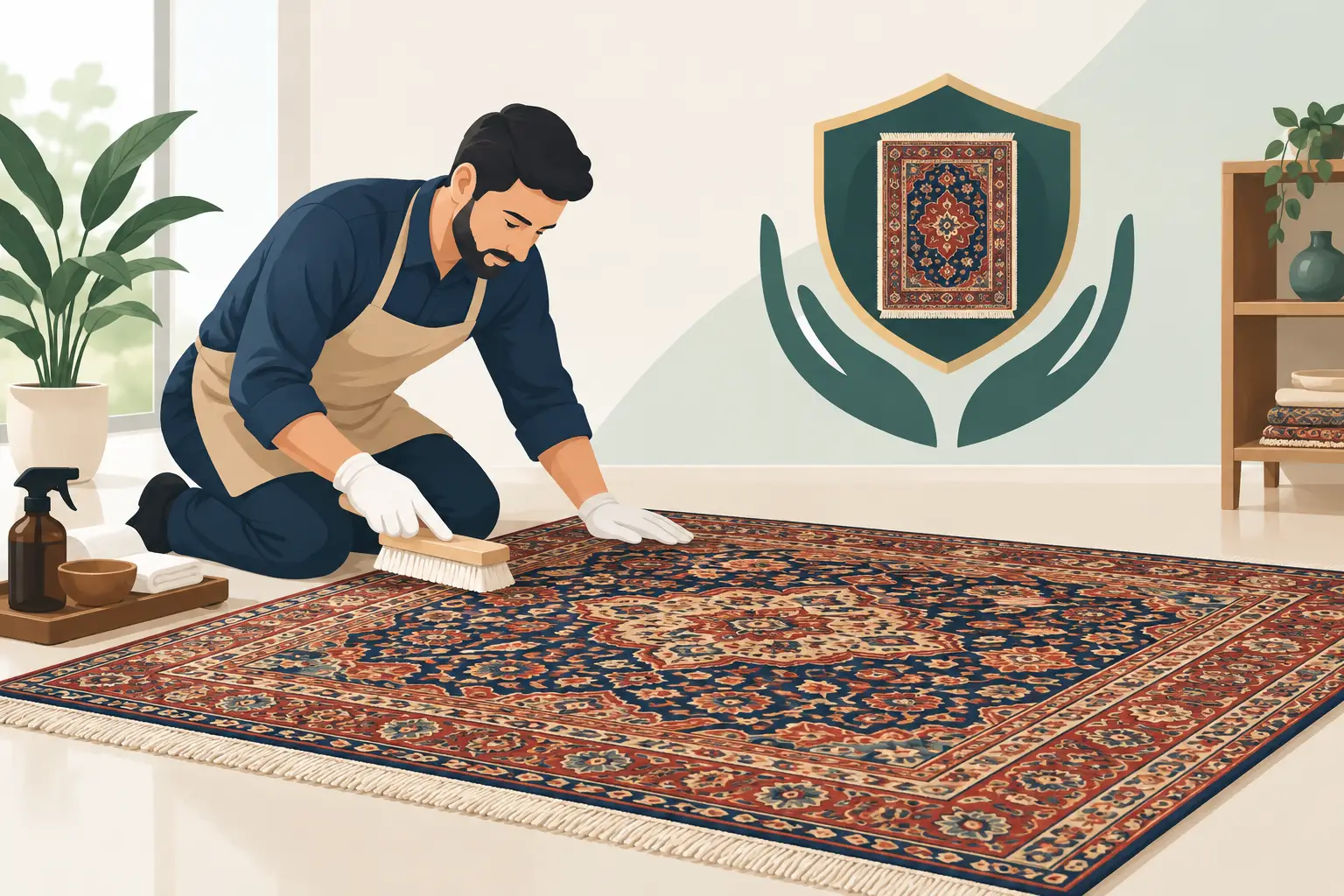
A hand-knotted rug can look perfectly fine from across the room while quietly losing value beneath your feet. Fine grit settles deep in the pile, fringe weakens one strand at a time, and an old spill can continue affecting dyes long after the surface feels dry. Persian rug value preservation is not simply about keeping a rug attractive. It is about protecting the fibers, structure, color, and craftsmanship that make it a living piece of history.
For homeowners in Camarillo and across Ventura County, that protection begins with treating a handmade rug differently from wall-to-wall carpet. A Persian, Oriental, Turkish, Indian, wool, or silk rug is an individual work of textile art. Its age, knot density, materials, dyes, condition, and history all shape what it needs.
Why Persian Rug Value Preservation Requires Specialized Care
The value of a rug is rarely determined by appearance alone. Collectors and knowledgeable buyers look at the quality of the weave, clarity of the design, condition of the pile, integrity of the foundation, original fringe and edges, and the way colors have aged. Sentimental value matters, too. An inherited rug may hold a family story that cannot be measured by an appraisal.
Dirt is one of the most common threats to both market and household value. Soil particles work like sandpaper as people walk across the rug. Over time, they cut into wool fibers, flatten the pile, and make a once-luminous pattern appear dull. Vacuuming helps with surface debris, but it cannot remove the compacted dirt, pet dander, residues, and allergens held deep within the foundation.
Improper cleaning can be just as harmful. Generic in-home carpet cleaning often relies on heavy moisture, strong extraction, or solutions designed for synthetic carpet. Handmade rugs may contain natural wool, cotton foundations, silk details, vegetable dyes, or unstable colors. The wrong process can lead to dye bleeding, browning, shrinkage, stiff texture, or hidden moisture that encourages mildew.
Professional rug care begins with inspection, not assumptions. A specialist should identify the fiber type, construction, dye stability, existing repairs, fringe condition, stains, and areas of weakened structure before choosing a washing or restoration method.
Wash the Rug Before Dirt Becomes Damage
A proper wash does more than freshen a room. It removes abrasive soil before it can wear away valuable pile and loosen the rug’s foundation. For many actively used wool rugs, professional washing every two to five years is reasonable. The right interval depends on foot traffic, pets, children, indoor air quality, and whether the rug is near an entryway, dining table, or sunny window.
A light-colored rug in a busy family room may need attention sooner than a darker decorative rug in a low-traffic bedroom. Silk rugs, antique pieces, and rugs with delicate or fugitive dyes require a more conservative plan. There is no benefit in overcleaning a fragile rug, but waiting until it looks visibly dirty is also risky because the damage often starts long before then.
Off-site hand washing gives the rug the controlled treatment it deserves. The process can include dust removal, fiber-safe washing, targeted spot treatment, careful rinsing, controlled drying, and grooming that respects the rug’s pile direction and construction. Eco-friendly solutions are useful when they are paired with the right technique, not used as a one-size-fits-all promise.
Homeowners should be cautious with rental machines, steam cleaners, and internet stain remedies. Scrubbing a stain can distort fibers and push contamination farther into the foundation. Saturating a rug without the ability to dry it thoroughly may leave odors or cause color migration. When a spill happens, blot gently with a clean white cloth, avoid harsh chemicals, and arrange an inspection if color transfers, odor remains, or the stain reaches the backing.
Color Is Often the First Thing to Lose
Fading is not always preventable, especially in bright Southern California homes, but it can be managed. Rotate rugs periodically so traffic and sunlight do not concentrate on one section. Use window treatments or UV-filtering solutions where practical, particularly for rugs placed in direct afternoon sun.
Do not assume faded color can be safely restored with household products. Some dyes respond differently to moisture and light, and aggressive color correction can create a result that looks unnatural. Preservation is usually the better goal: slow further fading, keep the rug clean, and address any damage before it spreads.
Repair Small Problems While They Are Still Small
A rug’s fringe and binding are more than decorative finishing. They help secure the foundation. When fringe becomes thin, tangled, or broken, the rug can begin to unravel from the ends. Likewise, a worn edge may allow side cords and knots to loosen, turning a modest repair into a much larger restoration project.
Early hand repair protects both the rug and the budget. Fringe work, binding, edging, serging, stitch locking, and careful pile repair can stabilize vulnerable areas without changing the rug’s character. On a valuable antique or heirloom rug, the repair should be appropriate to the piece. A visible repair may be preferable to an overly aggressive intervention that removes original material or makes the rug look artificially new.
Pet damage deserves quick attention. Chewing, clawing, and urine can affect more than the visible pile. Urine may travel into the foundation and create persistent odor, dye change, or fiber deterioration. Professional washing can address contamination, while restoration may be needed if the structure has been compromised.
Backing and leathering can also be useful in the right situation. They may add support to a worn rug or improve its behavior on a floor, but they are not universal solutions. A specialist should evaluate whether added backing could trap moisture, change how the rug drapes, or make future repair more difficult.
Everyday Habits That Protect Handmade Rugs
Preservation is built through ordinary choices. Use a quality rug pad to reduce slipping, cushion the foundation, and limit friction against the floor. Select a pad that is safe for your flooring and does not contain adhesives or materials that can transfer over time.
Vacuum regularly, but gently. For most rugs, use suction without an aggressive beater bar, and vacuum in the direction of the pile. Avoid repeatedly catching fringe in the vacuum. If a rug is particularly old, loosely woven, silk, or already fragile, ask for care guidance before establishing a routine.
Move furniture slightly from time to time, especially under heavy legs that compress the pile. If furniture must remain in place, use properly sized cups or supports to distribute weight. Rotate the rug once or twice a year where practical to balance traffic and sun exposure.
For storage, clean the rug first. Dirt, food residue, and pet oils can attract pests during storage. Roll the rug rather than folding it, wrap it in breathable material, and keep it in a dry, climate-stable space away from direct concrete, basements, attics, and plastic that can trap moisture. Check stored rugs periodically for odor, pests, or changing humidity.
When Resale Value Matters, Documentation Helps
Not every family rug is purchased as an investment, and not every expensive rug will appreciate. Market value depends on origin, condition, rarity, age, design, materials, provenance, and current demand. Still, careful maintenance gives a rug its best chance to retain value because condition remains one of the clearest factors a buyer or appraiser can see.
Keep records of professional washing, restoration, appraisal, and any known history. Save photographs that show the full rug and detail images of labels, signatures, unusual motifs, or documented repairs. This information can support insurance claims, estate planning, resale discussions, and future care decisions.
Be realistic about repair costs. A complete restoration may be worthwhile for a high-quality antique, a family heirloom, or a rug with significant sentimental value. For a lower-value rug with extensive damage, stabilization and practical repair may make more sense than attempting to recreate every lost detail. A trustworthy rug specialist should explain those trade-offs clearly.
Choose Care That Respects the Rug’s Story
A valuable rug should never be treated as an interchangeable floor covering. Before any washing or repair begins, ask how the rug will be inspected, whether dyes and fibers will be tested, how it will be dried, and what repair options are appropriate for its age and construction. Convenient pickup and delivery should not come at the expense of careful handling.
At Persian Rug Spa, each rug is evaluated as an individual piece, with hand washing and restoration services designed to protect its beauty and structural integrity. That attention is especially meaningful when a rug has survived decades of family life and still deserves many more years in the home.
The best time to preserve a rug is before the wear becomes obvious. A thoughtful inspection, gentle cleaning plan, and timely repair can keep the colors, craftsmanship, and memories underfoot where they belong.
