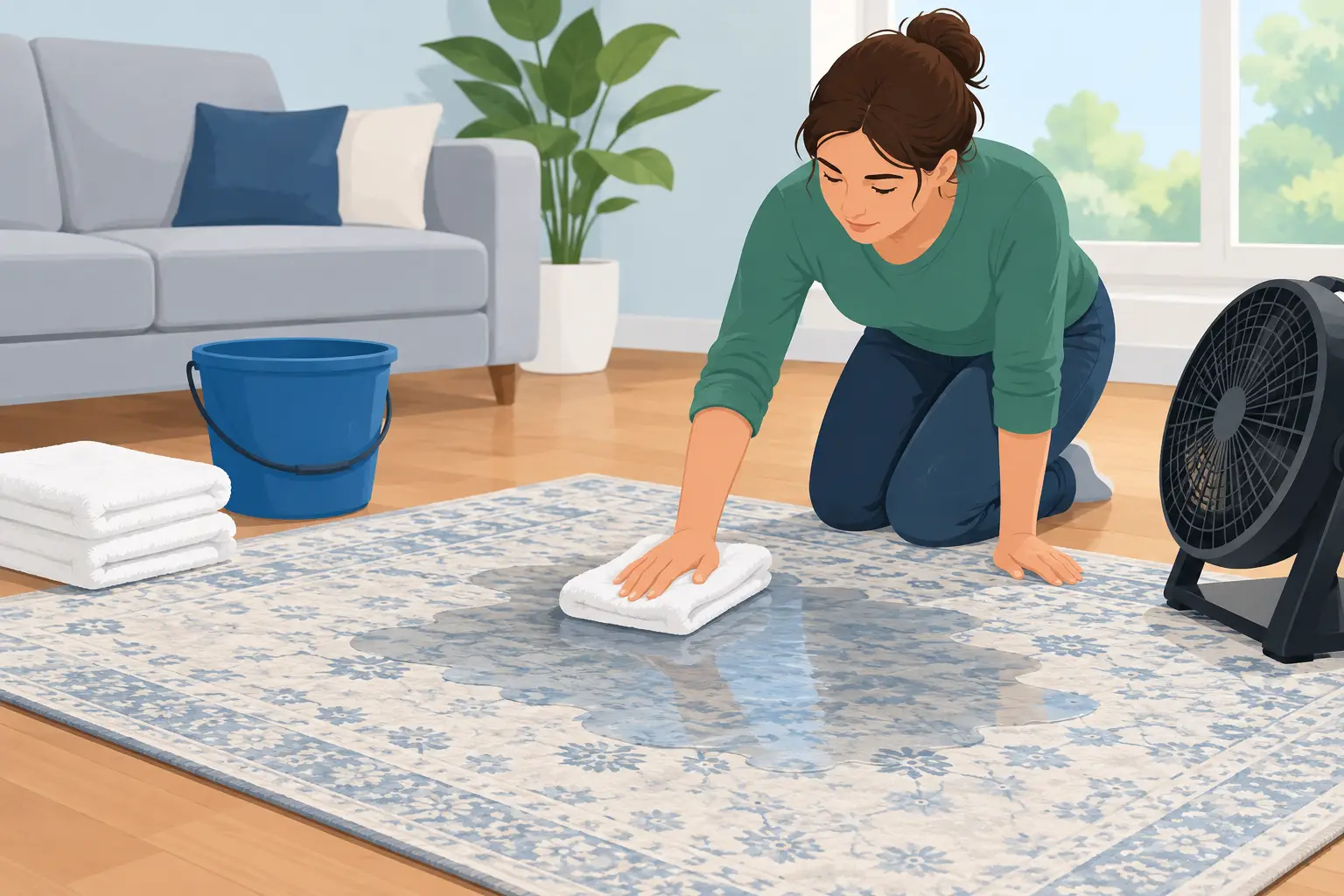
A soaked rug can look like a simple cleanup problem until the colors begin to run, the foundation stiffens, or a musty odor appears days later. Can wet rugs be saved? Often, yes, especially when the water is clean and the rug is dried correctly right away. But a handmade wool or silk rug is not wall-to-wall carpet. Its fibers, dyes, fringe, and foundation can react very differently to moisture.
The first hours matter most. Treat the rug as a valuable textile, not an interchangeable household item. Prompt, careful action can preserve its beauty and structure. Delays, aggressive scrubbing, and the wrong drying method can turn a manageable accident into permanent damage.
Can Wet Rugs Be Saved After a Leak or Flood?
Whether a wet rug can be saved depends on four things: the source of the water, how long the rug stayed wet, its materials and construction, and whether it can be thoroughly cleaned and dried. A rug dampened by a clean supply-line leak has a much stronger chance of recovery than one exposed to sewage, floodwater, or contaminated drain water.
A machine-made synthetic rug may tolerate moisture better than a hand-knotted wool rug in some respects, but it can still develop mold, odors, backing failure, or rippling. Natural-fiber rugs require greater caution. Wool can felt or shrink when mishandled, cotton foundations can weaken or distort, and silk can stain, lose luster, or suffer color movement. Antique and vegetable-dyed rugs need particularly measured treatment because their dyes may be less stable after saturation.
The good news is that water alone does not always ruin a rug. The greatest risk is prolonged moisture trapped deep in the pile and foundation. Even when the surface feels dry, the underside, padding, or interior fibers may still hold enough water to support mildew and cause structural stress.
What to Do in the First Few Hours
If the water source is safe, move quickly but gently. Shut off the source of the leak if possible, and keep foot traffic off the rug. Walking across a saturated rug can press soil deeper into the fibers and strain wet yarns.
For a small, clean-water incident, take these immediate steps:
- Remove furniture from the rug if it can be done without dragging legs across wet fibers. Place wood blocks or protective barriers under furniture that must remain nearby.
- Blot standing water with clean white towels. Press down firmly, then replace towels as they become saturated. Do not rub the pile.
- Lift the rug with help rather than pulling it by the fringe or one corner. Wet rugs are far heavier than they appear, and uneven lifting can stretch or tear the foundation.
- Increase air circulation with fans and a dehumidifier. Aim airflow across the room, not directly at delicate fringe or a single section of the rug.
Avoid using high heat, such as a hair dryer, space heater, or direct hot sun. Fast, uneven heating can shrink fibers, cause curling, fade colors, and leave the rug dry on top while moisture remains beneath. Do not fold a wet rug, roll it tightly, or leave it on a wet pad or hardwood floor.
If the rug is large, valuable, antique, handmade, or heavily saturated, the safest first move is professional pickup. A proper rug facility can inspect the fibers and dyes, remove contaminants, wash where appropriate, and dry the rug under controlled conditions.
Clean Water and Contaminated Water Are Different Emergencies
The type of water determines how the rug should be handled. Clean water from a supply line, rain entering through an open window, or an overflowing clean container may allow for prompt extraction and professional washing. Still, clean water can pull dyes, mobilize old stains, and create odor if drying is incomplete.
Gray water, such as water from a washing machine, dishwasher, or used bathtub, carries soil and microorganisms. The rug may need more than surface cleaning. Professional washing is usually the prudent choice, particularly for rugs with thick pile, cotton foundations, or absorbed detergent residue.
Black water is another matter. Sewage backups, toilet overflows involving waste, and outdoor floodwater can contain bacteria, chemicals, and other harmful contaminants. Do not attempt to clean these rugs in your living space. Keep people and pets away, avoid shaking or handling the rug unnecessarily, and seek professional guidance. In some cases, disposal may be the safer recommendation, especially when contamination has penetrated deeply into a thick or damaged rug.
Signs Your Rug Needs Professional Restoration
A rug should be evaluated by a specialist when it remains damp after 24 hours, smells musty, shows dye bleed, or begins to buckle. These problems can develop quietly. A rug may seem fine when first laid out, then reveal brown water marks, wavy edges, stiff areas, or mildew odor after it dries.
Color bleeding deserves immediate attention. Never scrub running colors or apply household spot removers in an effort to stop them. Friction can spread dye farther through the pile, while the wrong cleaner can alter delicate natural dyes. Specialized color-safe treatment may stabilize and correct the issue before it becomes more visible.
Look closely at the fringe and edges as well. Fringe is often an extension of the rug’s cotton foundation, not decorative trim. When it stays wet, it can discolor, weaken, tangle, or pull away from the body of the rug. Wet binding and serging may loosen, and warped corners can signal that the foundation has shifted.
At Persian Rug Spa, rugs are inspected as individual pieces because the right response for a contemporary area rug is not automatically right for a Persian, Oriental, silk, or inherited antique rug. Fiber type, construction, dye stability, age, and water exposure all guide the cleaning and restoration plan.
Why Household Methods Can Make Water Damage Worse
Rental carpet machines and in-home extraction tools can be useful for certain carpets, but they are not a complete answer for a water-damaged rug. They may remove surface moisture while leaving water and soil in the foundation. They can also overwet the rug, push cleaning residue into the pile, or create uneven drying.
Steam cleaning is another common mistake. Heat and moisture may set certain stains, encourage dye migration, and place stress on wool, silk, and cotton components. Bleach, ammonia, and strong alkaline cleaners are equally risky. A rug’s dyes and fibers may react in ways that are difficult or impossible to reverse.
Professional rug care is more deliberate. It can include dry-soil removal, controlled washing with fiber-appropriate solutions, treatment for spots or odor, careful rinsing, grooming, and measured drying. If water exposure has damaged the edges, fringe, or foundation, repair work may be needed after the rug is clean and stable. The goal is not simply to make the rug look dry. It is to preserve the masterpiece beneath your feet.
Preventing Mold, Odor, and Long-Term Damage
A rug does not need visible mold to be affected by moisture. Musty odor is often the earliest warning sign, and it should not be covered with fragrance sprays. Odor indicates that moisture, soil, or microbial growth may still be present in the fibers or foundation.
Check the rug pad and the floor below the rug. Pads can hold significant moisture and transfer odor back into a freshly cleaned rug. Depending on the material and extent of saturation, the pad may need to be professionally cleaned or replaced. Hardwood, laminate, and subflooring should also be dried and assessed independently.
Once the rug has been professionally cleaned and fully dried, regular vacuuming without a beater bar on fringe, prompt attention to spills, and occasional rotation can help protect it. In humid rooms, near exterior doors, or in homes with pets and children, periodic professional washing helps remove the fine soil that holds moisture and dulls color over time.
A wet rug can be an anxious sight, particularly when it is an heirloom or a piece chosen with care for your home. Give it the same respect you would give a treasured textile: act promptly, avoid shortcuts, and allow careful hands to protect the fibers, colors, and tradition woven into it.
