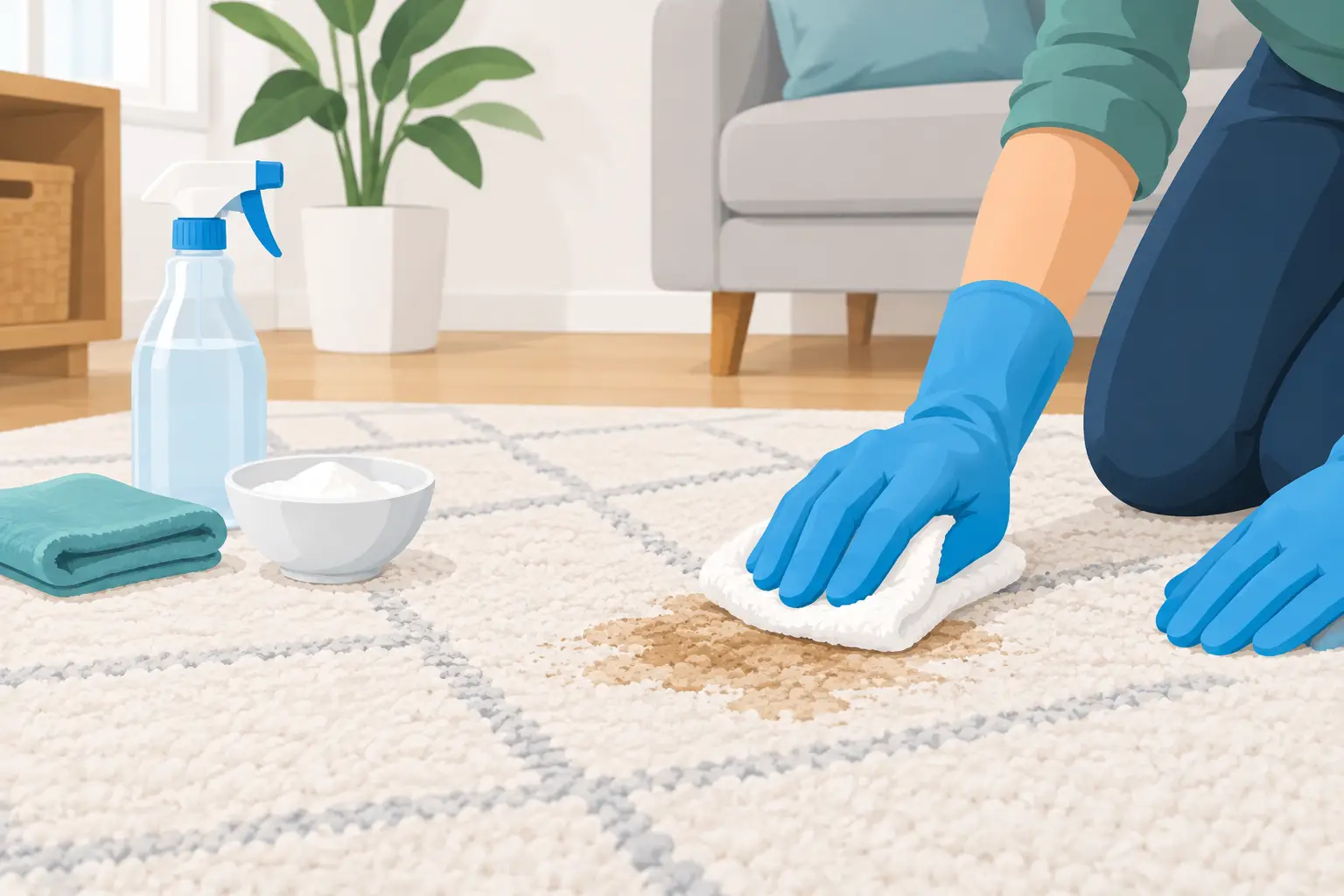
A spilled glass of red wine can feel like an emergency when it lands on a treasured rug. The instinct is often to scrub quickly, add soap, and hope for the best. But knowing how to remove rug stains begins with doing less, not more. On a fine wool, silk, Persian, or Oriental rug, aggressive cleaning can spread the stain, distort the pile, weaken fibers, or cause dyes to run.
Your rug may be a centerpiece of the room, but it can also be a living piece of history. Whether it is a family heirloom, a handmade investment, or a favorite contemporary area rug, the safest response depends on what caused the stain and what the rug is made of.
How to Remove Rug Stains Safely: Start With Assessment
Before applying water or any cleaning product, identify the spill. Is it water-based, oily, acidic, protein-based, or an unknown old stain? Coffee, wine, pet accidents, mud, cooking oil, ink, and candle wax all behave differently in rug fibers.
Just as important, consider the rug itself. Machine-made synthetic rugs can sometimes tolerate more home treatment than handmade rugs, but even they can develop water marks or backing problems. Wool is naturally resilient yet absorbent. Silk is delicate, highly sensitive to moisture, and easily damaged by rubbing. Antique rugs, vegetable dyes, and hand-knotted pieces require extra caution because their colors and structure may react unpredictably.
If the spill is fresh, act promptly. If it is old, resist the urge to use stronger products. A stain that has set into the foundation of a handmade rug may need professional washing rather than repeated spot treatments at home.
The First Five Minutes Matter
For most fresh spills, blotting is the right first step. Use a clean, white cotton towel or plain white paper towels, pressing gently from the outside of the spill toward the center. This helps prevent the mark from spreading into a larger ring.
Do not rub, scrub, or use a colored towel. Rubbing pushes liquid deeper into the pile and can create a fuzzy, worn-looking patch. Colored towels may transfer dye onto light rug fibers, leaving a second problem behind.
Continue blotting with dry sections of the towel until it no longer picks up moisture. If a thick spill, such as food or mud, remains on the surface, carefully lift it away with a spoon or the edge of a dull knife. Work slowly so you do not grind particles into the rug.
Avoid soaking the area. A rug can look dry on top while moisture travels into the backing, foundation, or floor beneath it. Excess moisture may lead to dye migration, mildew odors, wood-floor damage, or rippling in the rug.
A Gentle Method for Water-Soluble Spills
For a small, fresh water-soluble stain on a stable, colorfast rug, a light treatment may be appropriate. Water-soluble spills include many beverages, washable foods, and tracked-in dirt.
First, test any solution on an inconspicuous corner. Dampen a white cloth with cool water and press it lightly against the test area. If color transfers to the cloth, stop immediately. The rug should not be wet-cleaned at home.
If no color transfers, use a cloth barely dampened with cool water to blot the affected area. Cool water is preferable because hot water can set certain stains and may affect dyes. Follow with a dry towel, pressing firmly to absorb as much moisture as possible.
For a minor food or beverage mark, you may use a very small amount of mild, clear, pH-neutral detergent diluted in water. The emphasis is on very small. Apply the solution to the cloth, never directly onto the rug, then blot gently. Follow with a second cloth lightly dampened with plain water to remove detergent residue, and blot dry again.
Detergent left in a rug can attract new soil. When homeowners say a stain “came back,” the issue is sometimes residue drawing dirt to the same area after the rug has dried.
Treating Common Rug Stains With Care
Pet accidents
Pet urine needs quick attention because it can leave both a visible mark and a persistent odor. Blot thoroughly first. Then use a light application of cool water to dilute what remains, followed by more dry blotting. Do not use steam, ammonia, or heavily perfumed products. Heat can set odor, while ammonia-like products can encourage repeat marking.
If the urine reached the rug’s foundation or backing, surface cleaning will not fully solve the problem. Professional washing is often the better choice, particularly for wool or handmade rugs. Proper treatment addresses contamination below the pile rather than simply masking the odor.
Wine, coffee, and tea
Blot immediately and use cool water sparingly. These spills contain pigments that can settle quickly into natural fibers. Avoid salt, baking soda, and vinegar as first responses on valuable rugs. These common household recommendations can leave residue, alter pH, or create color changes in sensitive dyes.
A faint shadow that remains after gentle blotting is a reason to pause. Repeated home treatment can turn a manageable stain into a permanently lightened or distorted area.
Grease and cooking oil
Oil does not respond well to water alone. Blot surface oil without pressing it farther into the rug, then avoid adding dish soap or solvent without a fiber and dye assessment. Some products can strip natural oils from wool, affect dye stability, or spread the oily area outward.
Grease stains are especially good candidates for professional attention because the visible spot may be smaller than the contamination beneath the pile.
Mud and tracked-in soil
Let mud dry completely before attempting removal. Wet mud is easily pushed deeper into the rug. Once dry, gently vacuum the area without using a beater bar on delicate rugs. If soil remains, use careful dry extraction or arrange specialized cleaning instead of saturating the fibers.
Wax, gum, and sticky residue
For wax, allow it to harden and lift away loose pieces gently. Do not use a hot iron, hair dryer, or strong solvent on a fine rug. Heat can damage fibers, melt synthetic components, or transfer color. Gum and adhesive residue can be even more complicated, particularly when they cling to silk or dense wool pile.
What Not to Use on Fine Rugs
Household cleaning products are designed for convenience, not necessarily for handwoven textiles. Before reaching for a bottle under the sink, remember that a rug is not wall-to-wall carpet.
Avoid bleach, hydrogen peroxide, ammonia, harsh carpet shampoos, powdered cleaners, and strong alkaline or acidic solutions. Do not use a steam cleaner on a handmade, wool, silk, antique, or color-sensitive rug. Steam drives heat and moisture into fibers and foundations, increasing the risk of shrinkage, dye bleed, and structural damage.
Vinegar and baking soda are often promoted as universal cleaners, but they are not universal rug solutions. Their usefulness depends on the fiber, dye, stain, prior treatments, and amount used. On a valuable rug, uncertainty is a reason to stop rather than experiment.
When a Stain Needs Professional Rug Washing
Call for specialist care when the rug has unstable colors, silk fibers, fringe, antique construction, a strong pet odor, large spill area, unknown stain, or any sign of color transfer. Professional treatment is also wise when a stain has already been treated with multiple products. Mixing cleaners can complicate removal and make future restoration more difficult.
A rug-care specialist can inspect the fiber type, construction, dye stability, stain source, and condition of the foundation before choosing a treatment. This is different from a quick in-home carpet cleaning approach. Fine rugs often need controlled dust removal, hand washing, thorough rinsing, careful drying, and attention to fringe, edges, and pile direction.
At Persian Rug Spa, each rug is evaluated as an individual textile, with stain treatment chosen to protect its color, structure, beauty, and long-term value. For Southern California homeowners, free pickup and delivery make it easier to give a special rug the level of care it deserves.
Help Your Rug Dry Correctly
After any light at-home blotting, encourage airflow and keep foot traffic away from the area until it is completely dry. Place clean dry towels over the spot and weigh them down briefly to draw out remaining moisture, replacing them if they become damp.
Do not place the rug in direct, intense sunlight to speed drying. Prolonged sun exposure can fade color, and uneven drying may create water lines. If the rug feels damp underneath, smells musty, or develops ripples, it needs more than surface drying.
A careful response protects more than a clean-looking floor. It preserves the texture underfoot, the richness of the colors, and the story woven into the rug. When there is any doubt, leave the stain in patient hands rather than risking a masterpiece for the sake of a quick fix.
