A silk rug can look clean on the surface while holding fine grit deep between its fibers. That is the danger behind searching for how to clean silk rugs: the wrong method may brighten a spill temporarily but leave the rug dull, distorted, or permanently marked. Whether it is a Persian silk rug, a hand-knotted Oriental piece, or a treasured family heirloom, silk deserves the same thoughtful handling as a fine textile or work of art.
Silk is luminous because its fibers reflect light beautifully. Those fibers are also smooth, absorbent, and more vulnerable than wool. Moisture, friction, heat, alkaline products, and unstable dyes can all change the rug’s appearance. A careful response is usually more valuable than a fast one.
Why Silk Rugs Need Specialized Care
Silk rugs are often tightly woven with thousands of delicate knots per square foot. Their detail, sheen, and color variation are part of what makes them remarkable. They can also make damage more obvious. A small pulled loop, color bleed, rough brush mark, or uneven drying area may stand out against a fine silk field.
Many handmade rugs combine silk with wool or cotton. Others are made from viscose, bamboo silk, rayon, or other silk-like fibers. These materials do not respond to cleaning in the same way. Viscose, for example, can become weak when wet and may develop brownish water marks or a stiff texture after an improper cleaning attempt. Before any treatment, the fiber content and construction should be identified rather than assumed.
A standard in-home carpet cleaner is rarely the right answer for a silk rug. High-pressure extraction, hot water, aggressive brushing, and strong detergents are designed for broadloom carpet, not for a finely woven textile with sensitive dyes and hand-finished fringe. Even a product labeled gentle can be unsuitable if its pH, residue, or drying process is wrong for the rug.
What You Can Safely Do at Home
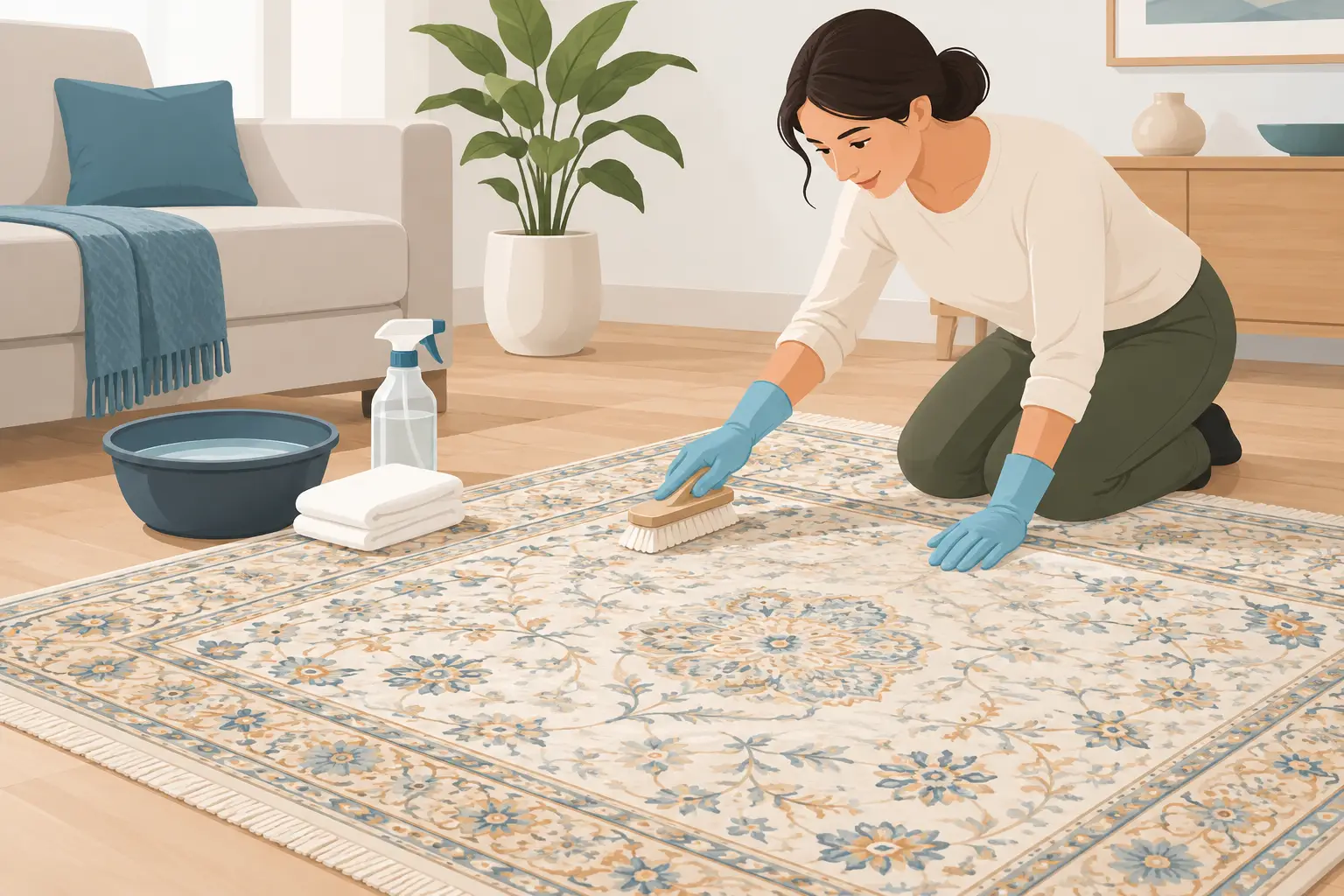
Home care for a silk rug should focus on prevention, dry maintenance, and quick spill control. It should not attempt to replace a full professional wash.
Remove dry soil carefully
Fine dirt acts like sandpaper underfoot. For routine maintenance, use a vacuum with suction only, keeping the beater bar and rotating brush switched off. Vacuum in the direction of the pile, and avoid repeatedly passing over fringe, edges, or any loose area. If the rug is especially delicate, use an upholstery attachment with a light touch or have it professionally dusted instead.
Do not shake a silk rug violently or beat it over a railing. This can stress the foundation and loosen fine knots. Rotating the rug occasionally can help distribute sun exposure and foot traffic, but move it with support rather than dragging it across a hard floor.
Blot spills, never scrub them
When a spill happens, speed matters. First, gently lift away solids with the edge of a spoon or a dull plastic scraper. Then place a clean white cotton towel or plain white paper towel over the area and press lightly. Replace the towel as it absorbs moisture.
Work from the outside of the spill toward the center so it does not spread. Do not rub, brush, or twist the pile. Friction can roughen silk fibers and push the stain farther into the foundation.
For plain water spills, blotting and allowing the area to air-dry may be all that is needed. Elevate the affected section slightly if possible and improve air circulation with a fan placed nearby, not directly against the rug at high force. Avoid heat, hair dryers, and direct sunlight, which may set a stain or cause uneven color change.
Treat products as a risk, not a shortcut
Avoid household stain sprays, dish soap, laundry detergent, vinegar, baking soda, hydrogen peroxide, and enzyme cleaners unless a rug-care specialist has identified the fiber and given specific instructions. These popular remedies can alter dyes, leave a sticky residue that attracts soil, or cause texture changes that cannot be reversed.
The same caution applies to rental machines and steam cleaners. Steam adds heat and moisture at once, while extraction machines may overwet the rug and its cotton foundation. The result can be dye migration, odor, rippling, mildew, or shrinkage.
How to Clean Silk Rugs After a Stain
A fresh, small spill may be manageable with patient blotting, but not every stain is a home-care situation. Red wine, coffee, tea, pet accidents, cooking oil, ink, cosmetics, and unknown liquids should be treated as urgent professional concerns. The longer these substances remain in silk, the harder they can be to remove without affecting color.
If you must take immediate action before professional help is available, blot only. Keep the rug flat, do not saturate the area, and save information about what spilled. Knowing whether a stain is oil-based, acidic, sugary, or protein-based helps a specialist choose a safer treatment.
Pet urine deserves particular attention. It may travel farther through the foundation than the visible spot suggests, and its salts can remain after surface cleaning. A rug that smells fine once dry may still hold residue that attracts moisture later. Thorough odor treatment often requires controlled flushing, specialized rinsing, and proper drying outside the home.
When a Full Professional Wash Is the Better Choice
Silk rugs usually benefit from professional evaluation when they look gray despite vacuuming, feel stiff or crunchy, have lingering odors, show color changes, or have been exposed to a significant spill. A full wash may also be appropriate after water damage, storage contamination, smoke exposure, or years of accumulated household dust and allergens.
The process should begin with inspection. An experienced rug specialist looks at the fiber, dyes, weave, fringe, backing, prior repairs, and areas of wear. Dye stability is tested before washing, because some natural and antique dyes need a more conservative process than newer synthetic colors.
Proper off-site rug washing allows for controlled dust removal, individualized spot treatment, gentle hand washing where appropriate, complete rinsing, and carefully managed drying. It also makes it possible to address fringe cleaning, edge wear, loose binding, and minor repairs before they become larger structural problems. The goal is not simply to make a silk rug look brighter. It is to remove damaging soil while preserving its hand, color, shape, and character.
At Persian Rug Spa, each rug is assessed as its own piece – not sent through a one-size-fits-all carpet-cleaning process. That distinction matters most when a rug carries craftsmanship, history, and sentimental value that cannot be replaced.
Protecting Silk Rugs Between Cleanings
Placement makes a meaningful difference. A silk rug is best suited to a lower-traffic room, such as a bedroom, formal living space, or quiet sitting area. If it is used in a busier part of the home, a quality rug pad can reduce slipping, cushion foot traffic, and limit abrasion from the floor beneath.
Keep silk rugs away from persistent direct sunlight when possible. Window coverings, UV-filtering film, or periodic rotation can help slow fading. For dining areas, use thoughtful placement and address food or drink spills immediately. Shoes, pet claws, and furniture legs can all create wear, so felt pads and occasional furniture repositioning are worthwhile.
Never store a silk rug in plastic for an extended period. It needs to be clean, thoroughly dry, and protected from moisture, insects, and crushing pressure. Professional preparation is especially wise for antique or valuable rugs before a long move or storage period.
A Note on Fringe, Pulls, and Loose Edges
Fringe is part of the rug’s foundation, not decorative trim that can safely be cut away. If it is tangled, darkened, or unraveling, resist the urge to pull, comb aggressively, or trim it yourself. Likewise, a snagged silk loop should not be pulled upward. These small details can lead to a larger loss of structure when ignored or handled roughly.
Early repair is usually more discreet and less costly than waiting until knots release or edges begin to open. A skilled repair can stabilize the area while keeping the rug’s original design and proportions in view.
A silk rug asks for restraint, not heroic cleaning. Blot a spill, protect the fibers from friction and heat, and let a qualified rug specialist handle the work that requires washing, stain chemistry, and careful drying. That approach gives your rug the best chance to remain a living piece of history under your feet for years to come.