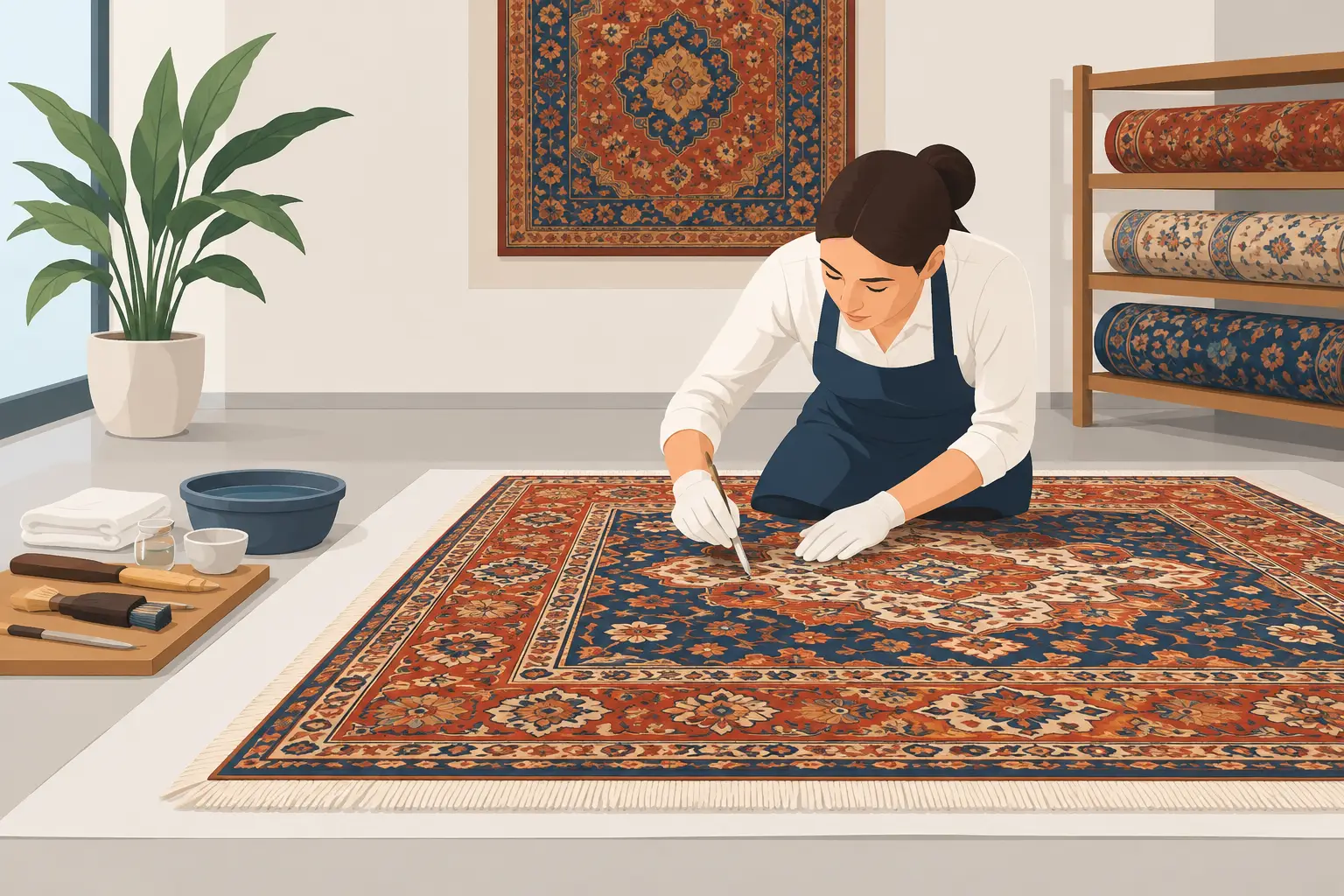
A beautiful rug rarely fails all at once. The first clues are usually quiet: fringe thinning at the ends, a curled corner that catches your foot, colors that seem duller than they once did, or a small opening along an edge. This rug restoration guide helps homeowners recognize those signs early and make thoughtful choices before ordinary wear becomes irreversible damage.
For a handmade Persian, Oriental, Turkish, Indian, wool, or silk rug, restoration is not simply about making it look newer. It is careful preservation of the fibers, dyes, foundation, and design that make the piece valuable. Whether your rug is a family heirloom, a significant design purchase, or a beloved part of a busy home, the right care can protect both its beauty and its useful life.
Restoration Starts With an Honest Inspection
A rug may need deep washing, repair, restoration, or a combination of all three. Those services overlap, but they solve different problems. A professional inspection should identify the rug’s fiber content, construction, dye stability, age, existing repairs, traffic patterns, stains, odors, and structural condition before any treatment begins.
Surface dust can make a rug appear faded when its colors are still healthy beneath embedded soil. On the other hand, a rug that looks merely worn may have broken warp or weft threads underneath, leaving its foundation vulnerable. Handwoven rugs are built from thousands or millions of individual knots held on a structural framework. When that framework begins to weaken, cleaning alone cannot restore its integrity.
A specialist also considers where the rug lives. A rug under a dining table faces food spills and chair friction. An entry rug collects grit that acts like sandpaper in the pile. A rug in direct Southern California sunlight can experience gradual fading. The best restoration plan reflects these real conditions rather than applying one standard process to every rug.
When Your Rug Needs More Than Cleaning
Professional washing removes embedded grit, allergens, residues, and odors that regular vacuuming cannot reach. It can revive the color and softness of wool pile, but washing is not a substitute for structural repair. If you see any of the following conditions, arrange an inspection before they spread:
- Fringe is unraveling, thinning, or separating from the body of the rug.
- Side binding or serging is loose, exposed, or worn through.
- Holes, tears, moth damage, or bare areas reveal the rug’s foundation.
- Corners are curling, rippling, or no longer lying flat.
- A spill has caused dye bleeding, stiffness, discoloration, or a persistent odor.
- The rug has old latex, adhesive, or deteriorating backing attached to it.
These are not cosmetic details. Fringe is often part of a handmade rug’s foundation, not an added trim. When it unravels, knots can eventually release from the ends. Likewise, a worn edge allows side knots to loosen one by one. Timely fringe work, binding, stitch locking, or edge repair is usually less invasive and more cost-effective than waiting until a larger section needs reconstruction.
What Skilled Rug Restoration Can Address
The appropriate repair depends on the rug and the nature of the damage. A well-executed restoration respects the original materials, weave, color placement, and character of the piece. It should strengthen the rug without making it look artificially new or covering problems that will return later.
Fringe repair may involve securing remaining foundation threads, rebuilding fringe where possible, or creating a clean, stable finish when original fringe cannot be saved. Side repair can include hand serging, binding, or rebuilding damaged edges to keep the rug from unraveling further. Holes and tears may require careful reweaving with compatible fibers and a close match to the surrounding pattern.
Other concerns call for a different approach. Blocking can correct distortion caused by moisture, improper cleaning, or uneven wear. Backing or leathering may offer extra support in specific applications, though neither is appropriate for every handmade rug. Older adhesives and failing carpet padding can create stiffness and discoloration, so their removal requires caution. The right answer depends on the rug’s construction and how it will be used after restoration.
Color work is especially delicate. Natural dyes, antique wool, and silk can react unpredictably to moisture and cleaning chemistry. A color-safe process begins with testing, controlled washing, and careful drying. Attempting to treat bleeding dyes with a household stain remover can set the problem deeper into the fibers or create a harsh, uneven result.
A Rug Restoration Guide to the Professional Process
A careful restoration process should feel deliberate, not mysterious. At Persian Rug Spa, each rug is approached as a living piece of history or a modern masterpiece with its own materials and needs. The goal is preserving tradition while enhancing the beauty and comfort it brings to your home.
First comes an evaluation. The rug is measured and examined for stains, wear, odors, dye concerns, prior repairs, and fiber damage. This is the point to discuss what matters most to you. Some owners want to stabilize a cherished antique while preserving every sign of age. Others need a family room rug cleaned, flattened, and reinforced for daily use. Both goals are valid, but they can lead to different recommendations.
Next, the rug is dusted and washed according to its fibers and condition. Hand washing and fiber-aware cleaning remove soil that can grind away at the pile over time. Controlled rinsing and drying matter as much as the wash itself, particularly for wool rugs prone to color migration or cellulosic fibers that can become distorted when improperly dried.
Once clean, repairs are easier to evaluate accurately. A stain may have hidden an area of pile loss, while embedded dirt may have made a fringe problem appear worse than it is. Hand repairs can then be completed with appropriate techniques such as stitch locking, reweaving, binding, edging, fringe work, or pile restoration. The finished rug is groomed, inspected, and prepared to lie properly in your home.
What Not to Do Before an Inspection
Homeowners often act quickly because they want to prevent a stain or loose thread from getting worse. That instinct is understandable, but a few common responses can create more damage than the original issue.
Do not pull loose fringe, cut it close to the rug, or tug at an unraveling edge. Avoid taping a tear from the front or applying glue to a hole. Adhesives can harden fibers, leave residues, and make future restoration more difficult. If a corner curls, resist the urge to soak it or force it flat under heavy furniture. Moisture and pressure can distort the foundation.
For a fresh spill, blot gently with a clean white cloth and avoid rubbing. Use plain water sparingly only if you know the rug’s dyes are stable, and never saturate a handmade rug. Skip supermarket spot removers, bleach, steam cleaning, and rental carpet-cleaning machines. These methods may be acceptable for some synthetic carpets, but they are a poor gamble for natural fibers, delicate dyes, and handwoven construction.
If the rug has water damage, pet contamination, mold concerns, or dye bleeding, move furniture off the affected area and seek professional guidance promptly. Time can make a major difference in odor removal, stain treatment, and fiber recovery.
Protecting a Restored Rug at Home
Restoration works best when paired with practical habits. Vacuum regularly without using a beater bar on fringe or delicate handwoven pile. Rotate the rug periodically so foot traffic and sunlight do not concentrate in one area. Use a quality rug pad suited to the floor beneath it to reduce slipping, cushion the foundation, and limit wear from movement.
Place entry rugs where they can be vacuumed often, and attend to spills immediately with blotting rather than scrubbing. If a rug sits in strong window light, consider curtains, shades, or periodic rotation. These small choices do not eliminate wear, but they slow it down significantly.
How often a rug needs professional washing depends on household traffic, pets, children, allergies, and the rug’s location. A lightly used formal-room rug may go several years between washings, while a busy living room or entry rug may need attention much sooner. Restoration should never be treated as a calendar-based package. It is a response to the rug in front of you.
A properly restored rug should still look like your rug: its colors should feel true, its pattern should remain honest, and its age should be respected. When you notice the first loose edge, dull traffic lane, or changing fringe, early expert care gives that piece the best chance to continue telling its story under your feet.
