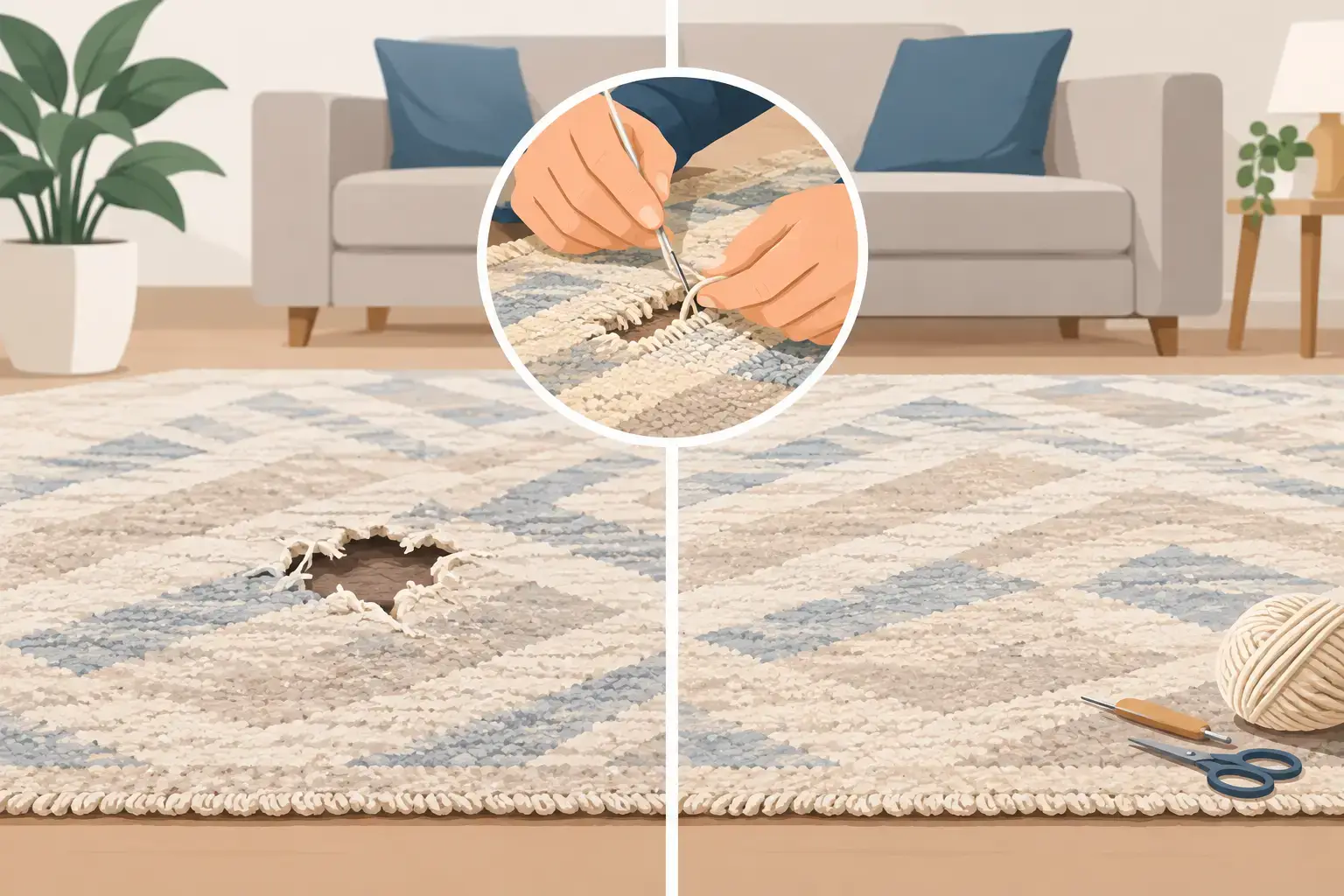
A hole in a treasured rug can feel like a permanent loss, especially when the rug is handmade, inherited, or central to the character of your home. Can rug holes be repaired? In many cases, yes. A skilled rug restoration specialist can rebuild damaged areas, stabilize surrounding fibers, and restore the pattern so the repair is secure and far less noticeable. The result depends on the rug’s construction, materials, age, damage location, and the amount of original fabric still intact.
A proper repair is not a patch placed over the surface. Fine rugs are woven structures, and restoring a hole means respecting that structure from the foundation upward. For Persian, Oriental, antique, wool, and silk rugs, this is careful handwork designed to preserve a living piece of history.
Can Rug Holes Be Repaired Without Replacing the Rug?
Most holes can be repaired when enough of the rug remains structurally sound around the damaged area. Even a missing section does not automatically mean a rug is beyond saving. Restoration may involve rebuilding the underlying foundation, reweaving missing warp and weft threads, and recreating the pile and pattern with compatible fibers.
The goal is not always to make damage completely invisible. On an older or one-of-a-kind rug, exact yarns and dyes may no longer exist. A conscientious specialist will aim for a repair that is stable, sympathetic to the original design, and visually blended from a normal viewing distance. That approach protects both the rug’s beauty and its authenticity.
There are situations where repair is less practical. If dry rot, moth damage, or widespread deterioration has weakened a large percentage of the rug, a full restoration may cost more than the rug’s market value. Sentimental value can still make restoration worthwhile, but the decision should be made with a clear, honest assessment of what the work can accomplish.
What Determines Whether a Hole Can Be Restored?
Every rug should be inspected individually before anyone promises a repair. Two holes of the same size can require very different work depending on how the rug was made and what caused the damage.
The Size and Location of the Damage
A small cigarette burn or puncture in an open field is often easier to blend than a hole running through a detailed border, medallion, or repeated floral motif. Patterned areas require the restorer to match multiple colors, knot directions, and shapes. Damage near an edge can also be complicated because the binding or selvage may need rebuilding before the field of the rug can be secured.
A hole in a high-traffic path deserves special attention. The repair must be strong enough to handle daily foot traffic, not merely attractive when the rug is lying still on a worktable.
The Rug’s Fiber and Construction
Hand-knotted rugs are typically repaired by hand knotting, using techniques that mirror their original construction. Flatweaves, kilims, needlepoint rugs, hooked rugs, and machine-made area rugs each call for a different strategy.
Wool is generally resilient and forgiving, while silk requires exceptional care. Silk fibers can be fine, delicate, and sensitive to tension. Antique rugs may also have fragile cotton foundations hidden beneath worn pile. Using the wrong thread, adhesive, or tension can make a damaged area stiffer, more visible, or more vulnerable to future tearing.
The Cause of the Hole
A hole caused by a single accident is different from damage caused by moths, pet chewing, water exposure, furniture friction, or prolonged wear. Before restoration begins, the underlying cause needs attention. Otherwise, a newly repaired area may be damaged again.
Moth damage, for example, often appears in hidden places under furniture or along the rug’s edges. The rug should be properly inspected and cleaned to remove larvae, eggs, and the organic debris that attracts them. If the surrounding fibers have been weakened, the repair area may need to extend beyond the visible hole.
Available Matching Materials
A restoration specialist may have a collection of wool, silk, cotton, and hand-spun yarns in many colors. In some cases, yarn can be carefully sourced from an inconspicuous part of the rug, such as a damaged fringe area, to make the repair blend more naturally. Color matching may also require custom dye work.
Perfect matching is more achievable on some contemporary rugs than on rare antique pieces with naturally faded vegetable dyes. A good restoration does not force a bright new color into a softly aged rug. It respects the rug’s existing tone and patina.
How Professional Hole Repair Works
The repair process begins with inspection, not stitching. The rug is evaluated for fiber type, construction, wear patterns, dye stability, and hidden weakness around the hole. It may need a careful hand wash before repair so embedded grit, oils, and dust do not remain trapped in the fibers or interfere with restoration.
Next, loose or damaged material is trimmed only as necessary, and the edges of the opening are stabilized. If the foundation is broken, new warp and weft threads are integrated into the original structure. This step is essential. Replacing pile without rebuilding the foundation is like repainting a wall with a crack still moving underneath it.
For hand-knotted rugs, the missing pile is then recreated knot by knot. The restorer follows the direction, density, color changes, and design of the surrounding area. Once the new fibers are secure, they are trimmed and blended to match the rug’s pile height. The repaired section may be blocked or gently shaped so it lies flat and supports even wear.
This work takes time because precision matters more than speed. A simple repair may be completed relatively quickly, while a large hole in an intricate antique Persian rug can require extensive hand restoration. An accurate estimate should reflect the actual condition of the rug, not just the measurement of the opening.
Why DIY Patches Usually Create a Bigger Problem
It is understandable to want a quick fix, especially for a small hole. However, iron-on patches, household glue, tape, and ordinary sewing repairs can permanently complicate professional restoration later.
Adhesives can seep into wool and cotton foundations, harden as they age, attract dirt, and make the repaired spot brittle. A surface patch may also pull against the surrounding weave, causing the opening to spread under foot traffic. On valuable rugs, even a well-intended repair with mismatched yarn can distract from the pattern and reduce visual appeal.
If you need to prevent further unraveling before professional evaluation, keep the rug flat, avoid vacuuming directly over the damaged area, and move it away from traffic. Do not cut away loose fibers or apply glue. Take clear photographs, including a wider image of the full rug, so a specialist can better understand the location and pattern.
When Repair Is Worth the Investment
Repair is often a wise choice when the rug is handmade, antique, high quality, custom-sized, or connected to family history. It can extend the life of a beautiful rug for many years while preventing a small opening from becoming a large structural loss.
It may also make sense for a newer rug that fits your room perfectly or has a design you would struggle to replace. In those cases, the value is not limited to resale price. A repaired rug can preserve the warmth, color, and craftsmanship that make a house feel like home.
For severely damaged rugs, ask for a straightforward discussion of options. Sometimes full restoration is the right choice. Other times, stabilizing the area, resizing the rug, or preserving it for lighter use is more sensible. A trustworthy specialist should explain those trade-offs clearly rather than recommend the most extensive work by default.
Protecting a Repaired Rug for the Years Ahead
After restoration, a quality rug pad can reduce friction, cushion foot traffic, and help prevent new tears. Rotate the rug periodically so sunlight and wear are distributed more evenly. Keep heavy furniture legs properly supported, and address spills promptly with blotting rather than scrubbing.
Professional washing also matters. Deeply embedded dirt acts like fine sandpaper in a rug’s foundation, gradually wearing fibers down from within. Regular, fiber-aware cleaning removes that abrasive soil while allowing a specialist to spot early edge wear, moth activity, or weak areas before they become holes.
At Persian Rug Spa, hole repair is approached as preservation rather than a quick cosmetic fix. With careful evaluation, hand restoration, and proper ongoing care, even a damaged rug can remain a meaningful part of your home instead of becoming a loss you did not have to accept.
