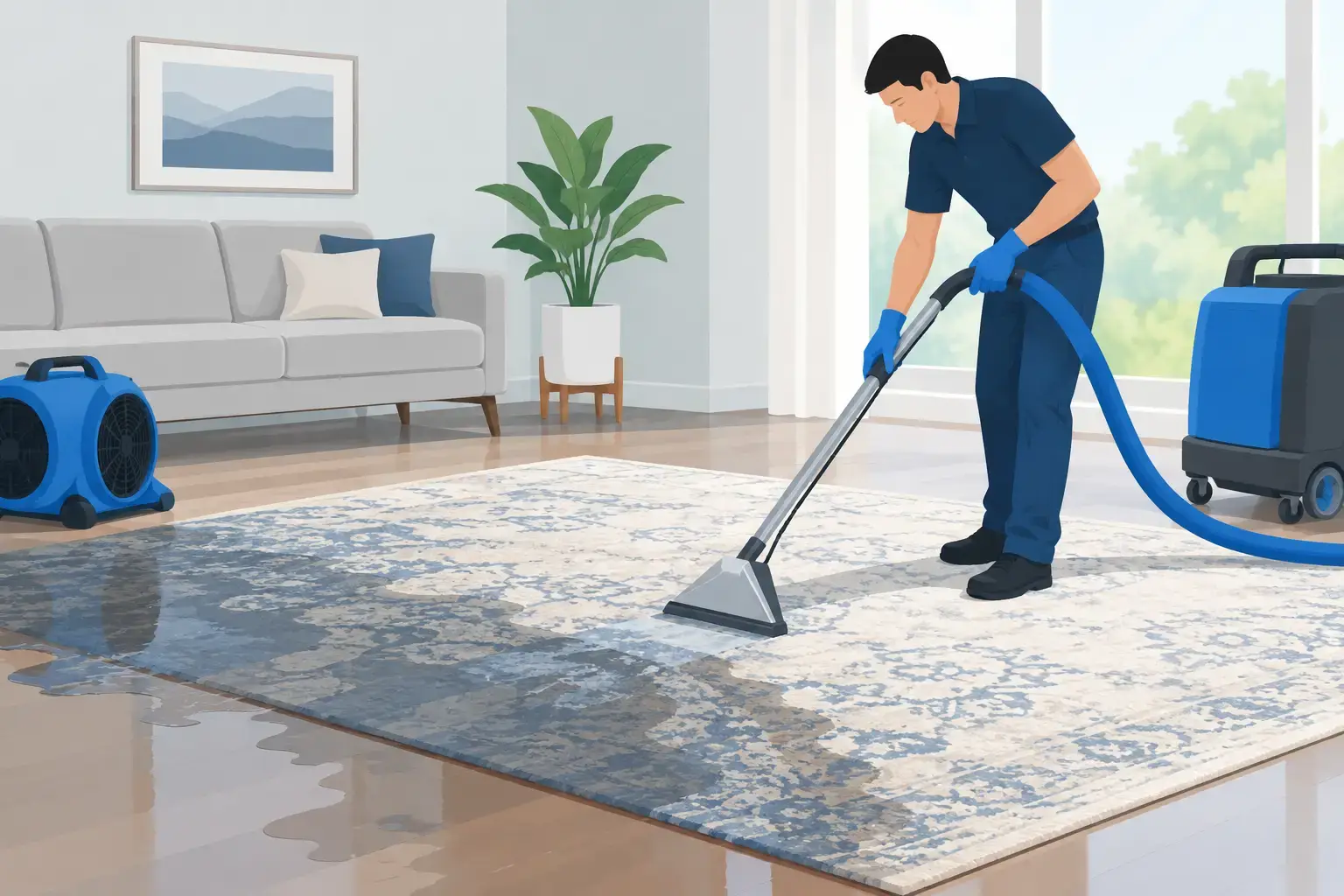
A wet rug can hold far more water than it appears to from the surface. What looks like a minor plumbing leak or an overnight spill may already be soaking into the foundation, fibers, fringe, and floor beneath it. Rug flood restoration is not simply about getting a rug dry. It is about stopping dye migration, preventing mold and odor, protecting the rug’s structure, and preserving a piece that may carry real financial or family value.
For a machine-made rug, quick action can still make a major difference. For a Persian, Oriental, silk, wool, antique, or handwoven rug, the first decisions after water exposure can determine whether the rug remains a living piece of history or suffers permanent damage.
What to Do Immediately After a Rug Flood
First, make the area safe. If water is near electrical outlets, appliances, or damaged flooring, avoid entering the space until the hazard is addressed. Stop the water source if possible, whether it is a broken supply line, overflowing fixture, roof leak, or appliance failure.
Once it is safe, move furniture off the rug. Place clean blocks, plastic tabs, or other barriers beneath furniture legs if the pieces cannot be moved completely. Do not drag heavy furniture across wet fibers, which can pull yarns, distort the weave, and press soil deeper into the rug.
If the rug is small enough to handle safely, lift it from the wet floor with help. Wet rugs are deceptively heavy, particularly wool rugs with dense piles. Support the rug from underneath rather than pulling it by the fringe or one corner. Fringe is decorative and structural, but it is not a handle.
Take clear photos of the rug, its labels if present, the affected room, and the source of the water before extensive cleanup begins. Documentation is useful for insurance claims and gives a restoration specialist a clearer picture of what occurred.
Avoid folding, rolling, or stacking a wet rug. Trapped moisture encourages mildew and can cause colors to bleed into one another. If you must relocate it briefly, lay it flat in a clean, dry location with airflow around it. Do not place it in direct, intense sunlight, which can create uneven fading and may set certain stains.
Why Rug Flood Restoration Requires Specialized Care
A rug is not wall-to-wall carpet. Its fibers, dyes, foundation, pile direction, and construction all influence the correct restoration process. Generic in-home carpet equipment is designed for broad synthetic carpeting, not necessarily for the hand-spun wool, vegetable dyes, cotton foundations, delicate silk, or detailed fringe found in fine area rugs.
Water exposure creates several risks at once. Natural dyes may run. Cotton foundations can shrink or weaken. Wool may develop a sour odor when moisture remains deep inside the fibers. Jute and certain backings can deteriorate, while adhesives used in some contemporary rugs can release or become brittle. A rug may feel dry on top while its underside remains wet enough to support microbial growth.
The water source matters, too. Clean water from a fresh supply-line leak is not treated the same as water from an overflowing toilet, storm runoff, or a sewer backup. When water is contaminated, professional handling is especially important. The rug may require controlled cleaning, sanitation, and careful inspection before it is safe to bring back into the home.
Time matters, but rushing into the wrong treatment can create damage that cannot be reversed. Heat, harsh detergents, aggressive extraction, and improper drying can turn a recoverable rug into a restoration project. A careful assessment is the better first step.
What Not to Do With a Flooded Rug
Homeowners often want to help immediately, and that instinct is understandable. Still, a few common responses can make the situation worse. Do not use a hair dryer, space heater, or high heat to force the rug dry. Uneven heat can shrink fibers, warp the foundation, and set odors or stains.
Do not apply bleach, vinegar, powdered cleaners, or fragrance-heavy deodorizers without knowing the fiber and dye composition. These products may alter color, stiffen wool, or leave residue that attracts more soil later. Renting a carpet-cleaning machine can also be risky because it may add water without fully removing what is already trapped below the surface.
Most importantly, do not assume a rug is safe because it no longer feels wet. Odor, mildew, and structural issues often develop after the surface has dried. A proper evaluation looks beyond the pile to the foundation, backing, fringe, and underside.
The Professional Rug Flood Restoration Process
Effective restoration begins with individual inspection. A specialist identifies the rug’s construction, materials, existing wear, color stability, and type of water exposure. This step guides every decision that follows. A valuable hand-knotted rug deserves a different approach than a tufted rug with a deteriorating backing.
The rug is then carefully dusted and prepared for washing when appropriate. Floodwater often carries fine grit, soil, and contaminants deep into the fibers. Removing this material is essential because particles left behind can abrade the pile over time.
Color-safe washing follows, using fiber-aware solutions and controlled techniques suited to the rug. Wool, silk, cotton, and synthetic fibers respond differently to moisture and cleaning agents. The goal is not merely a brighter appearance. It is to flush out embedded residue while protecting the color, texture, and integrity of the weave.
Controlled drying is equally important. Professional drying helps prevent lingering moisture in the rug’s foundation and reduces the risk of mildew, odor, and shape distortion. Depending on the rug’s condition, restoration may also include fringe cleaning, edge repair, reblocking, stitch locking, binding, or repair of weakened areas exposed by the water event.
At Persian Rug Spa, rugs are handled as individual works of textile art, with off-site cleaning and restoration designed for the specific fibers and construction of each piece. Free pickup and delivery can also spare homeowners from the difficult and potentially damaging task of transporting a saturated rug themselves.
When Is Restoration Worth It?
The answer depends on the rug, the water source, and the extent of the damage. A handmade rug with strong wool, a solid foundation, meaningful craftsmanship, or sentimental importance is often worth professional evaluation even after significant exposure. Many rugs that look beyond saving can regain their beauty when treated promptly and correctly.
On the other hand, some inexpensive tufted rugs or rugs with severely degraded glued backings may not be practical to restore. An honest inspection should address that directly. The right choice is not always the most extensive service. It is the option that respects the rug’s condition, value, and your goals for the home.
Insurance may also influence the decision. Keep receipts, photographs, and communications related to emergency mitigation and professional rug care. If the damage resulted from a covered loss, this information can support your claim.
Protecting the Rug and the Room After Water Damage
A restored rug should not return to a damp room or wet pad. Before reinstallation, confirm that the flooring and subfloor are fully dry and that the original leak or intrusion has been repaired. If the rug normally sits over a pad, inspect or replace the pad as needed. A contaminated or moisture-damaged pad can transfer odor and moisture back into a clean rug.
After the rug returns home, rotate it periodically to distribute foot traffic and keep it away from recurring moisture risks near exterior doors, pet bowls, or plumbing fixtures. For valuable rugs, occasional professional washing is part of preservation, not a last resort after visible staining. It removes the fine abrasive soil that vacuuming cannot always reach and allows specialists to spot small structural concerns before they become costly repairs.
A flooded rug does not have to become a loss. The most protective move is to act calmly, avoid quick fixes, and place its care in experienced hands while the damage is still manageable. Your rug has already survived years of footsteps, gatherings, and daily life. With the right restoration, it can continue telling that story beautifully.
