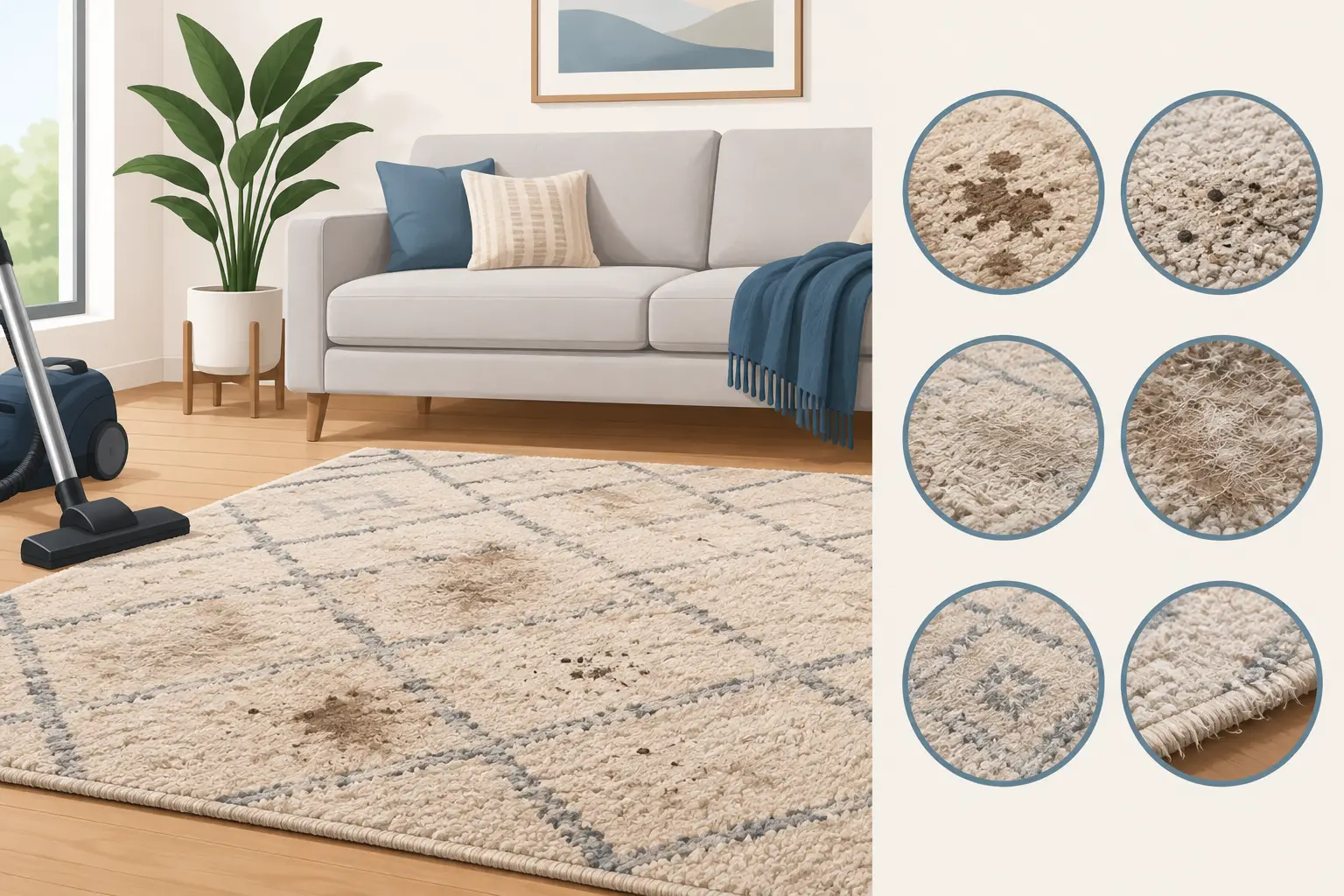
A fine rug can look acceptable long after its fibers have begun holding soil, oils, and residue deep below the surface. That is why the most common signs your rug needs cleaning are not always dramatic stains. A Persian, Oriental, wool, silk, or handmade rug is a living piece of history in your home. Regular professional washing helps preserve its color, texture, structure, and the craftsmanship woven into every detail.
Vacuuming is helpful, but it only removes a portion of dry surface debris. Foot traffic presses fine grit into the foundation of a rug, where it can act like sandpaper each time someone walks across it. The goal is not simply to make a rug look cleaner. It is to remove the damaging material before it shortens the rug’s life.
Signs Your Rug Needs Cleaning: What to Watch For
1. The colors look dull or gray
When a rug seems less vibrant than it once did, embedded soil may be masking its true color. This is especially noticeable in richly dyed Persian and Oriental rugs, where reds, blues, golds, and ivory details can lose their visual depth gradually.
Dullness is easy to overlook because it develops over time. If you move a rug away from furniture or compare a protected edge with the center walking area, the difference can be surprising. Proper hand washing can lift settled soil and reveal the pattern and color that have been hidden beneath it.
2. The rug feels gritty, stiff, or flattened
A rug should feel comfortable and flexible underfoot. If the pile feels coarse, crunchy, unusually firm, or compressed in traffic lanes, dirt may be packed between the fibers. Wool has natural resilience, but it cannot spring back properly when it is burdened by soil and residue.
Flattening can also be a sign of wear, particularly in older handmade rugs. Cleaning will not replace missing pile, but removing abrasive grit can slow further damage. An experienced rug specialist can assess whether the rug needs washing alone or whether restoration, blocking, or pile repair should be considered at the same time.
3. There is an odor you cannot vacuum away
A musty, sour, pet-related, or stale odor is more than a household nuisance. It often means that organic material, moisture, pet accidents, or old spills have penetrated beyond the top fibers. Sprays and deodorizing powders may cover the smell temporarily, but they rarely remove the source.
Odors deserve prompt attention when a rug has been exposed to pet urine, food spills, water damage, or prolonged humidity. Some situations require specialized odor treatment and controlled drying, particularly with wool, silk, cotton foundations, and antique textiles. Leaving moisture or contamination in place can contribute to dye movement, mildew, and fiber deterioration.
4. Pet hair and allergens seem impossible to remove
If your home has pets, a rug can collect more than visible fur. Dander, outdoor pollen, dust, and skin cells work their way down into the pile and foundation. Even rugs that are vacuumed regularly may retain a significant amount of fine particulate matter.
For families with allergy sensitivities, deep rug washing can make a meaningful difference in how clean a room feels. The right cleaning method depends on the rug’s fibers, dyes, age, construction, and condition. A delicate silk or hand-knotted antique should never be treated as though it were standard wall-to-wall carpet.
5. A spill left a spot, even if it faded
A stain that appears to have faded can still leave residue behind. Coffee, wine, juice, cooking oils, pet accidents, and cleaning products may attract more soil over time, creating a darkened or sticky area. Old spots also tend to reappear after humid weather or repeated foot traffic.
Avoid aggressive scrubbing, steam cleaning, or using a store-bought chemical without understanding the rug’s fiber and dye type. Some cleaning products can bleach natural dyes, strip wool of its protective oils, or cause colors to bleed. Blot fresh spills gently with a clean white cloth and seek professional guidance for valuable, handmade, or antique rugs.
6. The fringe is dark, tangled, or breaking
Fringe is not an accessory added to the edge of many handmade rugs. It is often part of the rug’s foundation. When fringe becomes gray, brittle, tangled, or shortened, it may indicate both accumulated soil and structural stress.
Fringe should be handled carefully. Pulling, brushing aggressively, or trimming it without evaluating the foundation can create a larger repair issue. Professional fringe work can clean, secure, and restore damaged ends while protecting the rug’s underlying construction.
7. Edges are curling, unraveling, or showing bare spots
The edges of a rug take considerable abuse from shoes, furniture movement, vacuum heads, and everyday traffic. A loose binding, curled corner, or unraveling side cord is a warning sign that should not be ignored. Once the edge opens, the rug can begin losing knots or wefts from the side inward.
Cleaning before repair is often part of proper restoration because soil can hide the true condition of the fibers. Depending on the rug, the appropriate solution may involve binding, edging, serging, stitch locking, or careful hand repair. Early attention is generally simpler and less costly than waiting until the damage spreads.
8. The rug has not been professionally washed in years
There is no single schedule that fits every rug. A lightly used decorative rug in a quiet room may need professional washing less often than a family-room rug near an entryway. Homes with children, pets, frequent entertaining, or open windows may need more frequent care because soil enters and settles faster.
As a general guide, many area rugs benefit from professional washing every one to three years. High-traffic rugs, pet-affected rugs, and rugs exposed to spills may need service sooner. A valuable heirloom can also benefit from periodic inspection even when it does not look visibly dirty.
9. The rug was exposed to water or flooding
Water exposure requires faster action than ordinary cleaning. A soaked rug can develop odors, mildew, dye migration, and foundation damage if it is not properly treated and dried. The risk is higher with cotton foundations, natural dyes, and older handmade pieces.
Do not assume a rug is safe simply because the surface feels dry. Moisture can remain beneath the pile or inside the foundation. A professional assessment can determine whether the rug needs washing, contamination treatment, controlled drying, or restoration work.
10. You inherited or purchased a rug with an unknown history
An inherited rug may carry decades of dust, storage odors, pet residue, or unseen damage. The same is true for rugs purchased secondhand or brought home from an estate sale. Before placing one in a bedroom, nursery, or main living space, it is wise to have it inspected and washed appropriately.
This is also an opportunity to learn what you own. Construction, fiber content, age, and condition all influence the safest approach. A specialist can identify concerns such as weak areas, unstable dyes, old repairs, moth activity, or worn backing before they become more serious.
Why Professional Rug Washing Is Different
A rug is not simply a smaller carpet. Many valuable rugs contain natural wool, silk, cotton foundations, hand-tied knots, vegetable or synthetic dyes, and delicate fringe that require individualized care. Generic in-home carpet cleaning can leave behind moisture, detergent residue, or color damage when used on rugs that need a more controlled process.
Professional off-site washing allows the rug to be inspected, dusted, spot-treated, washed according to its materials, rinsed thoroughly, and dried correctly. The best approach is not always the strongest cleaning method. It is the method that safely removes soil while preserving the fibers, dyes, shape, and character of the piece.
At Persian Rug Spa, each rug is treated as a masterpiece rather than an interchangeable household item. Careful washing, eco-friendly solutions, and skilled repair work help protect both the beauty of the rug and the memories attached to it. Free pickup and delivery also make proper care easier for homeowners throughout the area.
If your rug is giving you even one or two of these signals, do not wait for visible damage to make the decision for you. A timely professional inspection can protect the details that make it worth keeping – its color, its craftsmanship, and its place in your home.
