A rug can look clean on the surface while holding pounds of dry soil, pet dander, sand, and residue deep between its fibers. That is why rug washing versus steam cleaning is not simply a question of convenience. For a Persian, Oriental, wool, silk, or handmade rug, the cleaning method can affect its color, texture, structure, and lifespan.
Steam cleaning may be a practical option for certain machine-made rugs and light maintenance needs. Yet a valuable area rug is not wall-to-wall carpet cut from a roll. It is often a living piece of history, made with natural fibers, hand-tied knots, delicate fringe, and dyes that deserve individual care.
Rug Washing Versus Steam Cleaning: The Essential Difference
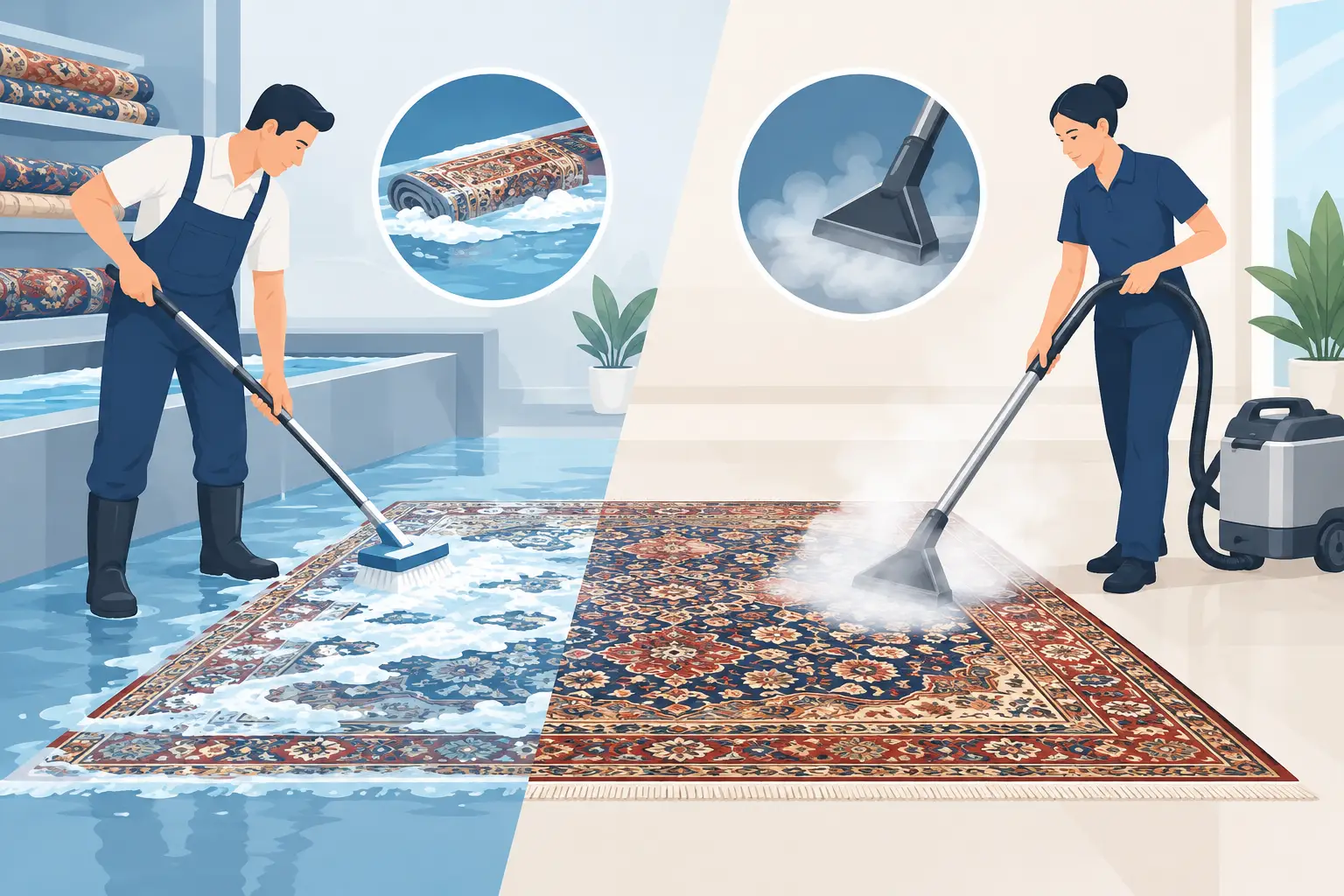
Professional rug washing is an off-site process designed to clean the entire rug, including the foundation beneath the pile. The rug is inspected, dusted to remove embedded dry soil, tested for color stability, treated for spots where appropriate, washed with fiber-safe solutions, rinsed thoroughly, and dried under controlled conditions. The exact approach changes with the rug’s materials, age, construction, and condition.
Steam cleaning, as the term is commonly used, usually refers to in-home hot-water extraction rather than literal steam. A technician applies cleaning solution, injects heated water, and extracts moisture from the rug in place. This can refresh the visible pile and remove some surface soil, but it has limits. The rug remains on the floor, and the process may not fully remove the fine grit and residue trapped in its foundation.
That distinction matters because dry soil is abrasive. Every time someone walks across a dirty rug, particles can rub against wool or cotton fibers like very fine sandpaper. A surface-level cleaning can improve appearance, while a proper wash addresses the soil that contributes to premature wear.
When Steam Cleaning May Make Sense
Steam cleaning is not automatically the wrong choice. It may be reasonable for a durable, low-value synthetic rug with light traffic, no color concerns, and no history of pet accidents or heavy staining. It can also be useful when a homeowner needs a quick refresh and understands that it is not the same as a full restorative washing.
The appeal is understandable. In-home extraction is convenient, and a rug does not have to leave the house. For some contemporary rugs, it can brighten the pile and reduce light surface dirt. The key is matching the method to the rug rather than treating every rug as if it were the same material.
Even then, drying is critical. If a rug is left damp too long, moisture can reach the backing, pad, or wood floor below. This may lead to odors, browning, mildew concerns, or dye movement in rugs with unstable colors. Thick rugs, wool rugs, and rugs laid over pads are especially likely to hold moisture longer than homeowners expect.
Why Fine Rugs Often Need Professional Washing
Handmade rugs are built in layers. A wool or silk pile sits over a cotton, wool, or silk foundation, with knots, wefts, fringe, bindings, and edges all working together. Deep soil, spills, and residues can settle below the face fibers, where a typical in-home machine cannot fully reach or safely flush.
A dedicated wash allows a rug specialist to see what the rug needs before water touches it. This begins with an inspection for weak areas, dry rot, moth damage, loose fringe, fading, prior repairs, urine contamination, and unstable dyes. A fragile antique rug may need a gentle, low-moisture method. A sturdy wool rug with years of traffic may benefit from more thorough washing and multiple rinses. There is no responsible one-size-fits-all formula.
Color testing is particularly important for Persian and Oriental rugs. Some reds, blues, and other saturated dyes can bleed if they are exposed to the wrong chemistry, heat, or amount of moisture. A skilled rug-care professional selects cleaning solutions and water temperature with the fibers and dyes in mind, then manages drying carefully to preserve clear patterns and rich color.
Professional washing also makes it possible to treat odors at their source. Pet urine, for example, may travel through the pile into the foundation. Cleaning only the top fibers can leave the underlying contamination behind, allowing odor to return when humidity rises. A full wash, followed by proper deodorizing treatment and controlled drying, gives the rug a far better chance of being truly refreshed.
Dust Removal Is More Important Than It Sounds
Before washing, a rug should be thoroughly dusted. This step is easy to overlook because the dirt is not always visible. Fine sand, skin cells, dry pet debris, and airborne particles work their way down through the pile over time.
When that material stays in the rug, adding water can turn it into mud within the foundation. Removing dry soil first allows washing solutions to work more effectively and helps protect the fibers from unnecessary abrasion. For rugs in Ventura County homes with pets, children, open windows, or frequent entertaining, this deeper level of care can make a noticeable difference.
Washing Can Support Restoration Work
Cleaning and repair often belong in the same conversation. Dirt can hide weakened edges, loose knots, damaged fringe, or small holes that are likely to grow. Once the rug is cleaned and inspected, a specialist can identify whether it needs fringe work, binding, serging, stitch locking, blocking, backing, or another preservation service.
This is not about making an old rug look artificially new. It is about stopping small concerns before they become major structural damage. Preserving tradition also means respecting the character and honest age of an heirloom piece.
Risks of Using the Wrong Method
The biggest risk is assuming that a beautiful rug can be cleaned exactly like installed carpet. Heated extraction may be too aggressive for some natural fibers, while excessive moisture can distort a cotton foundation or cause colors to migrate. Wool can feel harsh or lose its natural luster if it is treated with unsuitable detergents. Silk requires even greater caution because its fibers are delicate and its sheen can be permanently affected by improper cleaning.
Fringe is another concern. On many handmade rugs, fringe is not decorative trim. It is part of the rug’s foundation. Aggressive brushing, harsh whitening agents, or repeated in-home extraction can weaken those threads and accelerate unraveling.
There is also the issue of residue. If cleaning product remains in a rug after steam extraction, it can attract fresh soil and make the rug look dirty again sooner. A thorough wash includes rinsing designed to remove both loosened soil and cleaning agents, not merely lift moisture from the surface.
How to Choose the Right Care for Your Rug
Start with the rug’s construction and value. A machine-made polypropylene accent rug has different needs from a hand-knotted Persian rug inherited from a grandparent. Look at the fiber content, age, thickness, dyes, fringe, condition, and what has happened to the rug. A single coffee spill requires a different response than years of embedded dirt or a pet accident.
If you are unsure, avoid experimenting with rental machines, strong spot removers, or household steamers. Blot fresh spills promptly with a clean white towel, working from the outside of the spill inward. Do not scrub, and do not soak the area. Then have the rug evaluated before a stain has time to set or a moisture issue spreads.
A qualified specialist should be willing to explain the recommended method in plain language. Ask whether the rug will be inspected and color tested, how it will be dried, and whether repairs will be identified before cleaning begins. Clear answers are a sign that your rug is being treated as an individual textile, not as another piece of carpet.
A Better Standard for Rugs You Want to Keep
Steam cleaning can have a place for simple, durable rugs that need a light refresh. But when the rug is handmade, natural-fiber, antique, sentimental, expensive, heavily soiled, or affected by pet odors, professional washing is usually the safer and more complete choice.
At Persian Rug Spa, every rug is approached with the care of a masterpiece and the practical attention of a local service team. Free pickup and delivery make off-site washing easier for Camarillo and Southern California homeowners, while careful inspection helps ensure the cleaning plan respects the rug in front of us.
The best next step is not to choose a machine first. Choose the level of care your rug has earned, especially if it is meant to stay in your home and your family for many more years.
