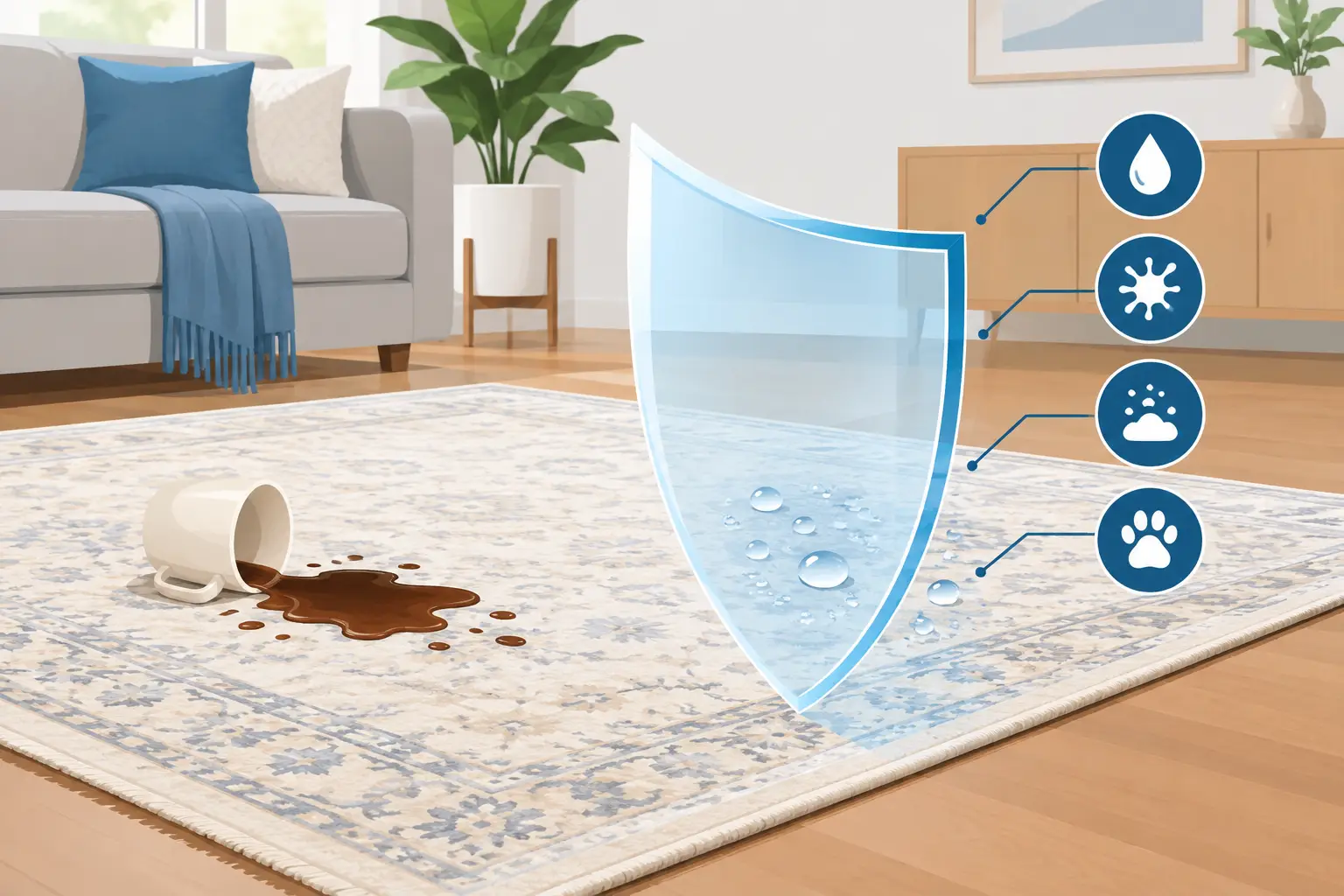
A wine glass tips near the edge of a hand-knotted rug. A dog comes in with damp paws. Children settle in for a movie with snacks. These are ordinary moments, but they can leave lasting marks when a rug has natural fibers, delicate dyes, or a light-colored field. A professional rug protection treatment can give you more time to respond to spills and reduce the chance that everyday soil becomes embedded in the pile. It is not a magic shield, though, and the right approach depends on the rug in front of you.
For a Persian, Oriental, silk, wool, antique, or handmade rug, protection should be part of a thoughtful care plan. Each piece deserves an inspection of its fibers, construction, dyes, condition, and use in the home before any product is considered. A living piece of history should never receive a one-size-fits-all treatment.
What Rug Protection Treatment Is Designed to Do
Professional rug protection is typically applied after a thorough wash, when the fibers are clean and free of the oily residue and fine grit that can attract more soil. The treatment is designed to create a protective barrier around individual fibers. Instead of allowing a fresh spill to absorb immediately, it can help liquid bead closer to the surface for a short period.
That extra response time matters. Blotting a spill promptly is far more effective when it has not traveled deep into the foundation and pile. Protection can also make routine vacuuming more productive because dry soil is less likely to cling tightly to treated fibers.
A properly selected treatment may help with common household threats such as drink spills, food residue, tracked-in dirt, and oily soil. It can reduce friction-related wear by helping fibers release dirt more easily during regular maintenance. In a busy family room, entry area, dining space, or home with pets, that benefit can help a well-made rug retain its color and definition longer.
Still, protection does not make a rug waterproof, stain-proof, or immune to damage. A spill left overnight can stain treated fibers. Pet accidents, red wine, coffee, cooking oil, ink, and highly pigmented foods can require professional attention even when a protectant was applied. Treatment also cannot repair moth damage, sun fading, brittle fibers, failing backing, worn fringe, or weak edges.
Why Fine Rugs Need a Different Standard of Protection
A machine-made synthetic area rug and a handwoven wool or silk rug may look similar from across the room, but they do not respond to moisture, chemicals, and abrasion in the same way. Fine rugs can contain natural lanolin in wool, vegetable or synthetic dyes, cotton foundations, silk highlights, and irregular hand-spun yarns. These qualities create the depth and beauty owners love, yet they require careful handling.
The wrong protector may alter the hand of a rug, leave residue, affect absorbency unevenly, or create a stiff feel in fine fibers. More seriously, an unsuitable chemical or poor application process can create color concerns on unstable dyes. This is why generic carpet-cleaning methods are not an appropriate shortcut for heirloom textiles.
A rug specialist starts with the condition of the piece. Is it clean enough for treatment? Are the dyes stable? Is there pre-existing fading, wear, staining, or a fragile foundation? Does the rug have wool, silk, viscose, cotton, or a blended construction? The answers shape whether protection is advisable and which formula and application method are appropriate.
For antique rugs and especially delicate silk pieces, the best recommendation may sometimes be careful placement, regular professional washing, and a quality rug pad rather than a topical treatment. That is not a lesser standard of care. It is preservation-minded judgment.
Clean First, Protect Second
Applying protection over hidden soil is a little like sealing dust beneath a finish. It does not solve the underlying problem, and it may make future cleaning more difficult. Fine particles of sand, dry soil, and grit work down into a rug over time, cutting at fibers as people walk across the surface. Vacuuming helps, but it cannot remove every contaminant caught near the foundation.
Professional off-site washing allows the rug to be assessed, dusted, hand washed with fiber-aware solutions, rinsed, and dried under controlled conditions before protection is applied. The goal is not simply a fresher appearance. It is to remove what is quietly wearing away the rug from within.
At Persian Rug Spa, protection is considered in the context of the rug’s full condition, not sold as an automatic add-on. That distinction helps preserve the feel, color, and structure that make a rug a masterpiece in the first place.
When Protection Makes the Most Sense
Rug protection treatment is particularly useful when a rug lives where life happens. A durable wool area rug under a dining table, a family-room rug near a sliding door, or a newer handmade rug in a home with children and pets may be a strong candidate after professional washing.
It can also be practical for rugs with lighter backgrounds or detailed patterns where small spots are more noticeable. A protector gives homeowners a better chance to address accidents before they become permanent visual distractions.
The decision is less straightforward for rugs that receive little foot traffic, rugs displayed as collectible pieces, and rugs with fragile fibers or previous color issues. In those cases, prevention may rely more on placement and monitoring. Keep valuable rugs away from direct, sustained sunlight when possible. Use window coverings to limit fading, rotate rugs periodically, and use a properly sized rug pad to reduce slipping and uneven wear.
Protection also needs renewal. Foot traffic, vacuuming, spot cleaning, and professional washing gradually reduce its effectiveness. How often a rug should be retreated depends on fiber type and household activity, not a fixed calendar. A rug in a quiet formal room may need attention far less often than one in a busy home with pets.
How to Respond When a Spill Happens
Even a protected rug needs a calm, quick response. Do not scrub. Scrubbing pushes material deeper into the pile, spreads the stain, and can distort delicate fibers.
Start by gently lifting solids with a spoon or dull edge. Then blot the area with a clean white towel, working from the outer edge toward the center. Continue with a fresh dry section of towel until you are no longer picking up moisture. Avoid household spotters, bleach, dish soap, and rental-machine solutions unless a rug professional has specifically recommended them for your rug. Products that seem harmless can cause dye bleeding, browning, texture changes, or sticky residue.
If color transfers to the towel, the spill has a strong odor, or the rug remains damp, professional care is the safer next step. Water reaching a cotton foundation can create concerns that are not visible from the surface. Prompt attention is especially valuable for pet urine, which can affect dyes and fibers as it dries.
Protection Works Best With Everyday Prevention
A treatment is one layer of defense, not the entire care plan. Routine vacuuming without an aggressive beater bar helps remove dry soil before it settles deeply. Rotating the rug every six to twelve months can distribute sunlight and traffic patterns more evenly. A quality rug pad cushions the pile, improves stability, and reduces wear caused by movement against the floor.
Watch the edges and fringe as well. Fringe is part of the rug’s foundation, not decorative trim to be pulled or caught in a vacuum. Early attention to loose binding, unraveling edges, and small holes can prevent a minor repair from becoming a structural restoration project.
The best protection is the kind that respects what the rug is made of and how your household actually uses it. When a protector is selected carefully, applied to a properly cleaned rug, and paired with sensible maintenance, it helps preserve the beauty you see every day while honoring the craftsmanship beneath your feet.
