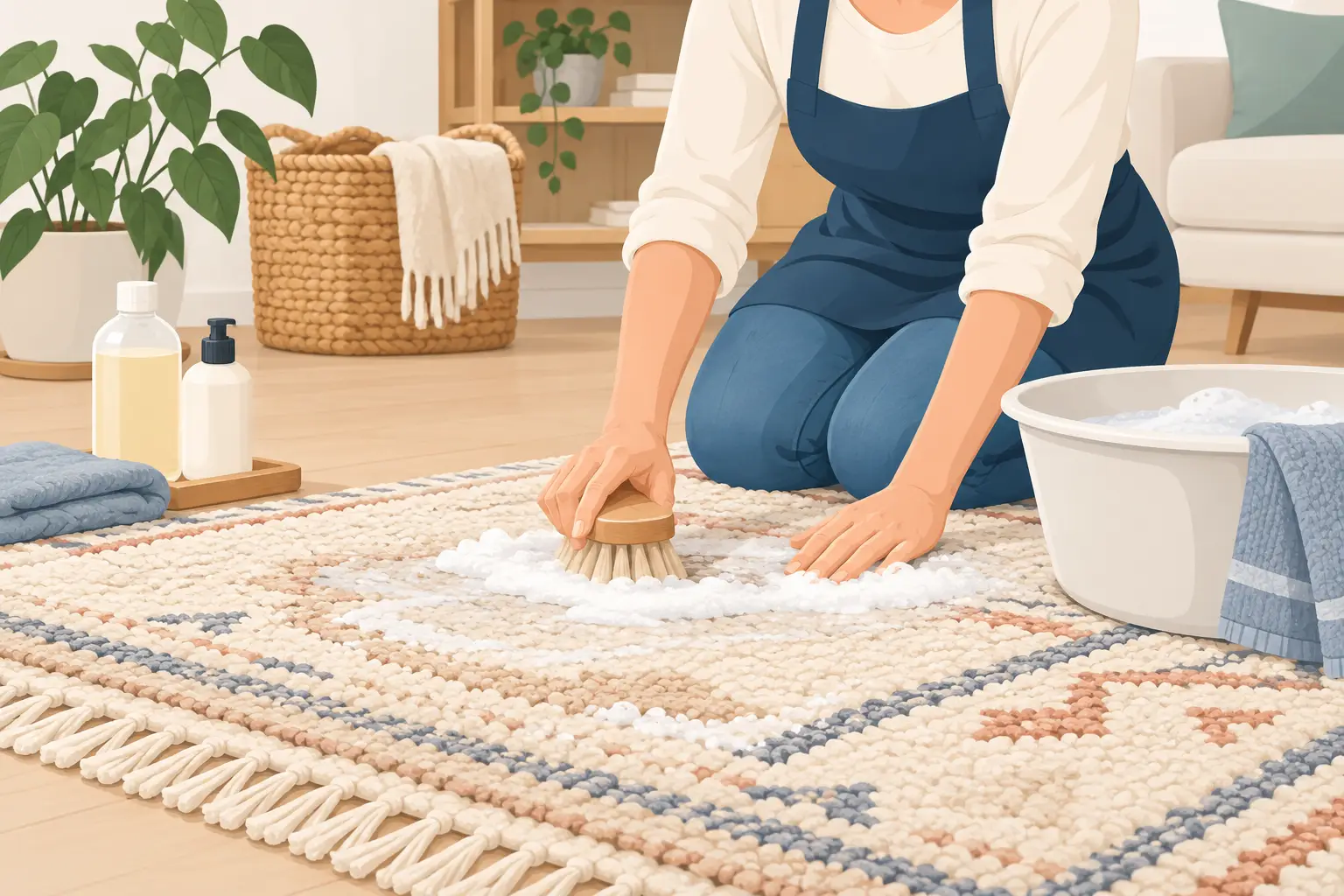
A wool rug can look deceptively sturdy. It has survived shoes, furniture, family gatherings, and years of daily life, yet its fibers and dyes may be far more vulnerable to improper cleaning than they appear. If you plan to hand wash wool rugs at home, the goal is not to make them soaking wet or scrub them bright overnight. It is to lift surface soil carefully while protecting the wool, the foundation, and the color that give the rug its character.
For a simple contemporary wool area rug, gentle hand washing can sometimes be appropriate. For a Persian, Oriental, antique, hand-knotted, or inherited piece, home washing carries more risk. Every rug has its own construction, dyes, age, and history. Treating it as a living piece of history rather than a standard carpet is the best place to begin.
First, Decide Whether Home Washing Is Appropriate
Before bringing out water or soap, inspect the rug in good natural light. Look at the pile, the fringe, the edges, and the back. If the rug feels brittle, has loose threads, worn binding, moth damage, curling corners, tears, or a weakened foundation, washing may make existing damage worse. These are repair concerns before they become cleaning concerns.
Color stability is another deciding factor. Some wool rugs, particularly handmade rugs with natural or older dyes, can bleed when wet. Red, navy, black, and deep purple areas deserve special attention. A dye that runs can permanently blur a pattern that took skilled weavers months or years to create.
Home hand washing is generally best reserved for a small, colorfast wool rug in sound condition. A large rug is difficult to rinse and dry thoroughly indoors, and trapped moisture can lead to odor, mildew, dye migration, or foundation distortion. Silk, viscose, antique, heavily soiled, pet-affected, or valuable handmade rugs should be evaluated by a rug specialist instead.
Perform a Colorfastness Test
Choose an inconspicuous colored area, ideally near an edge. Dampen a clean white cloth with cool water and press it onto the wool for about 30 seconds. Do not rub. If color transfers to the cloth, stop there. The rug should not be wet cleaned at home.
A clean test cloth is reassuring, but it is not a complete guarantee. Dyes can react differently when exposed to detergent, prolonged moisture, or water that reaches deeper into the foundation. Use the test as a warning screen, not permission to use aggressive cleaning methods.
What You Need to Hand Wash Wool Rugs Safely
The safest approach uses very little chemistry and a great deal of patience. Gather a vacuum with suction only, clean white towels, two buckets, cool water, a mild wool-safe cleaner, a soft natural-bristle brush or sponge, and a fan for drying.
Avoid hot water, bleach, ammonia, oxygen boosters, laundry detergent, dish soap, carpet shampoo, and products marketed as heavy-duty degreasers. Wool is a protein fiber, much like hair. Strong alkaline cleaners can leave it dry, rough, or weakened. Products that appear to create a dramatic clean may also strip away the softness and luster you want to preserve.
Choose a dry, clean work area with good airflow. A covered patio can work for a small rug on a mild day, provided the rug will not sit in direct, intense sunlight. Prolonged sun can fade dyes, while damp weather slows drying. Indoors, protect the floor beneath the rug and make sure you have enough room to turn and dry it properly.
How to Hand Wash Wool Rugs Step by Step
Start by removing loose soil. Vacuum the front and back gently, without a beater bar that could pull fibers or fringe. Vacuuming both sides matters because grit settles deep into the pile and acts like sandpaper each time someone walks across the rug.
Next, address individual spots rather than washing the full rug if the rest is clean. Blot fresh spills immediately with a white towel. Work from the outside of the spill toward the center so it does not spread. Then dab with a very small amount of diluted wool-safe cleaner and cool water. Never scrub in circles. Scrubbing can fuzz the wool, distort the pile, and push staining deeper.
If the whole rug genuinely needs cleaning, mix a small amount of wool-safe cleaner into cool water according to its directions. Less is usually better. Excess soap is difficult to remove and can attract soil after the rug dries.
Use a sponge or soft brush to apply the solution lightly, working in small sections. The rug should be dampened, not saturated. Follow the direction of the pile and use gentle, even strokes. Give extra attention to traffic lanes, but resist the temptation to scrub hard when a gray area does not lift quickly. Deeply embedded soil may require a professional wash process with controlled rinsing and specialized equipment.
Rinse by blotting with a second sponge or clean cloth dampened only with cool water. Change the rinse water frequently. Continue until towels no longer pick up visible suds or soil. Incomplete rinsing is one of the most common reasons a rug feels stiff or becomes dirty again soon after cleaning.
Do Not Soak the Rug
A wool rug’s face fibers may look clean while its cotton, wool, or jute foundation remains wet underneath. That hidden moisture is the problem. It can cause dyes to travel, create a musty smell, encourage microbial growth, and alter the rug’s shape.
Professional rug washing is different from simply getting a rug wet. It involves inspection, dust removal, fiber-appropriate cleaning, controlled washing, complete rinsing, and managed drying. A proper process protects both the visible beauty and the structure beneath it.
Drying Is the Step That Protects the Rug
After rinsing, press clean dry towels into the rug to absorb as much moisture as possible. Stand on the towels if needed, but do not wring, twist, or fold the rug while wet. Those actions can stretch the foundation and leave permanent ripples.
Lay the rug flat to dry with the pile facing up. Elevating it slightly on a drying rack or a clean, slatted surface can improve airflow, but make sure the support is even so the rug does not sag. Use fans and open windows when conditions allow. Turn the rug only after the upper surface is mostly dry, then allow the back to dry completely.
Do not return furniture to the rug until both sides are fully dry to the touch, including the fringe and edges. Depending on thickness, humidity, and airflow, this can take a day or longer. A damp rug placed back on a floor may develop odor or transfer moisture to the surface underneath.
When a Wool Rug Needs Professional Washing
Some situations call for more than careful spot treatment. Pet urine, old food or drink stains, smoke odor, flood exposure, sticky residue, and heavy traffic soil often reach far below the surface. A handheld cleaner or rental machine may leave moisture and residue behind while failing to remove the source of the problem.
Professional care is also the safer choice when a rug has unstable dyes, delicate fringe, worn edges, moth damage, or sentimental and financial value. A trained rug cleaner can assess whether washing, repair, color correction, blocking, fringe work, or edge stabilization should happen first. That individualized assessment is particularly valuable for handmade rugs, where each knot and color variation contributes to the rug’s original artistry.
At Persian Rug Spa, rugs are handled off-site with fiber-aware washing and restoration methods designed for the individual piece, not a one-size-fits-all carpet-cleaning process. Free pickup and delivery can make proper care practical even when a large or delicate rug is difficult to move.
Keep Wool Rugs Cleaner Between Washes
Regular maintenance reduces the need for frequent wet cleaning. Vacuum gently once or twice a week in busy areas, rotating the rug occasionally so traffic and sunlight do not wear one section faster than another. Clean spills promptly, use a quality rug pad to reduce movement and abrasion, and keep fringe out of vacuum beater bars.
A wool rug does not need to look brand new to be well cared for. Its gentle variations in pile and color are often part of its character. The real standard is a rug that is clean, structurally sound, comfortable underfoot, and ready to remain part of your home for many more years.
